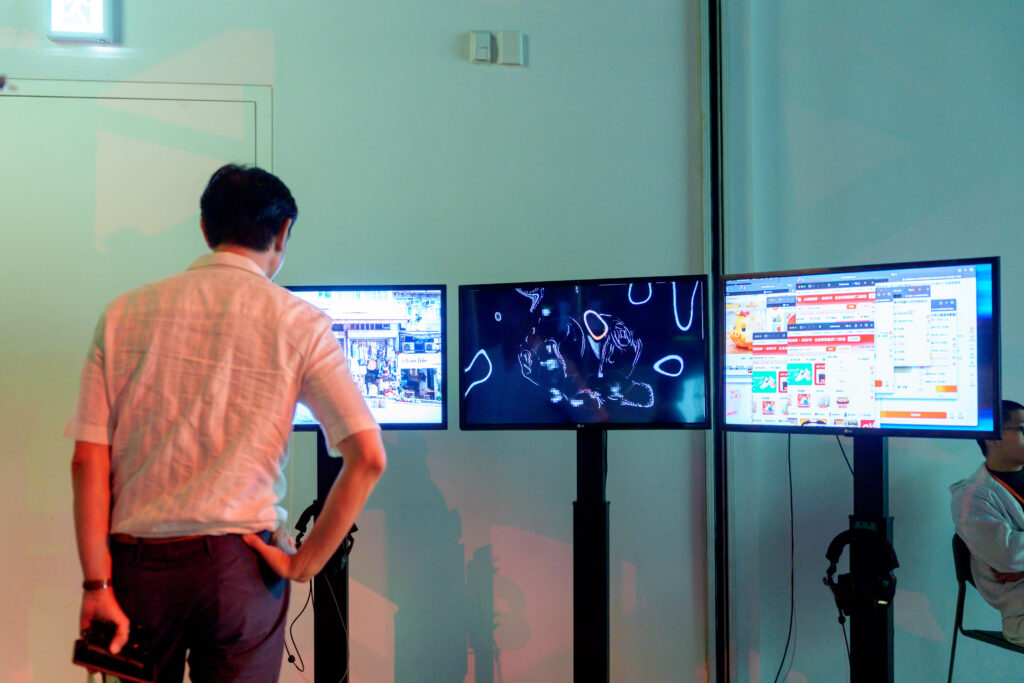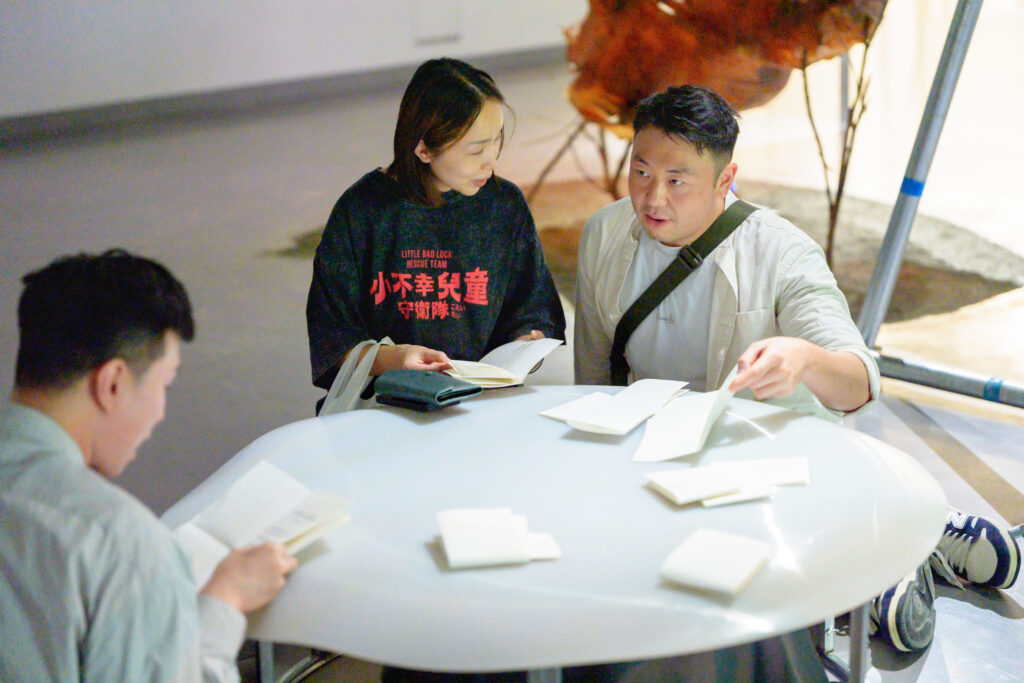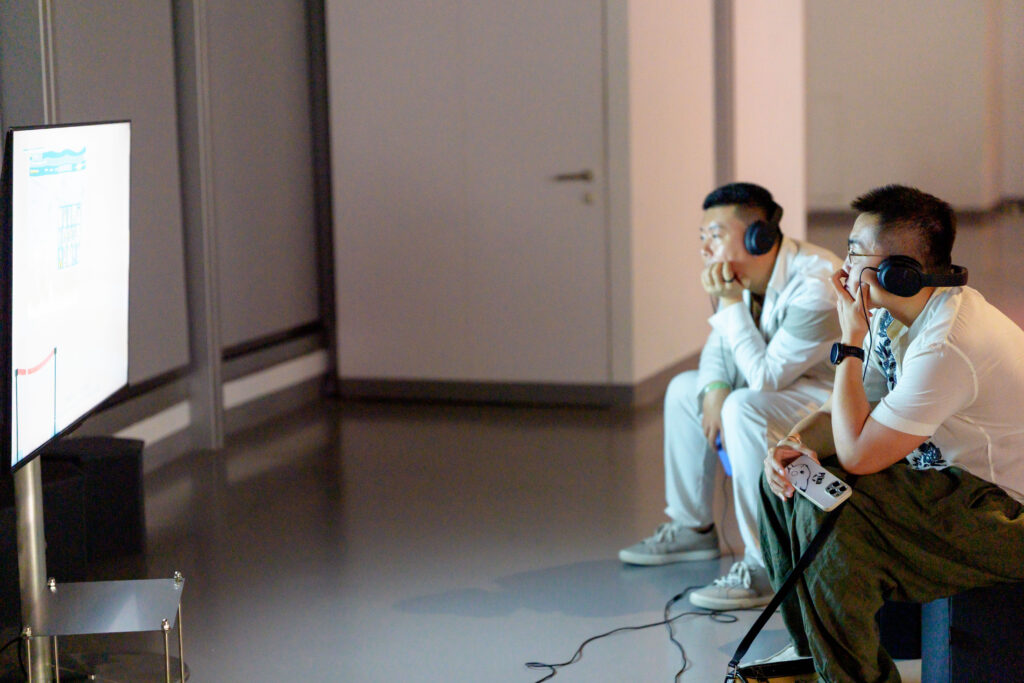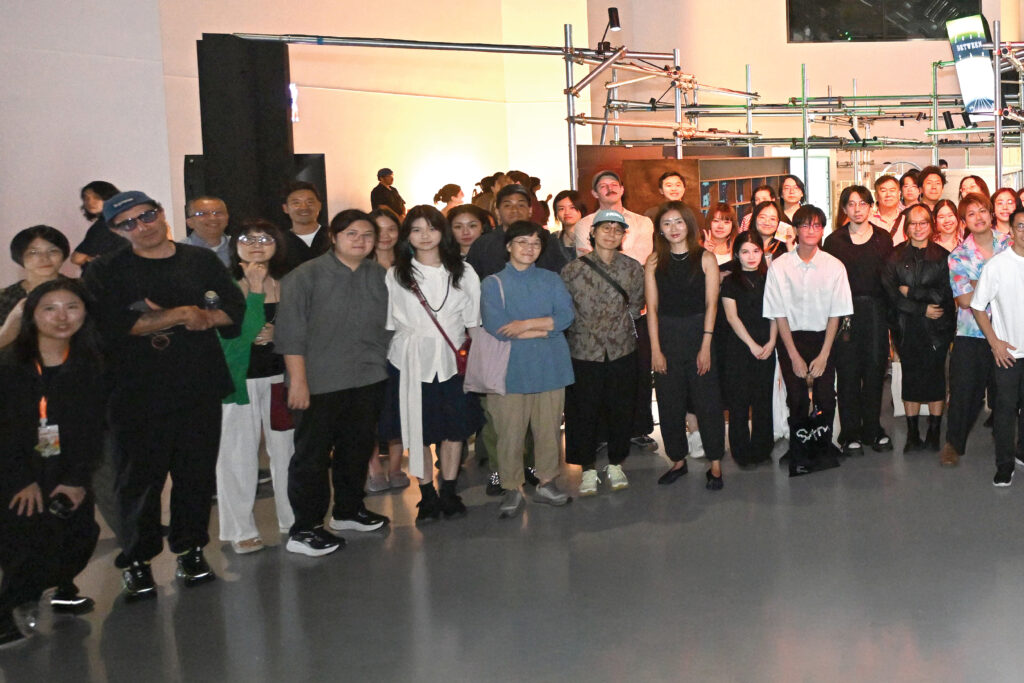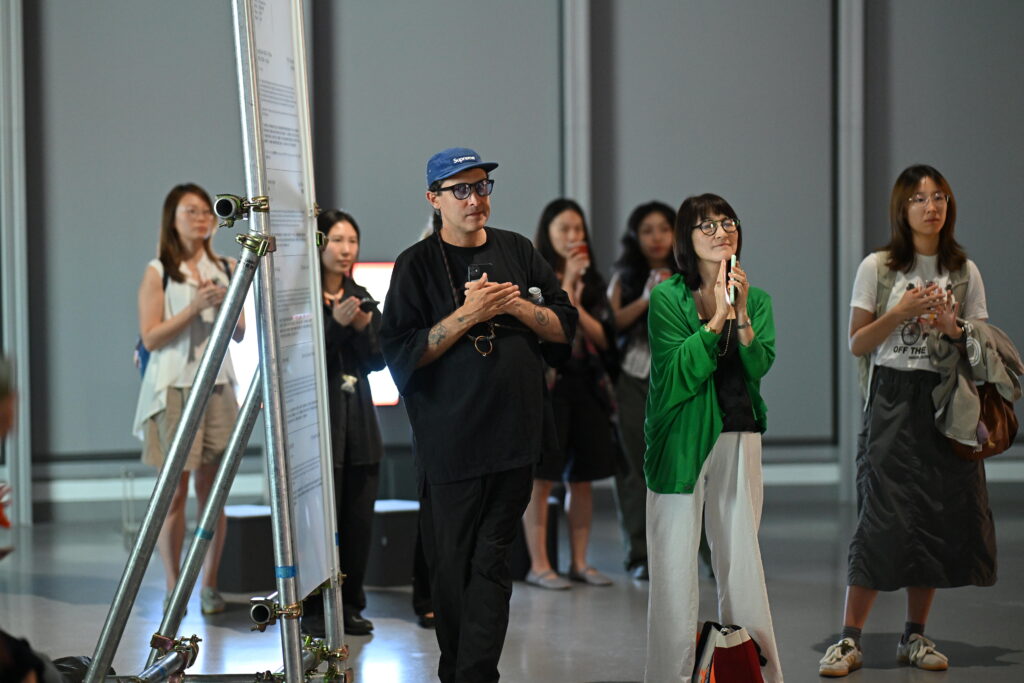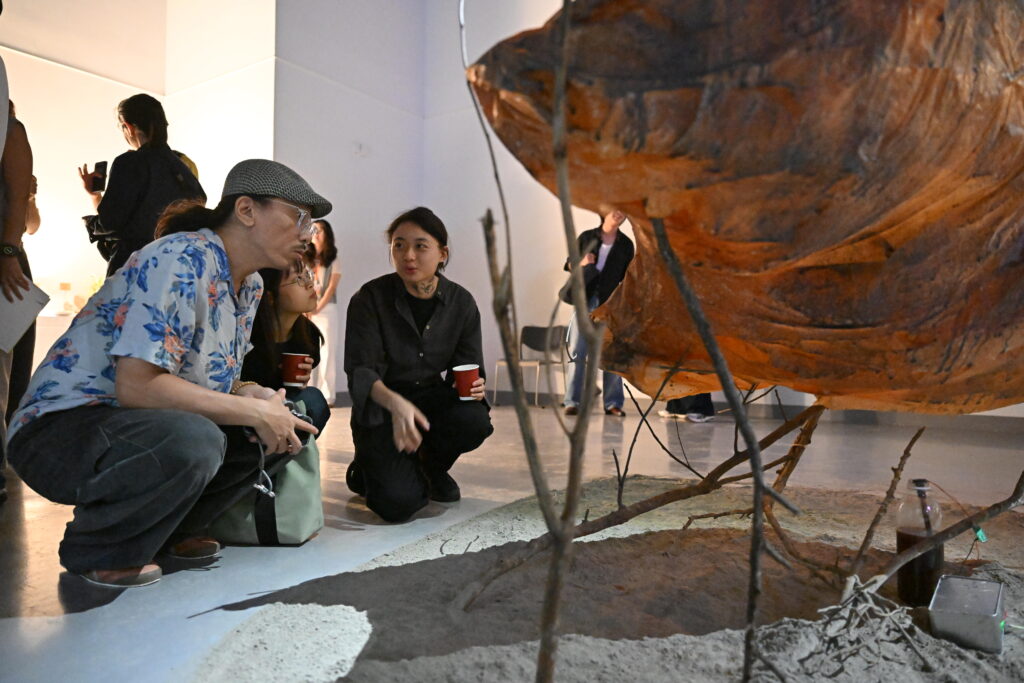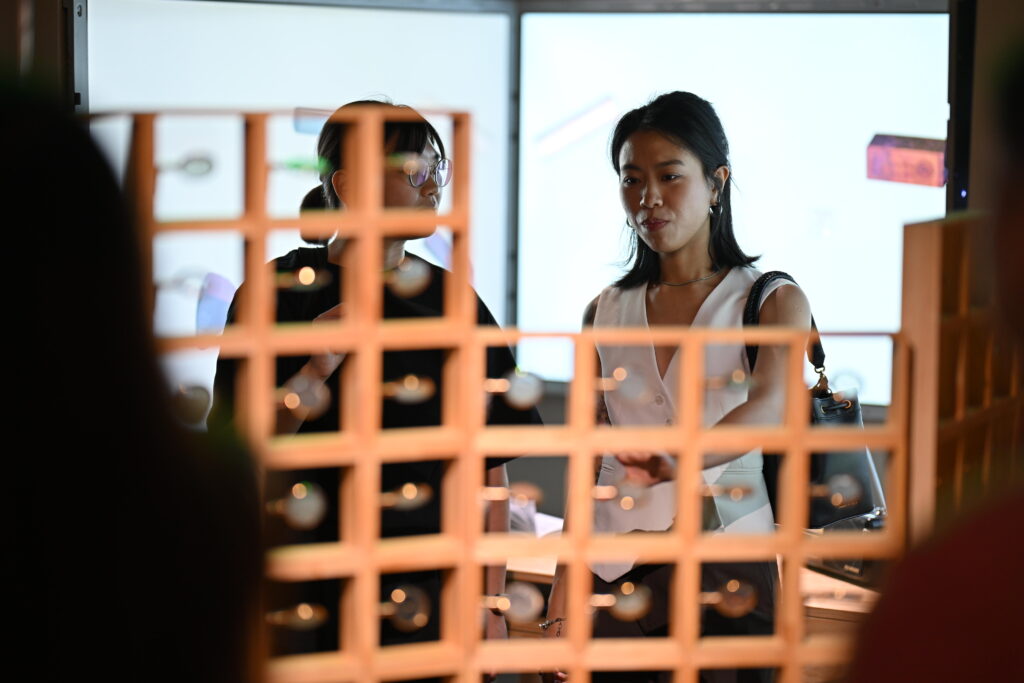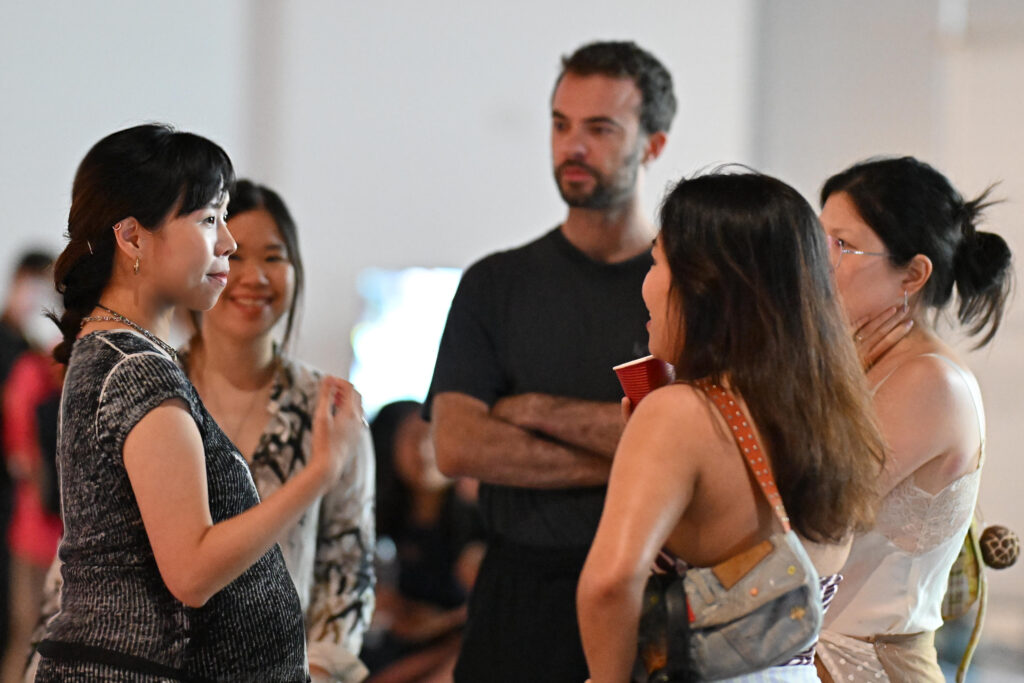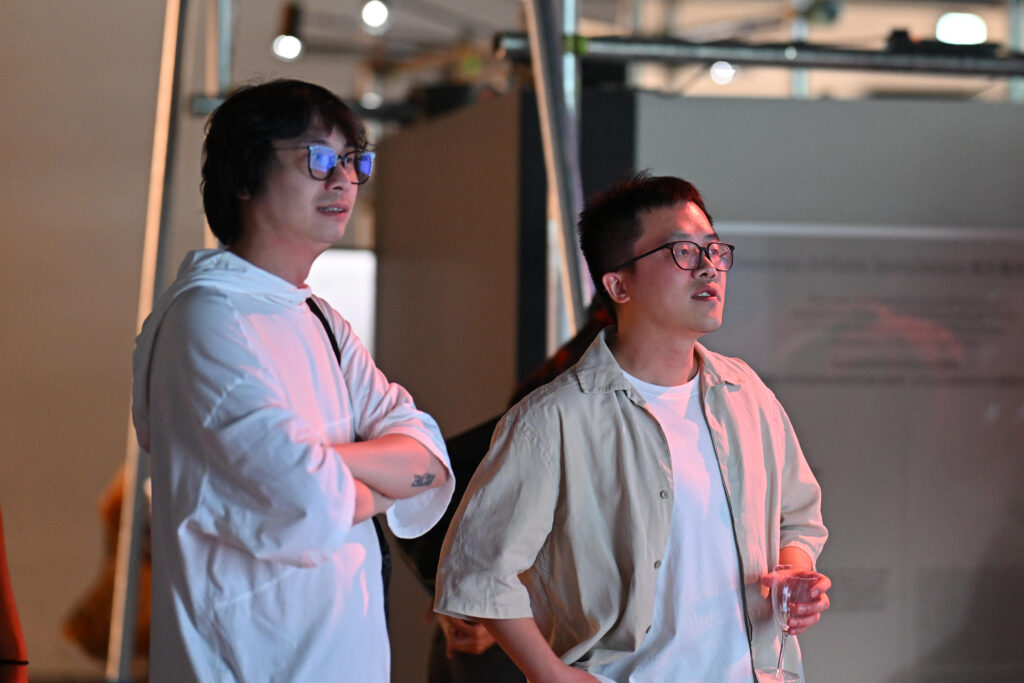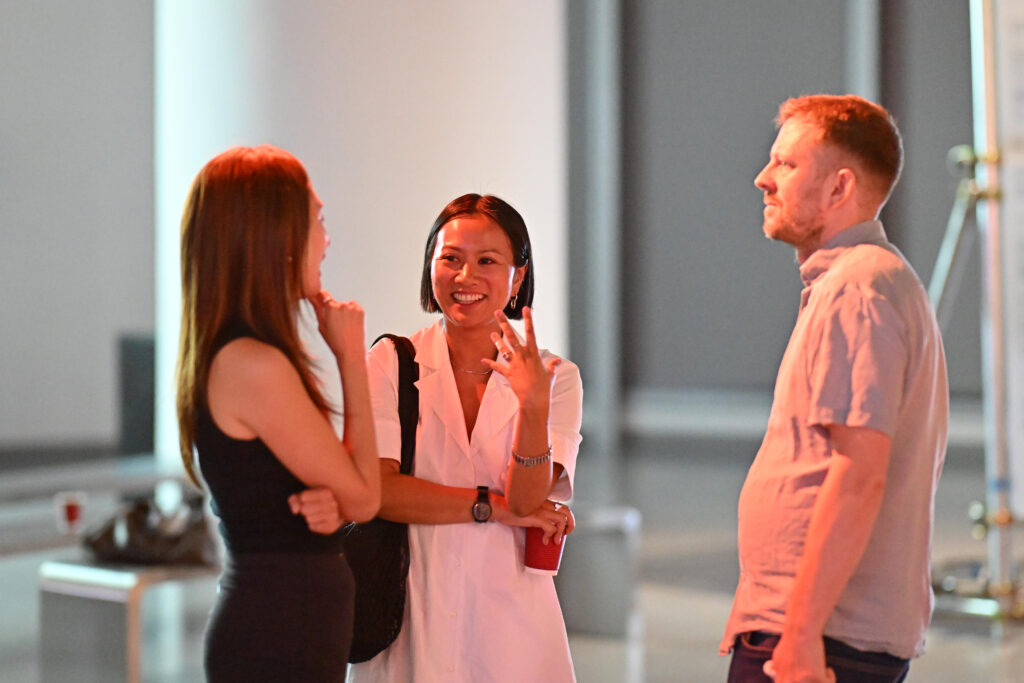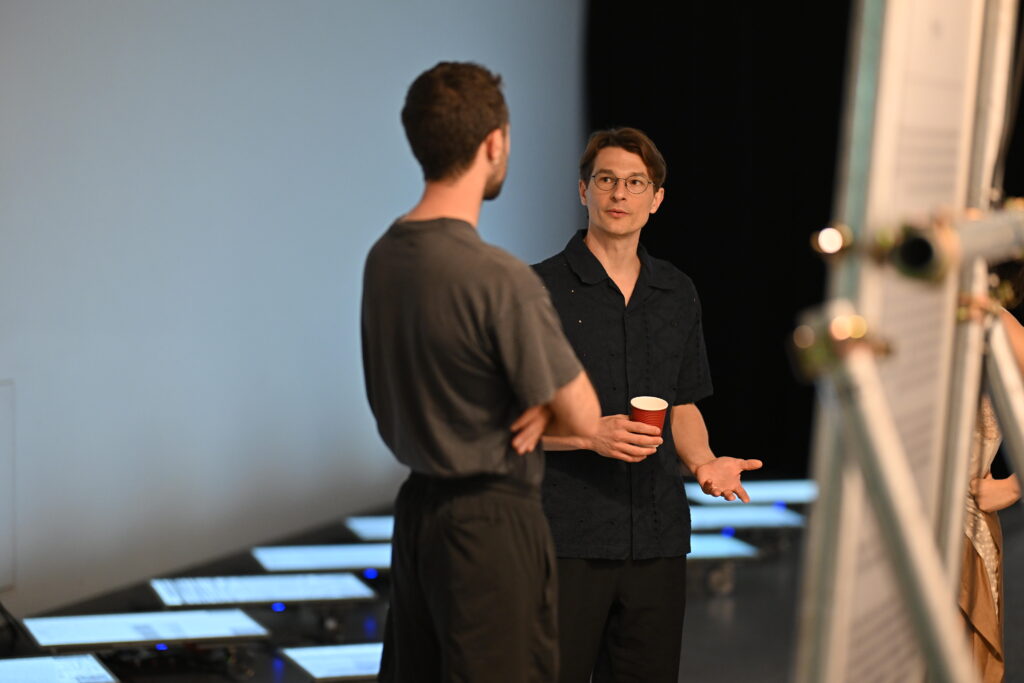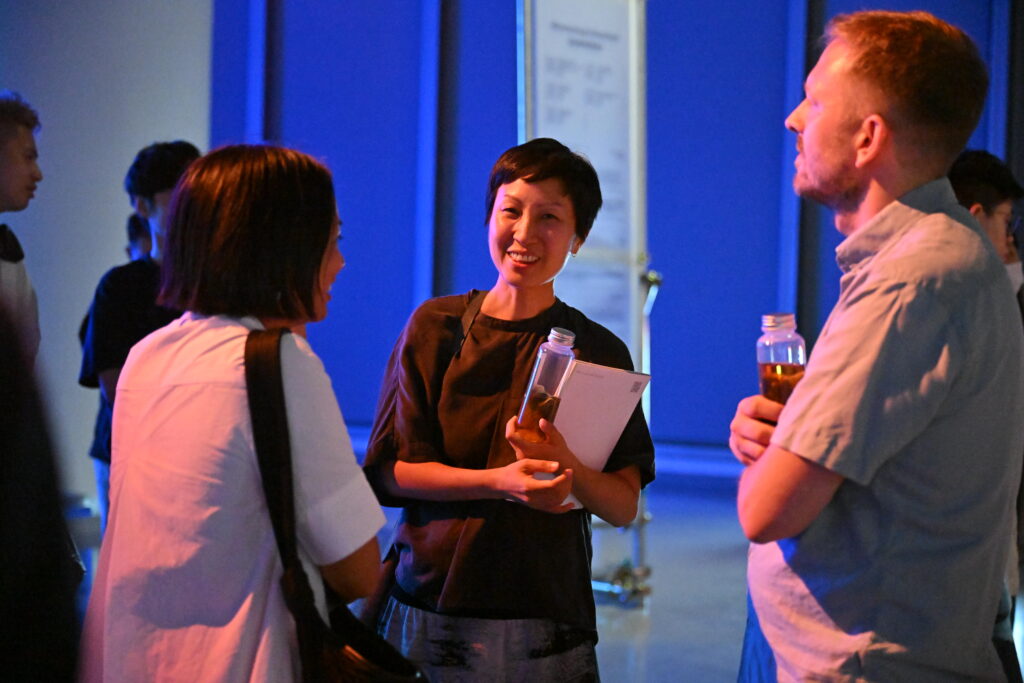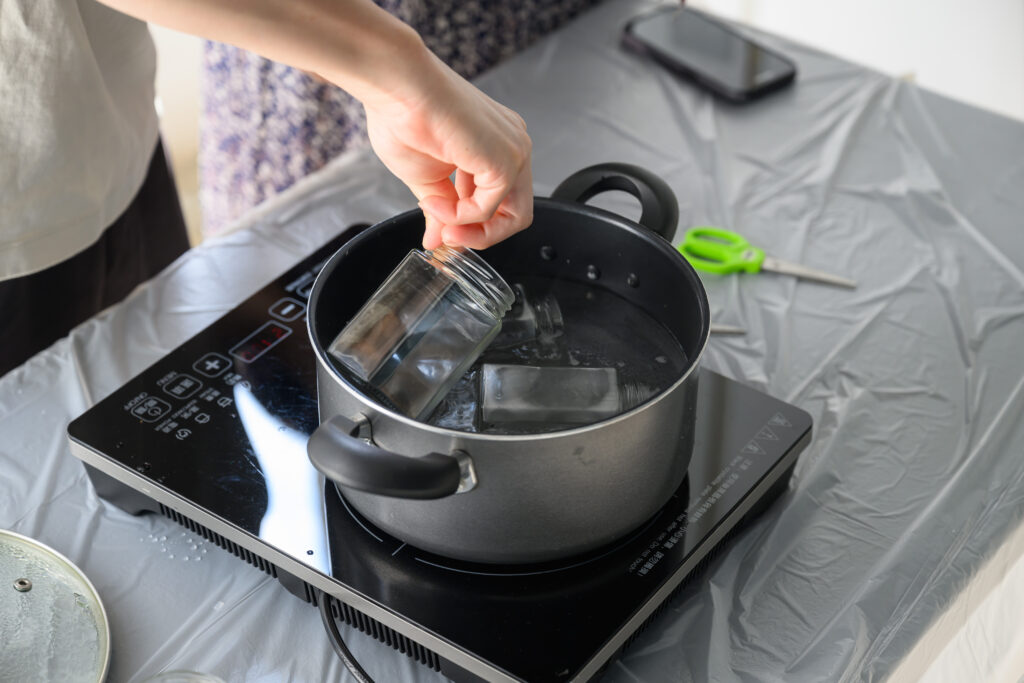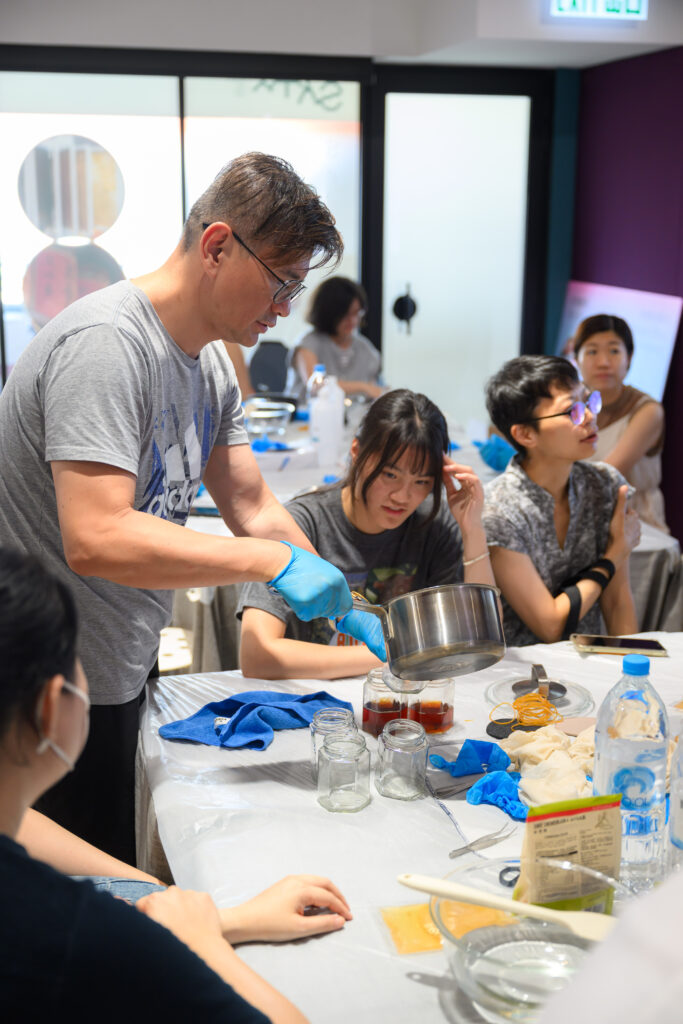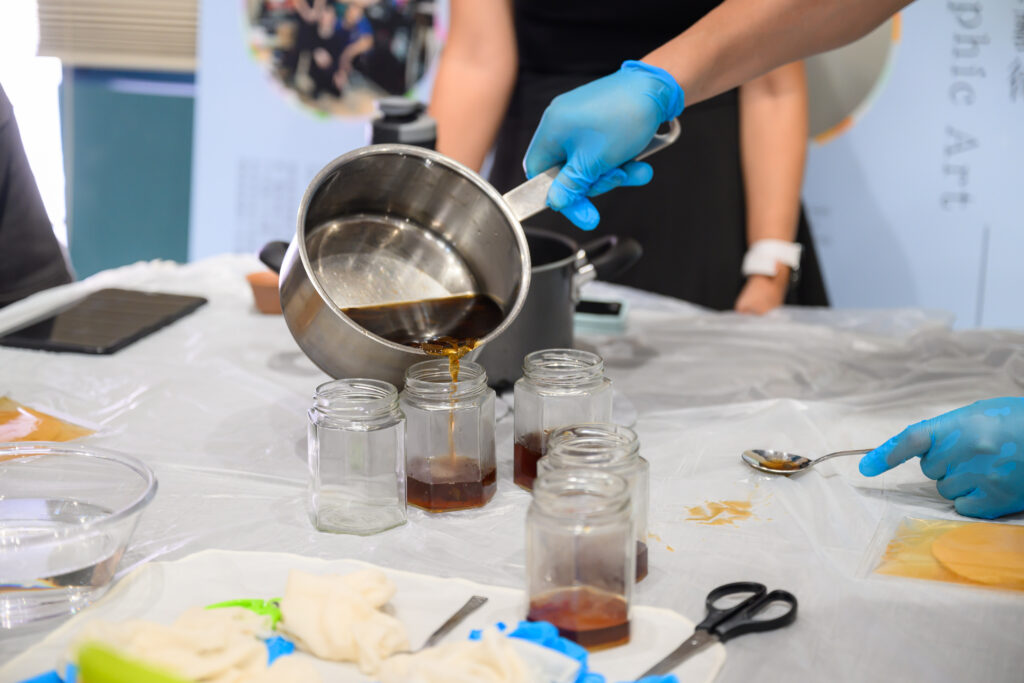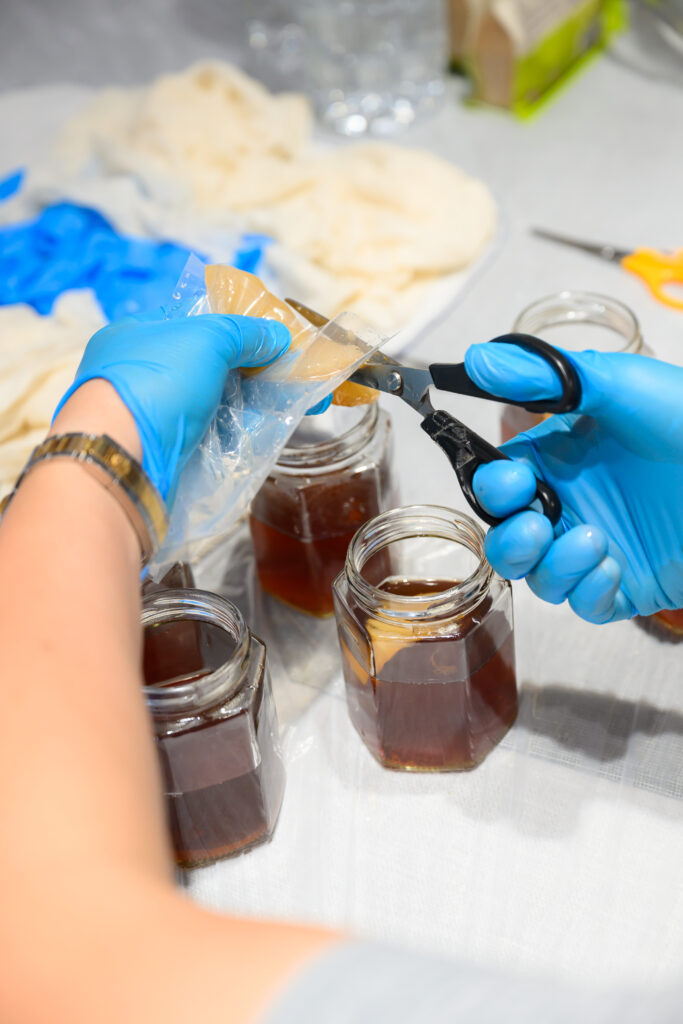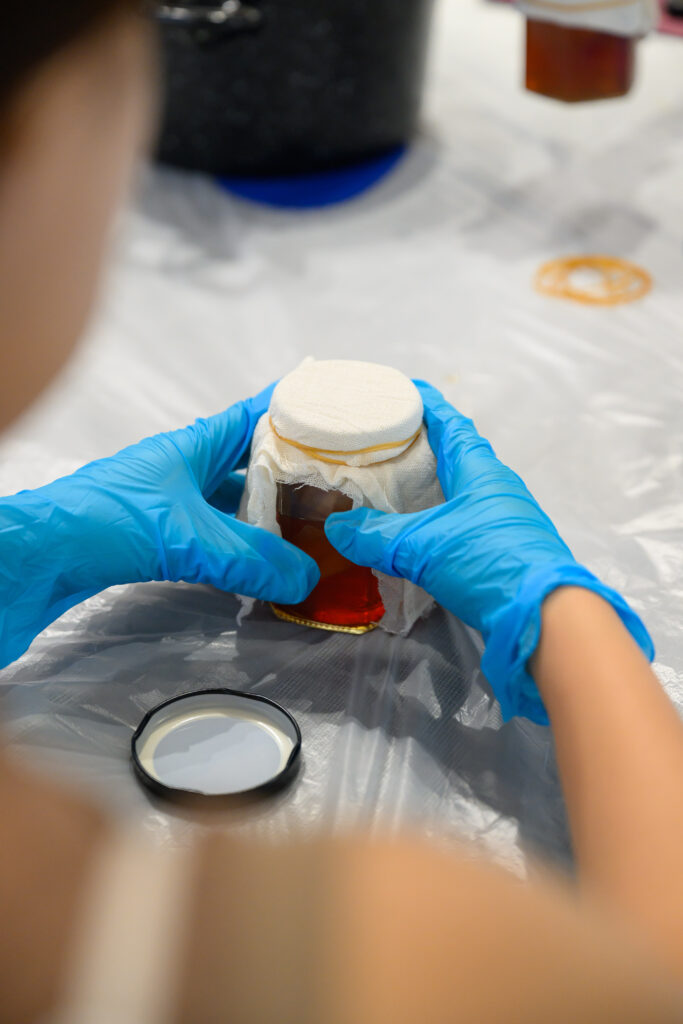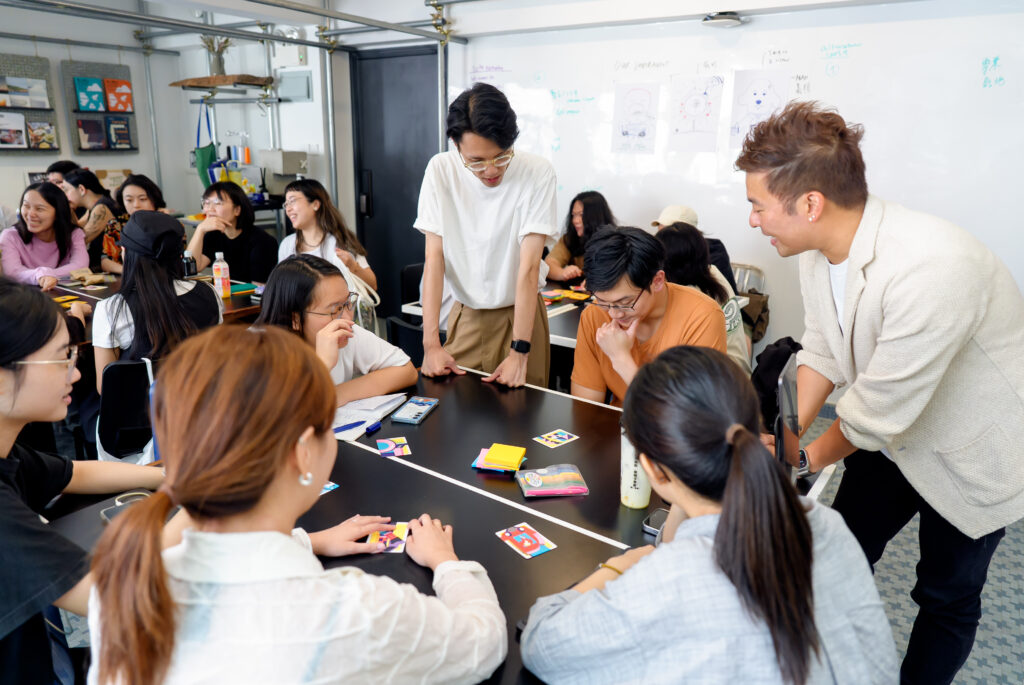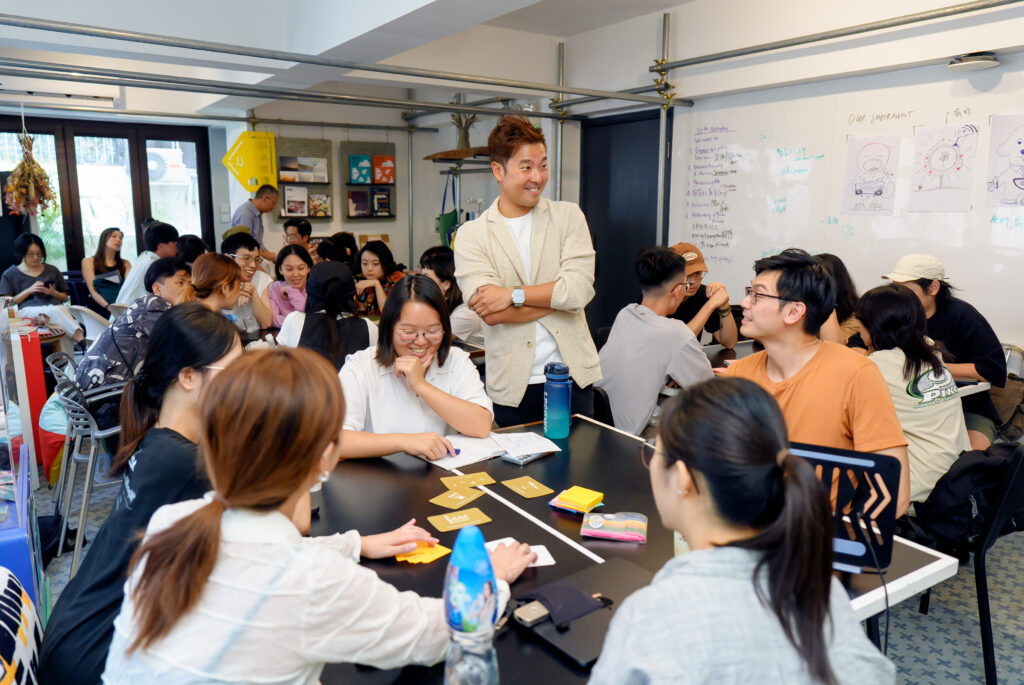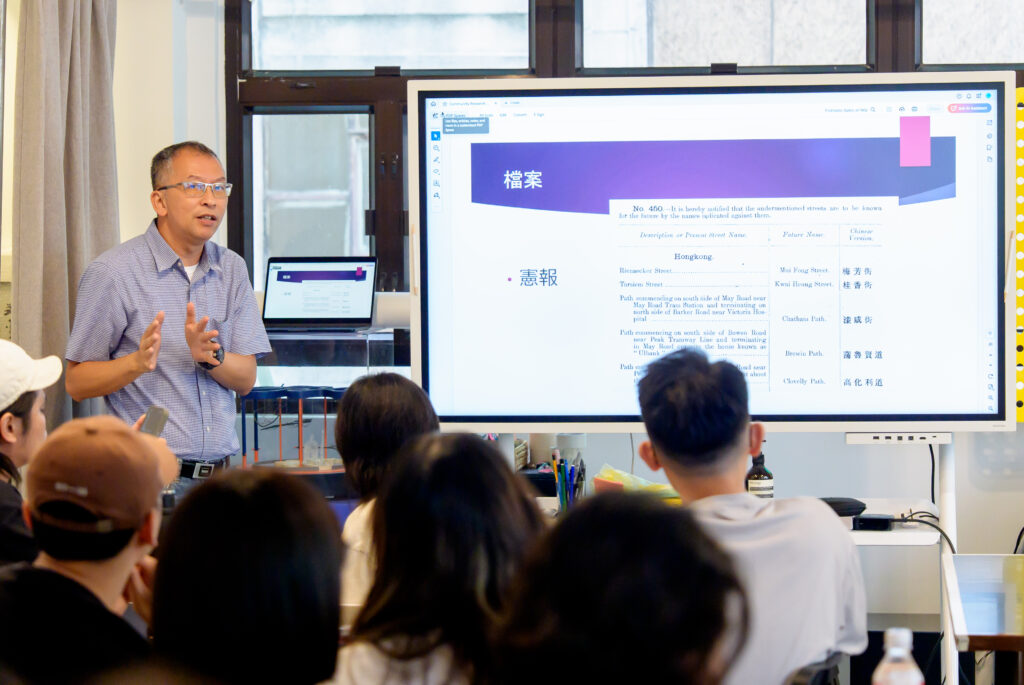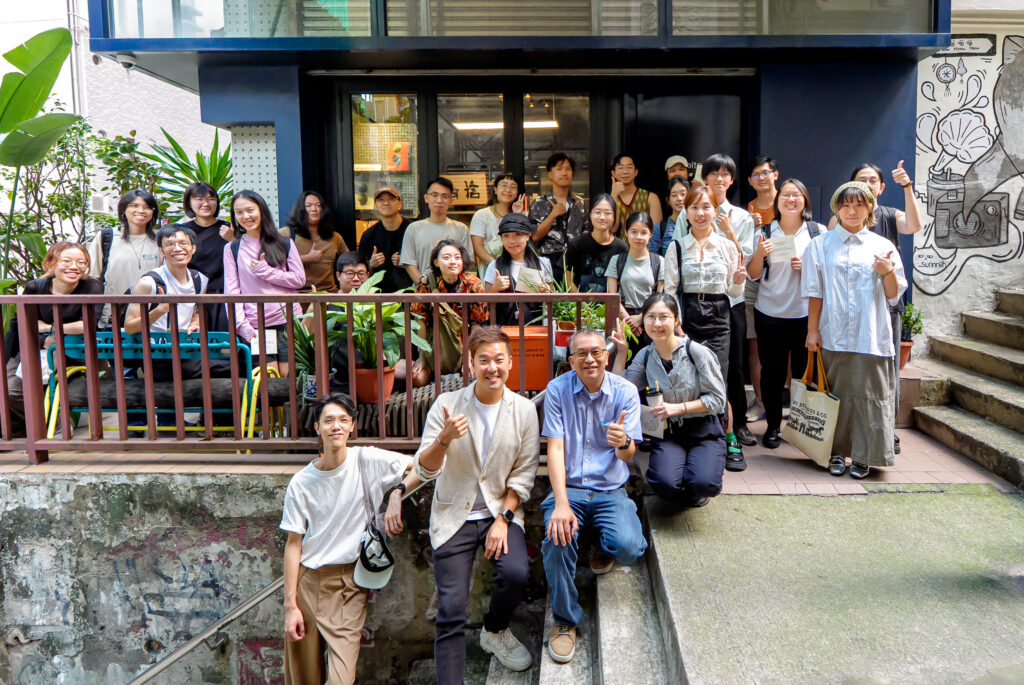


將在8月中旬舉行,詳情即將公佈,敬請期待!
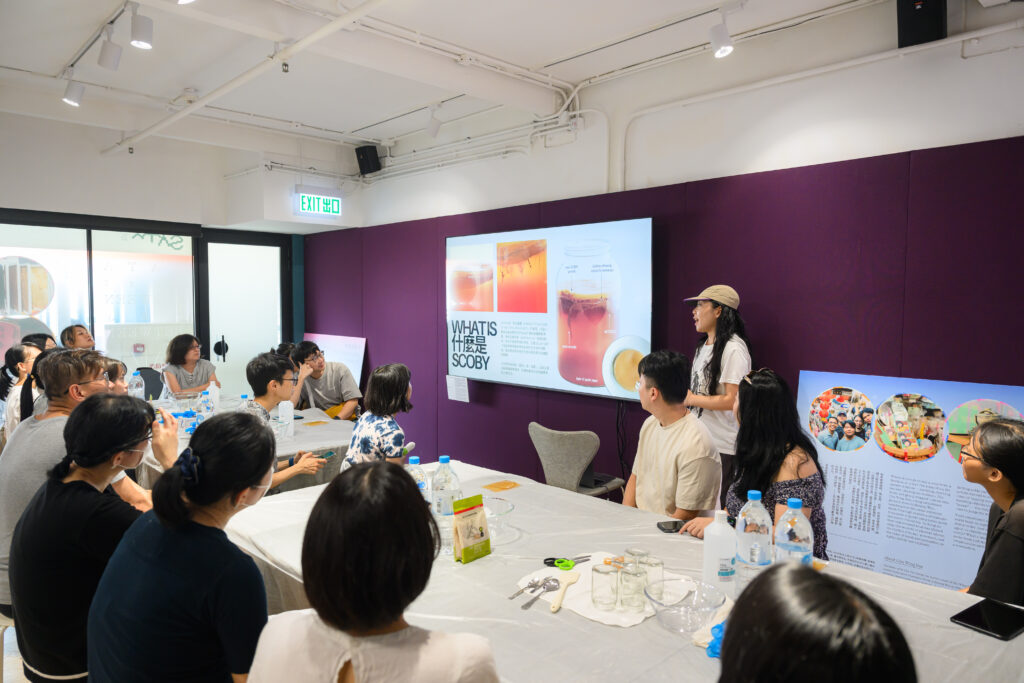
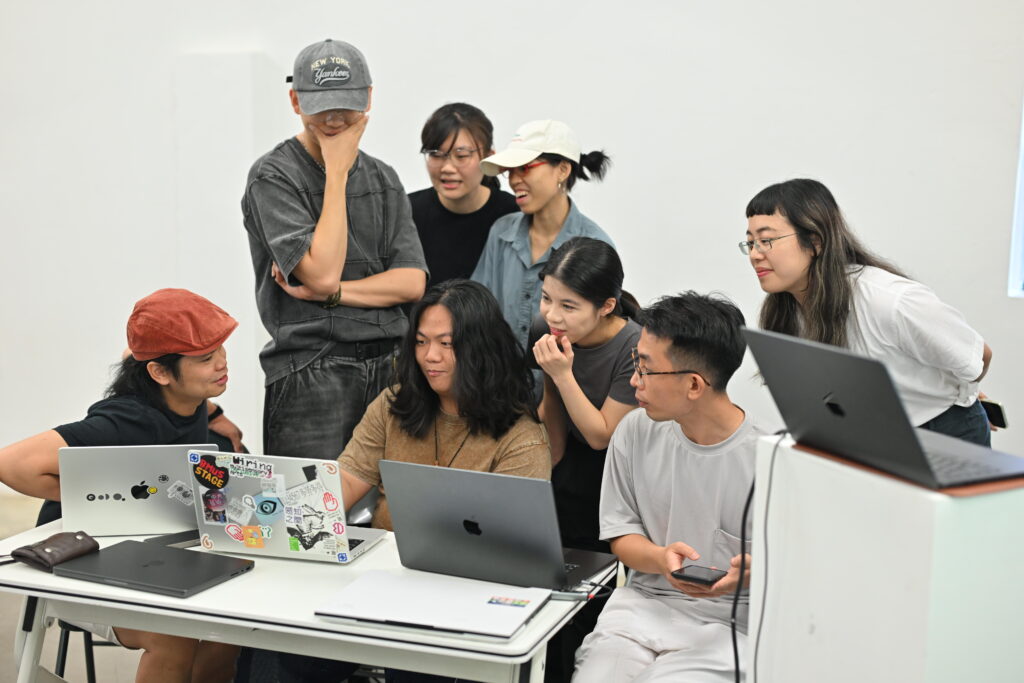
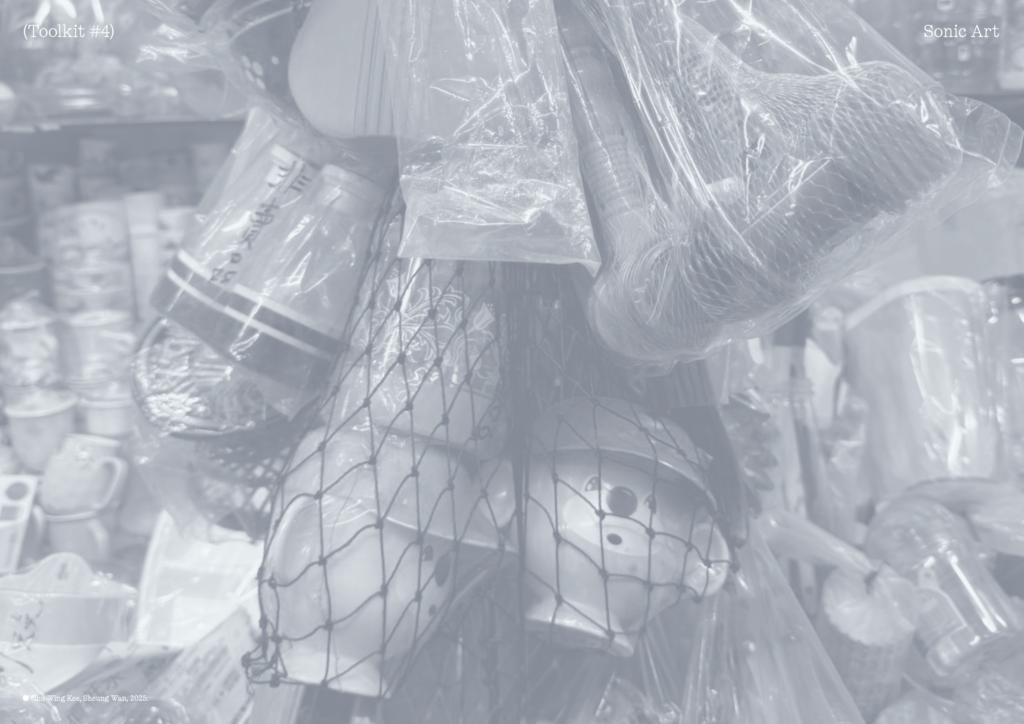
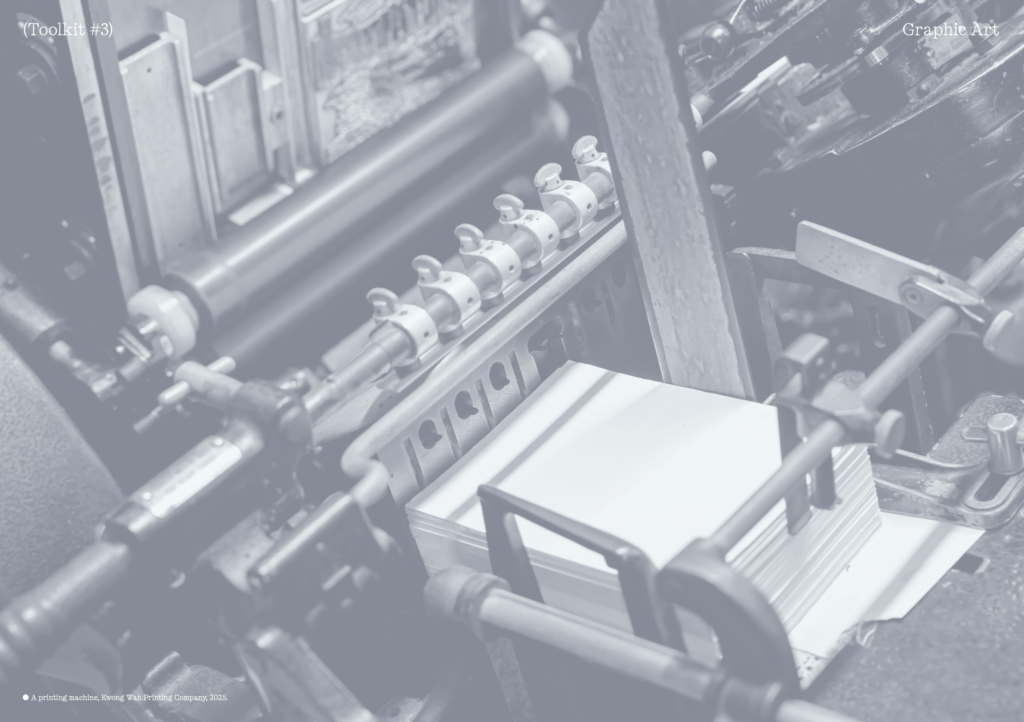
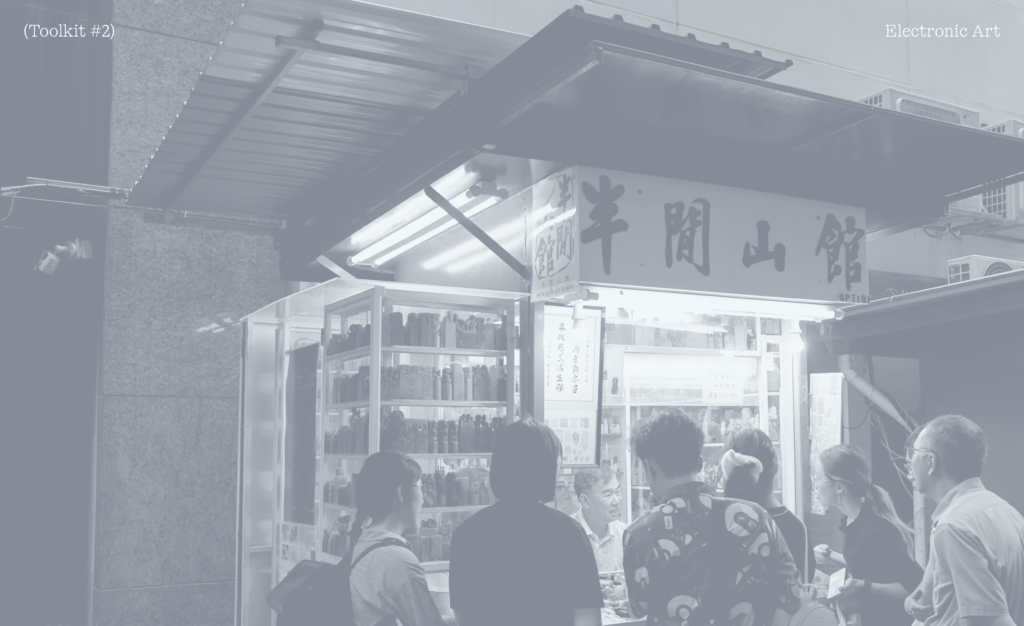
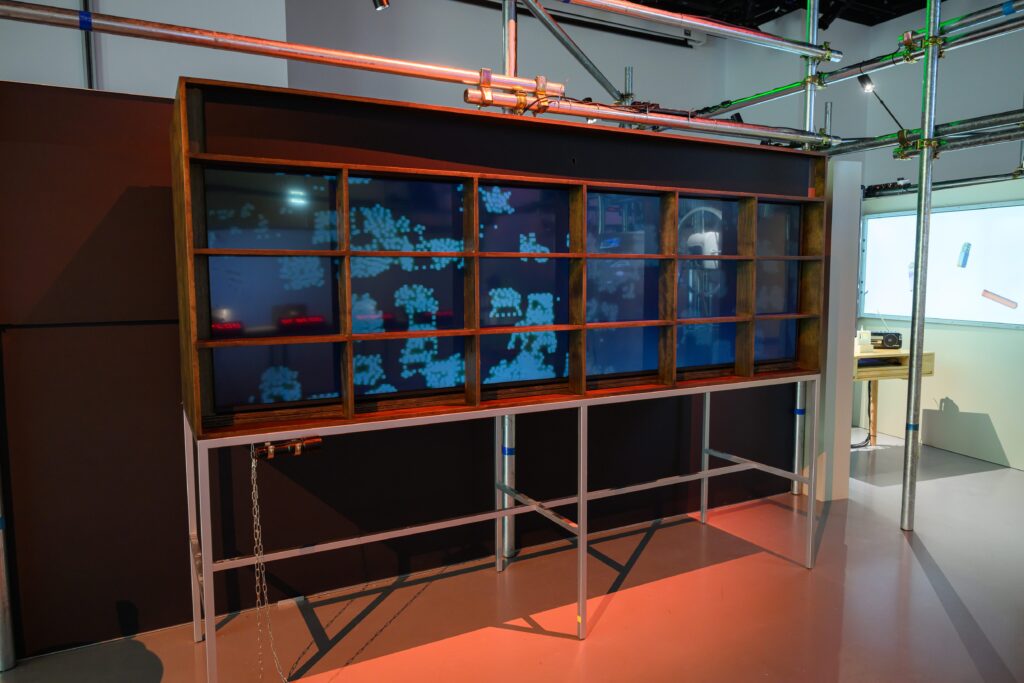
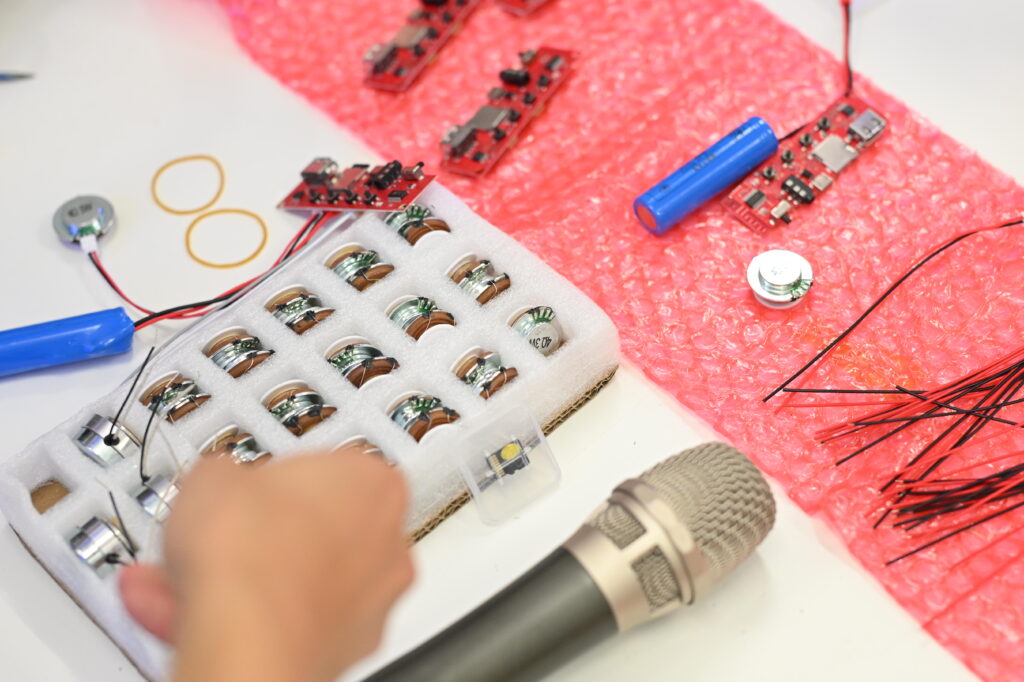
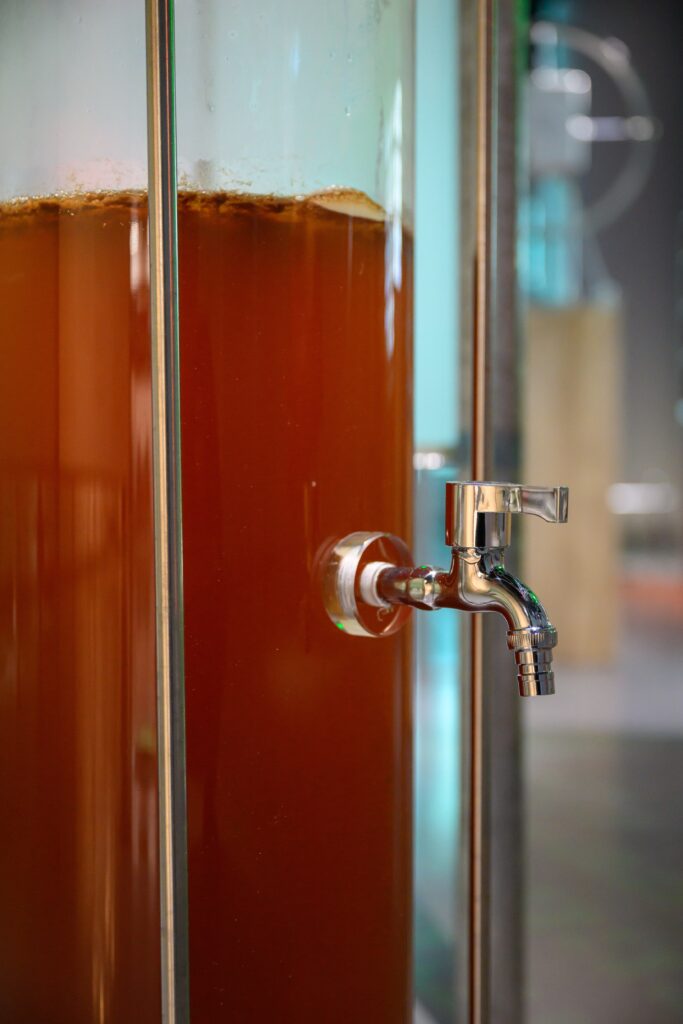
The group researching the seal shop Pun Han Sin Koon, mentored by Fung Wing Lam, foregrounds collective process and shared experience as a form of communal inheritance. At the grocery shop Chu Wing Kee, mentor Sing Jantzen Tse guides participants in weaving seemingly individual works through intangible threads such as sound, echoing the hidden resonances that bind a neighbourhood. Led by Liv Tsim, Kee Heung Chun Tea Company adopts a ‘slow methodology’, observing alongside living fermentation—using kombucha as a metaphor—to reflect the uncontrollable and adaptive evolution of a shop’s layout and survival strategies: organic, interrupted, yet never fully mastered. Finally, the group mentored by Roger Ng at the print shop Kwong Wah Printing investigates human–machine operational errors, exploring the poetic qualities of human mistakes.
Media Arts Exhibition & Public Programmes 媒體藝術展覽及公眾活動
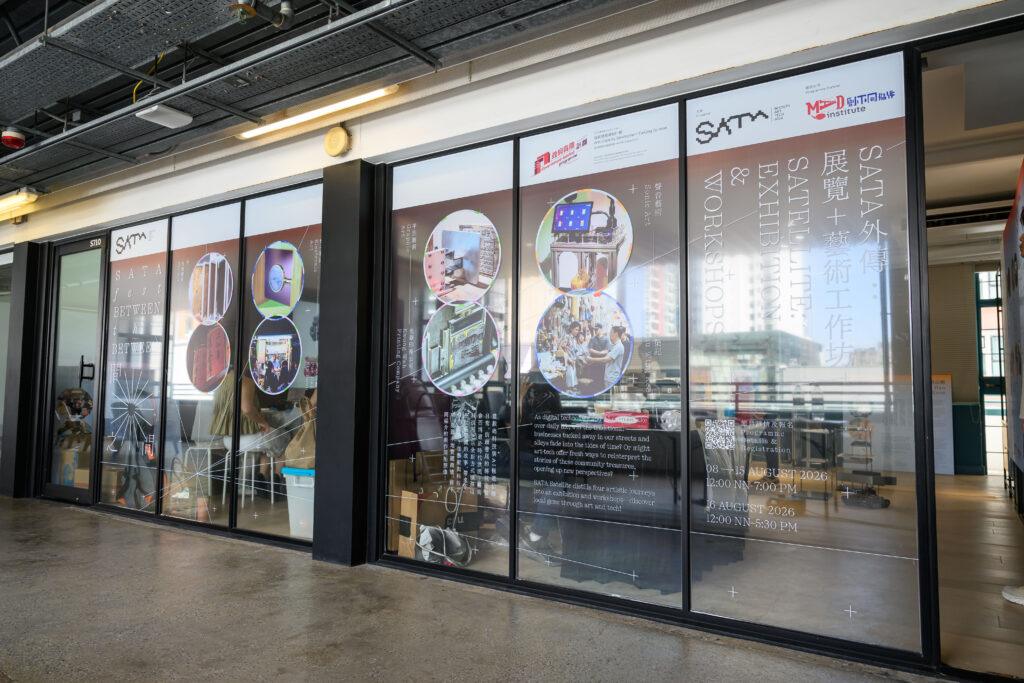
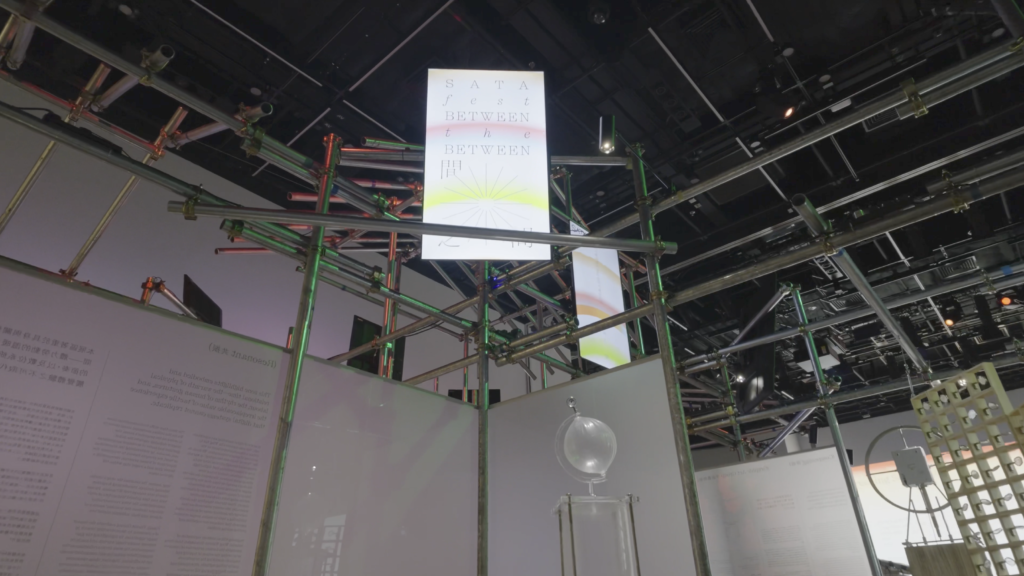
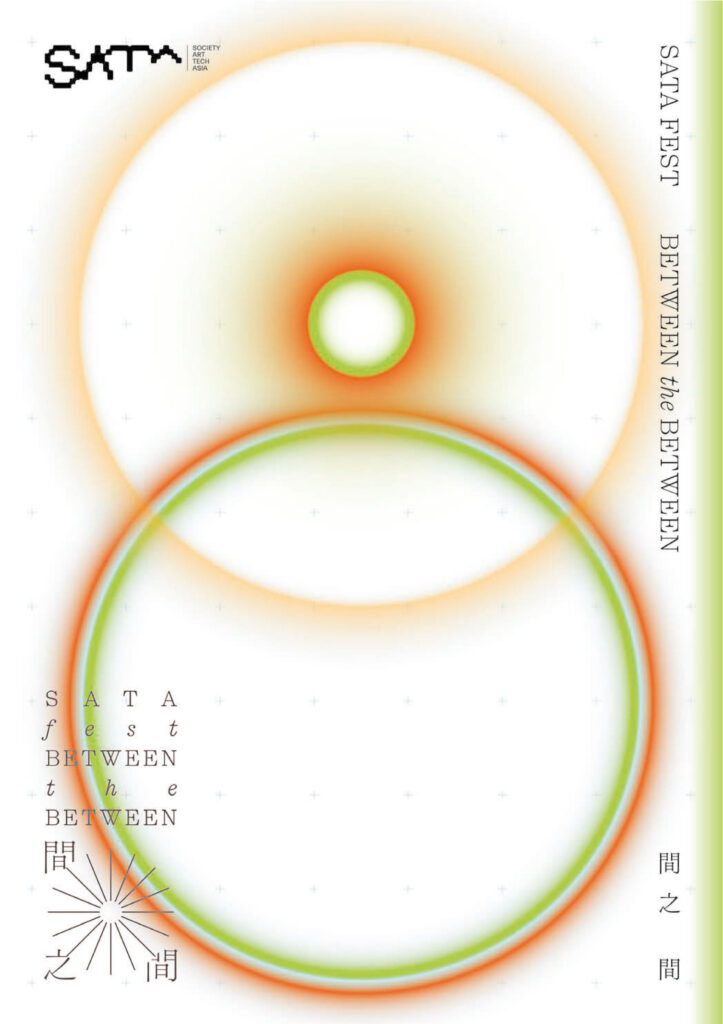
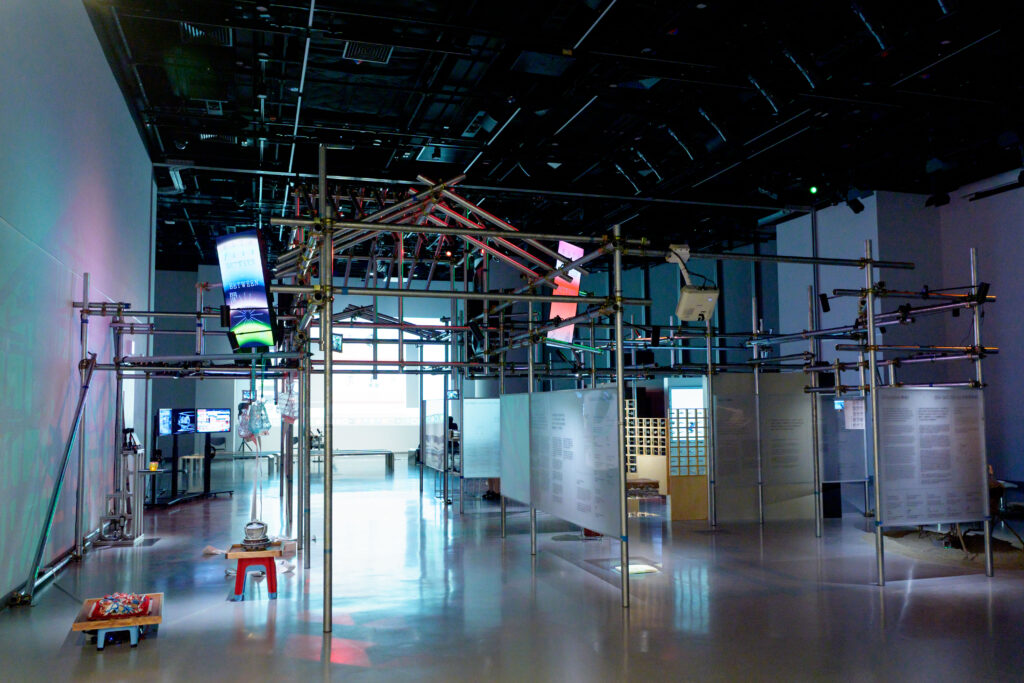
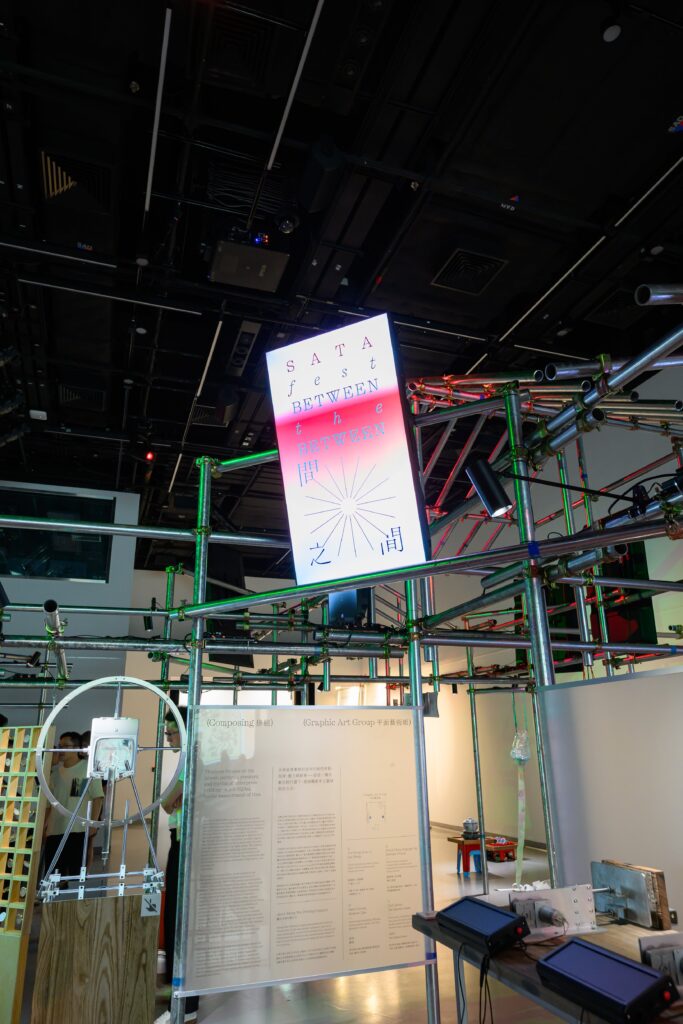
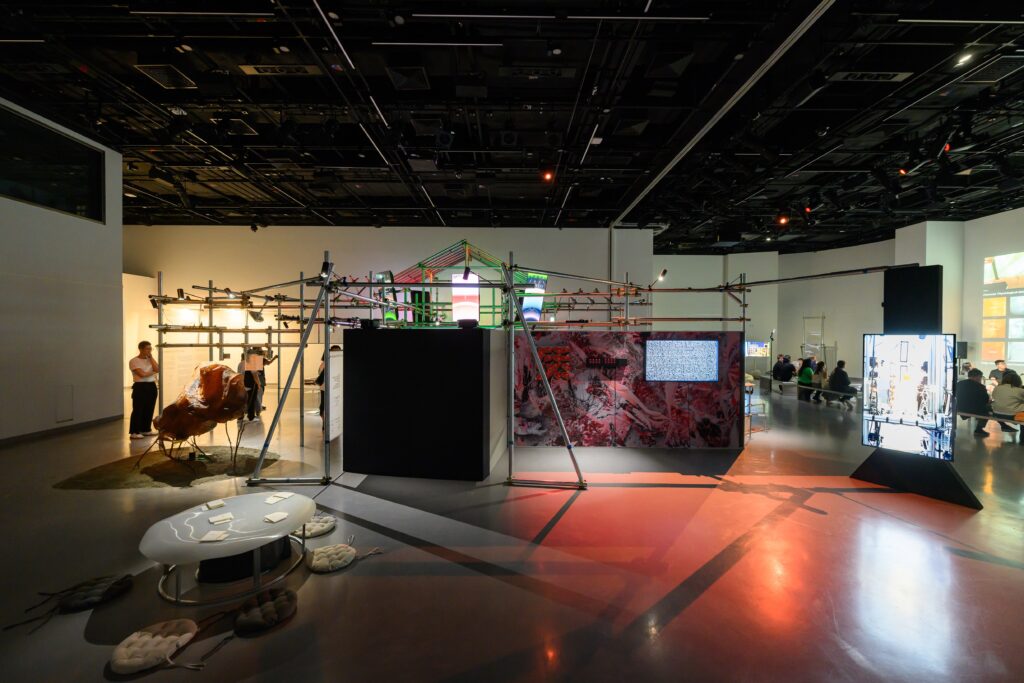
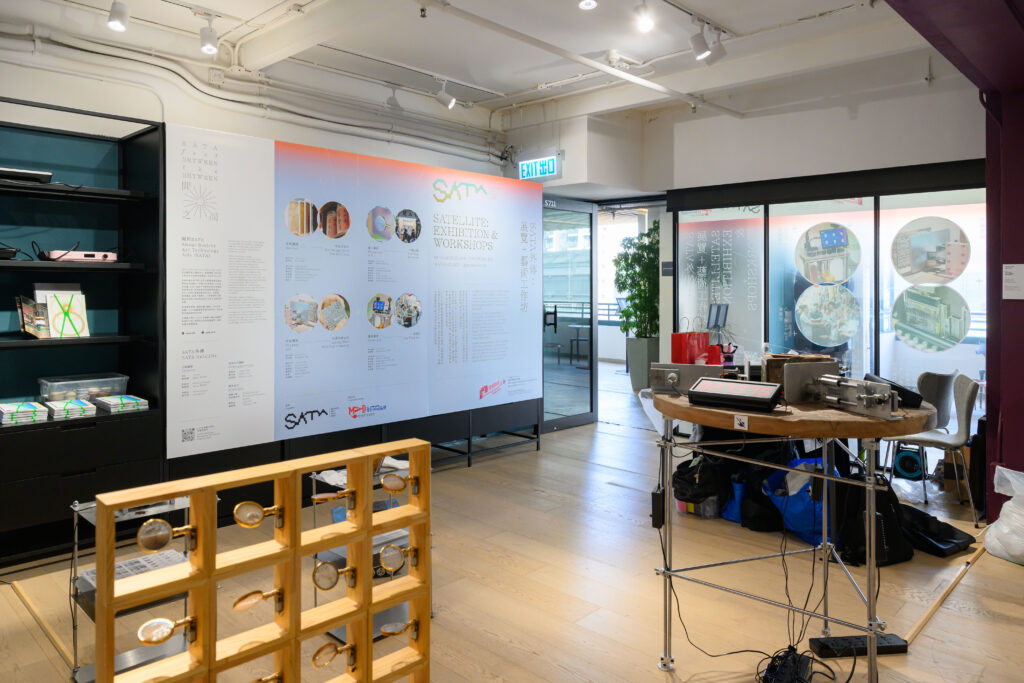
𝐒𝐀𝐓𝐀 𝐅𝐞𝐬𝐭: 𝐁𝐞𝐭𝐰𝐞𝐞𝐧 𝐭𝐡𝐞 𝐁𝐞𝐭𝐰𝐞𝐞𝐧 間之間
9 - 18.7.2026 (11am - 7pm); 19.7.2026 (11am - 5pm)
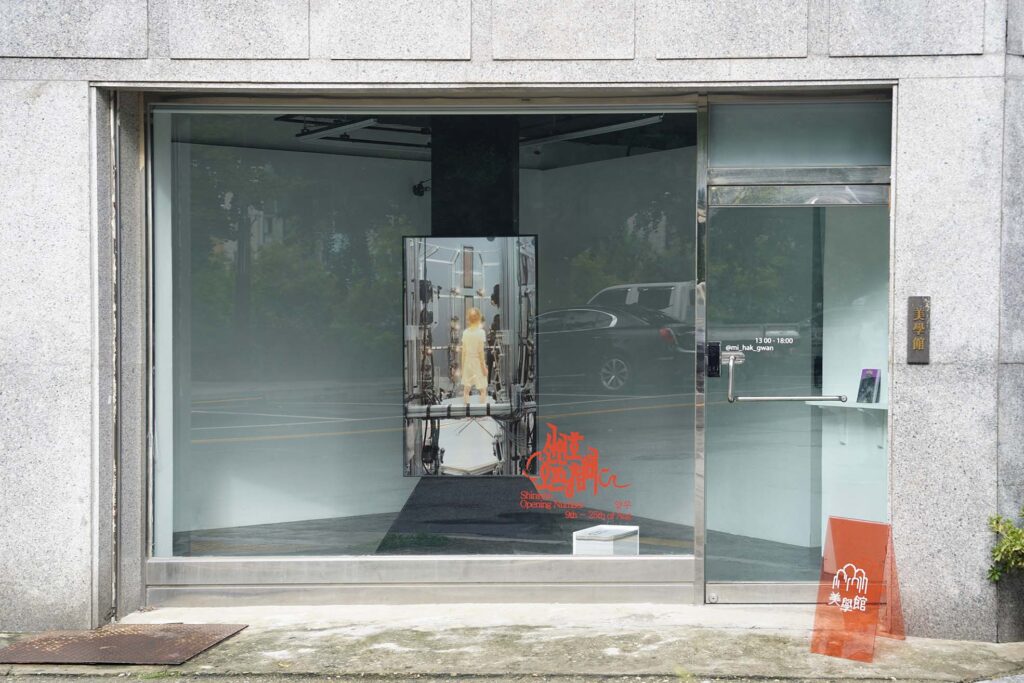
HKADC SHOWCASE 香港藝術發展局展藝館
Free Entry 免費入場
Guided tours are held daily throughout the exhibition. For institutional or group tour inquiries, please feel free to email us at hi@sata.info.
展覽期間,每天均設有導賞團。如各機構及團體有興趣參與安排團體導賞,亦歡迎電郵至 hi@sata.info 與我們查詢。
-
Between art and society, time unfolds and lingers.
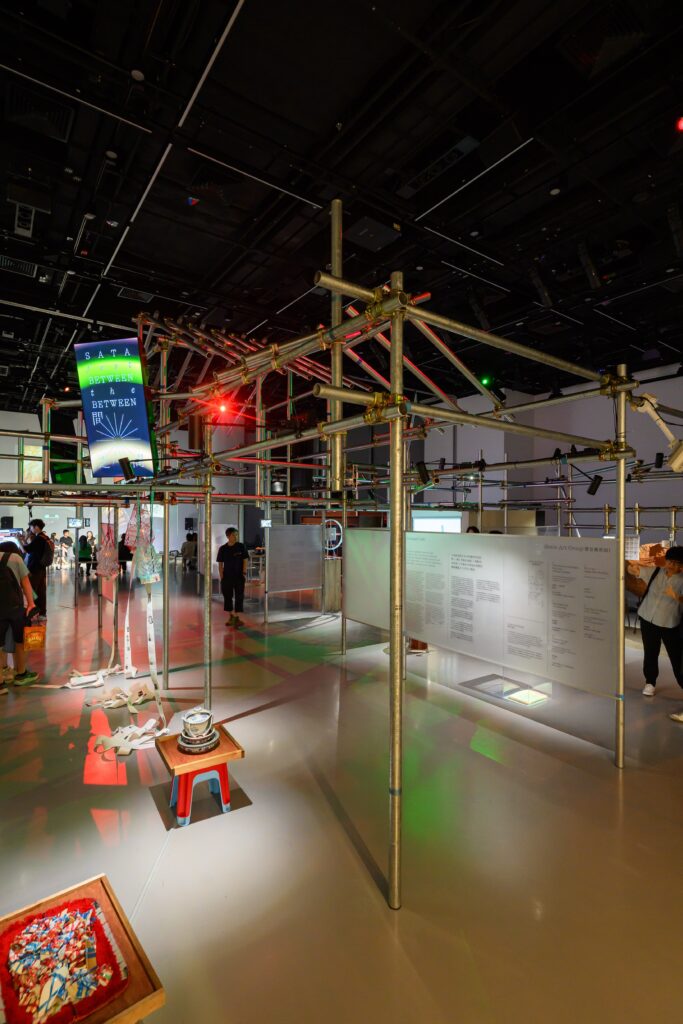
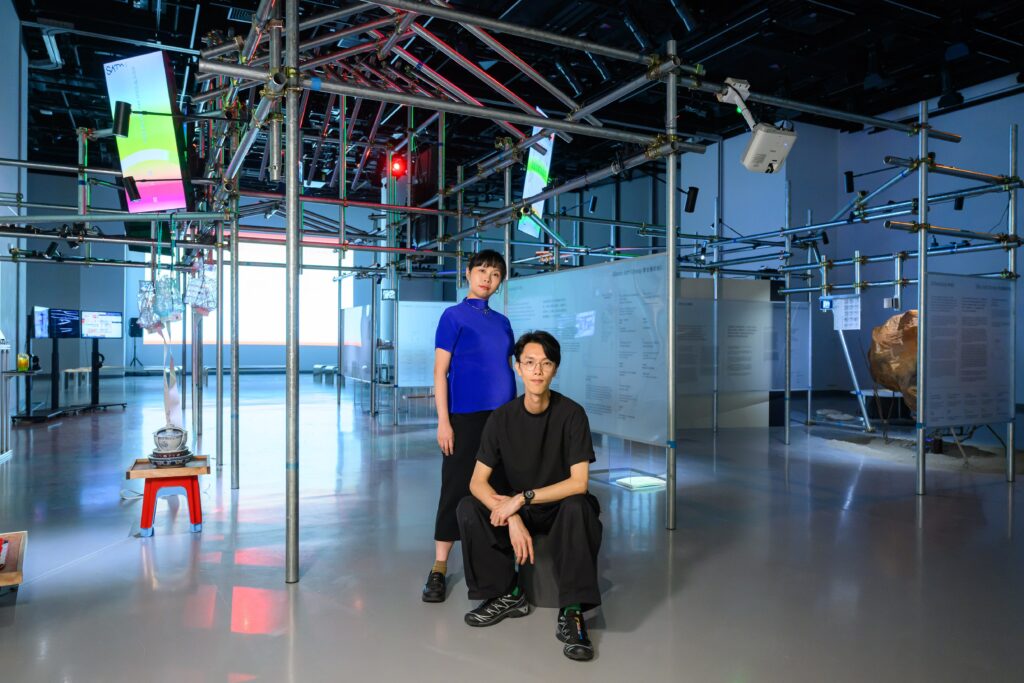
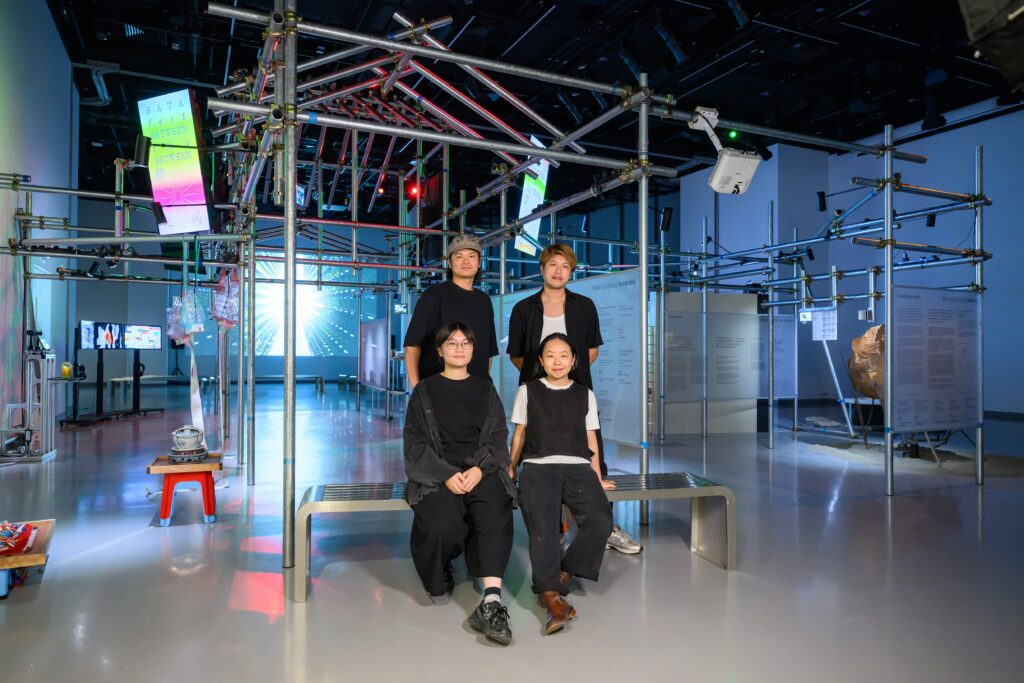
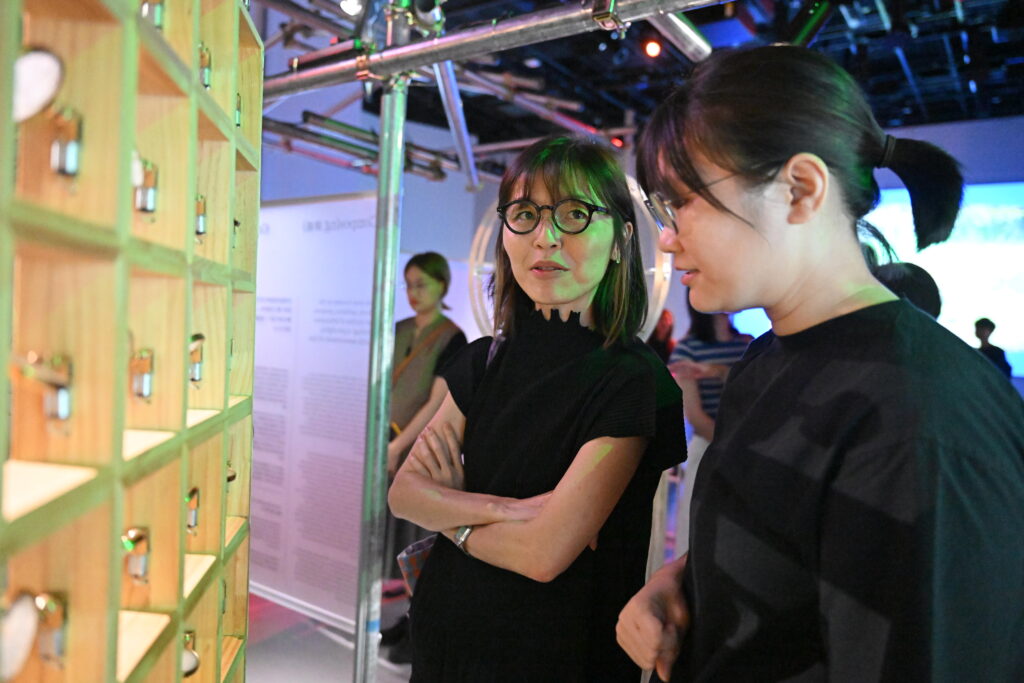
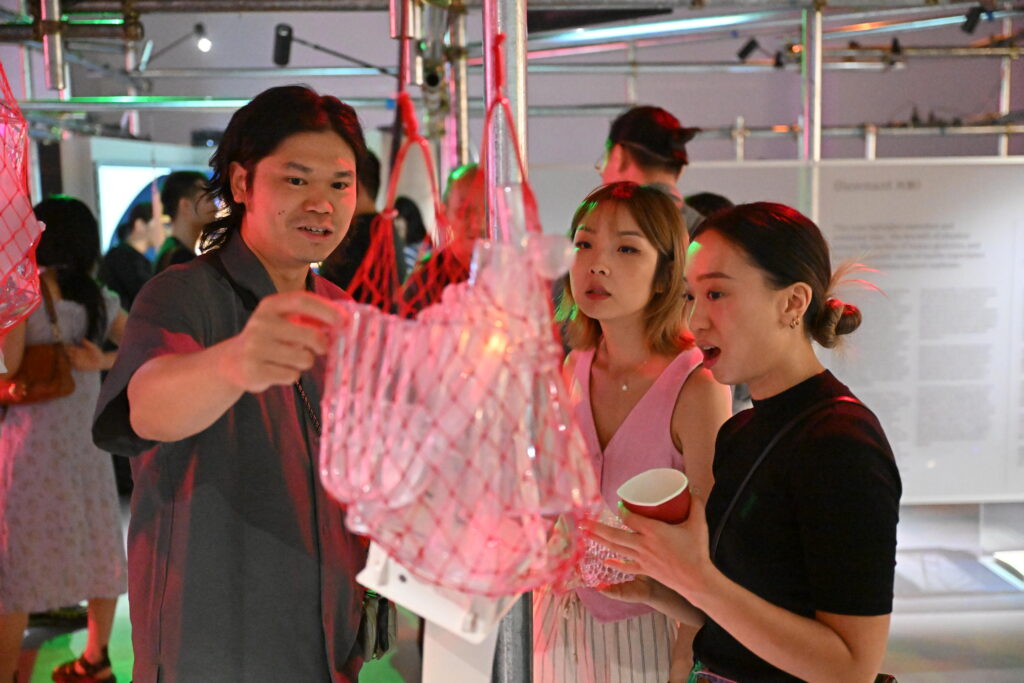
From traditional seal carving, the fermentation of tea leaves, to the connection between neighbourhood and the grocery store, and the human–machine collaboration in letterpress printing— these four local small businesses operate without advanced systems, yet preserve a different sense of time. In this fast-paced city, can we take a moment to experience “time” that cannot be fully measured?
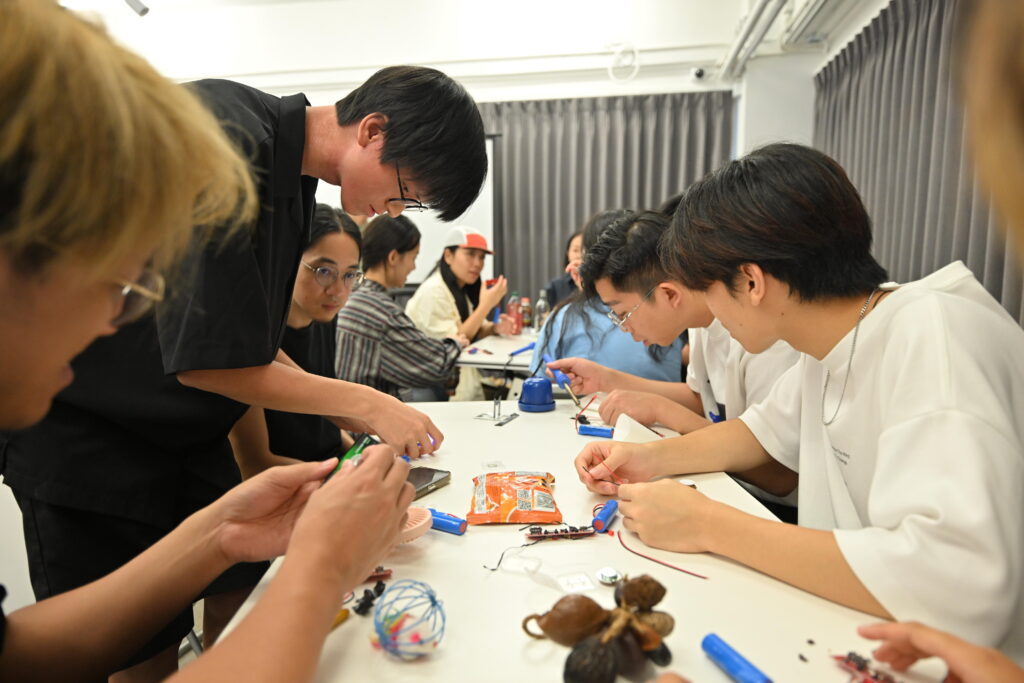
Curated by Shan Wong, SATA Fest: “Between the Between” brings together artist-mentors Fung Wing Lam, Rogerger Ng, Sing Jantzen Tse, Liv Tsim, and 20 artist-mentees, to conduct a year-long research and development. Through sonic art, graphic art, electronic art and bio art, they reinterpret and respond to these small businesses’ operation models, opening up a contemporary dialogue on time.
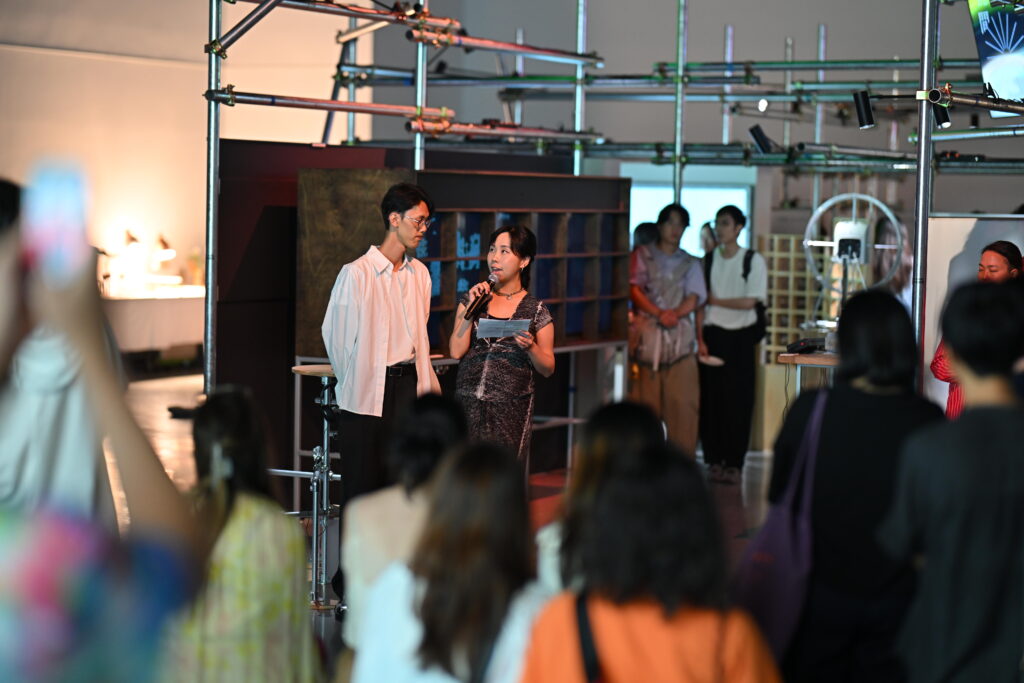
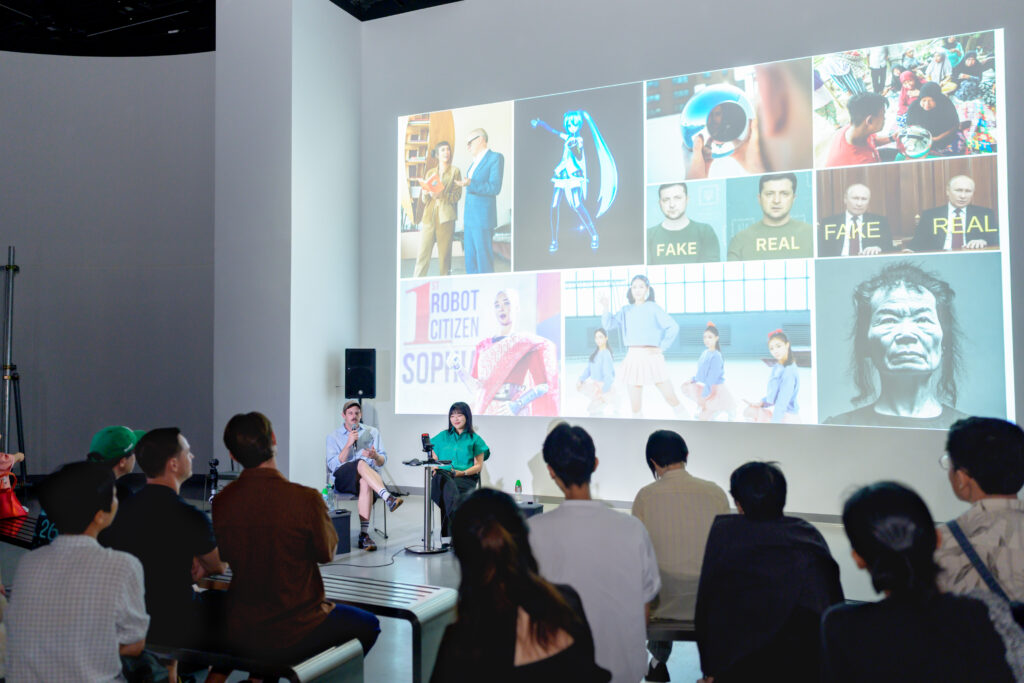
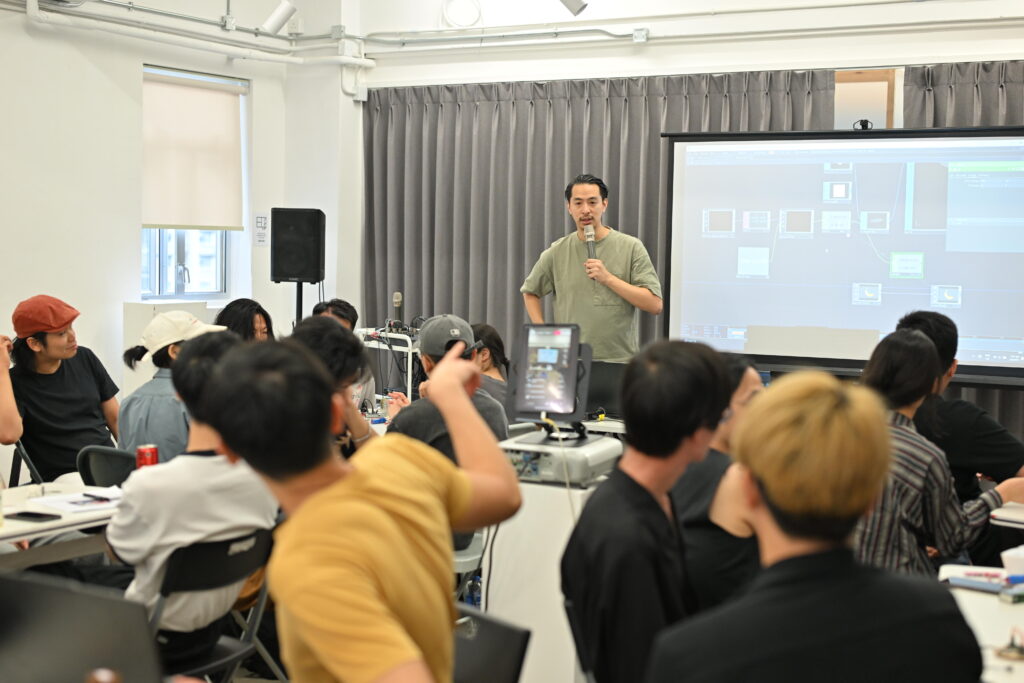
Beyond the exhibition, SATA Fest also invites overseas artists to HK for talks and artwork presentations, offering new perspectives on the relationship between art, technology, and the city.
在藝術與城市之間,時間在縫隙中延續與流動。
從手工印章的雕刻工序、茶葉的發酵過程,到雜貨店的人情往來與印務店的人機協作,這四間本地商號沒有智能化或自動化的營運模式,卻保存著另一種時間感。在這個講求效率的城市裡,我們仍能短暫停留,感受那種無法被完全測量的生命經驗嗎?
SATA Fest:「間之間」由黃詠珊策劃,邀請藝術家馮穎琳、伍啓豪、謝振聲、詹昫嵐擔任導師,並聯同20位不同領域的藝術家深入四家傳統商號,展開為期一年的研究與創作。藝術家透過聲音藝術、平面藝術、電子藝術與生物藝術,重新詮釋並回應這些店舖的運作方式與生活節奏,開展一場關於「時間」的當代對話。
除了展覽,SATA Fest 亦特邀多位海外藝術家來港交流及展出作品,讓公眾從不同角度理解藝術、科技與城市之間的關係。


Society Art Technology Asia (SATA) is an artist-led platform exploring how art, technology, and society shape one another across Asia. Founded in 2025.
Asian societies are not interchangeable, but many share post-colonial histories that produce similar pressures: extractive technology transfer, platform capitalism, and a discourse that still casts the region as adopter and imitator rather than as a site of original thought. They also hold rich cultural, philosophical, and spiritual traditions that offer ways of understanding the relationship between people, tools, and the world that dominant frameworks tend to overlook.
Through summer schools, mentorships, talks, workshops, and exhibitions, SATA creates spaces for practitioners to think together and develop work on their own terms.
In computer engineering, SATA is the interface between a motherboard and its storage. Our aim is to be a connective infrastructure for moving knowledge across borders.
Society Art Technology Asia ( SATA ) 是由藝術家主導的平台,探索藝術、科技與社會如何在亞洲互相塑造。成立於2025年。
亞洲社會各有不同,但不少經歷後殖民歷史帶來的相似壓力:掠奪式技術轉移、平台資本主義,以及一套至今仍將亞洲定位為接收者與模仿者、而非原創思想發源地的論述。並且,亞洲社會擁有豐富的文化、哲學與精神傳統,提供了理解人、工具與世界之間關係的途徑,而這些途徑往往被主流框架所忽略。
透過暑期學校、導師計劃、講座、工作坊及展覽,SATA 為實踐者創造共同思考、按自身條件發展創作的空间。
在電腦工程中,SATA 是連接主機板與儲存裝置的介面。我們旨在成為跨越邊界、傳遞知識的基礎設施。

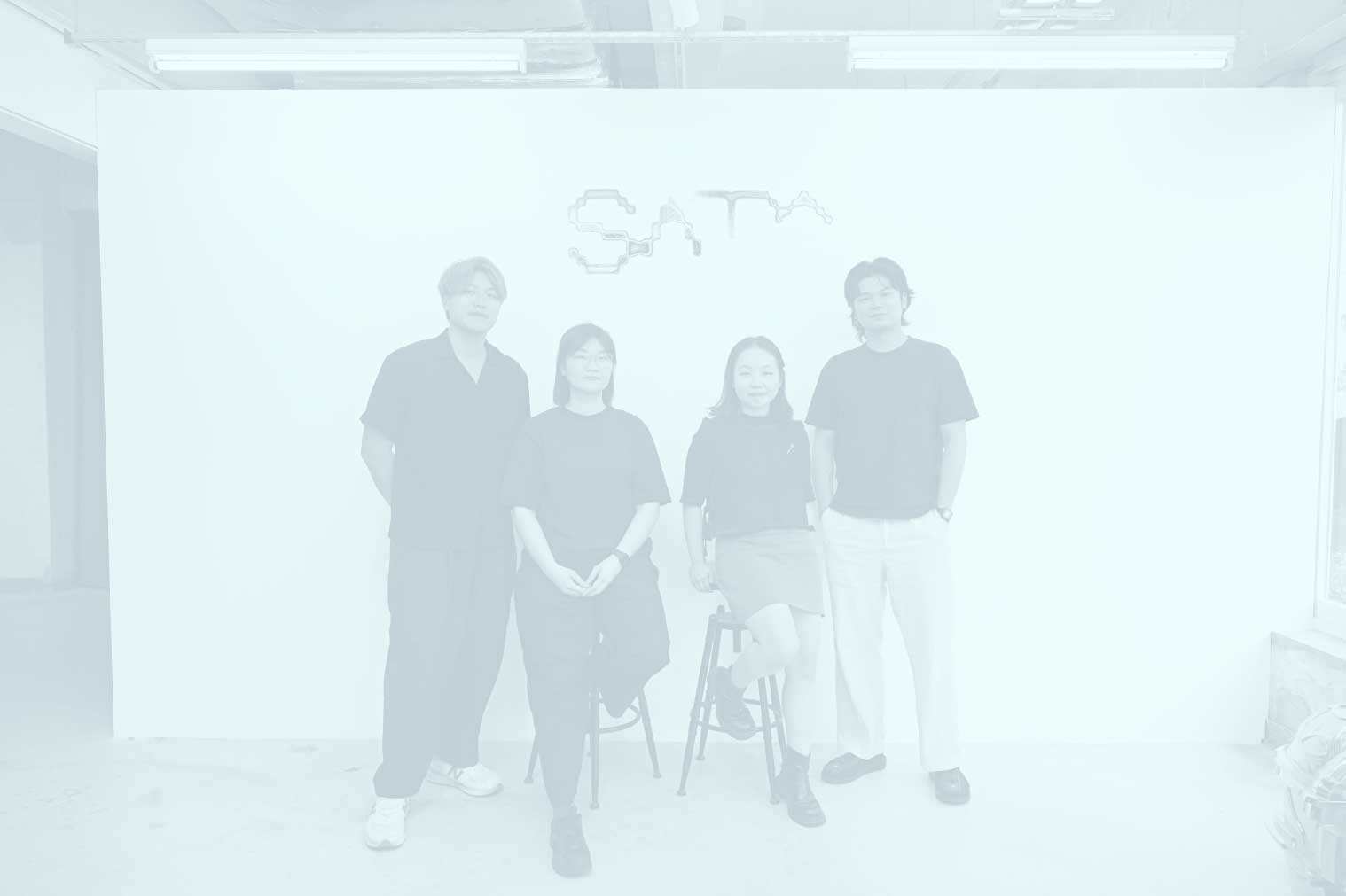
Co-Founders & Co-Directors 共同創辦人暨總監
Shan WONG 黃詠珊
Kachi CHAN 陳家智
Curator 策展
Shan WONG 黃詠珊
Exhibition Manager 展覽經理
Alice WONG 黃嘉淇
Project Manager 計劃經理
Annisa AU 區芷欣
Administrative Manager 行政經理
TANG Yiu Ming 鄧耀銘
Studio Manager 工作室經理
MOK Wing To 莫穎濤
Marketing Manager 市場經理
Thalia WONG 王德榆
Editor 編輯
Mary LEE 李挽靈
Graphics Design 平面設計
Thingsidid
Website Design & Development 網站設計與製作
Nekogato
Exhibition Design & Fabrication 展覽設計與工程
NNNNNNN
Video Production 影像拍攝
FUNG Yiu Man 馮耀民
LAU Chun Yuen 劉晉源
LEUNG Ho Sing 梁皓昇
Project Assistant 製作助理
TSUI Sin Yuk 徐善鈺
Editing Assistance 文稿校對
relaxer Xian 閒閒
Screening Curatorial Support 放映策展支援
Clara CHE Wei Peh 白其薇
Participating Traditional Businesses 參與商號
Chu Wing Kee 朱榮記
Kee Heung Chun Tea Company 奇香村茶行
Kwong Wah Printing Company 光華印務公司
Pun Han Sin Koon 半間山館
Artist-Mentors 藝術家導師
FUNG Wing Lam 馮穎琳
Rogerger NG 伍啟豪
Sing Jantzen TSE 謝振聲
Liv TSIM 詹昫嵐
Participating Artists 參展藝術家
CAO Shu 曹澍
Foreseen Agency
Priyageetha DIA
Saroot SUPASUTHIVECH
Tromarama
Unmake Lab
WU Ziyang 武子楊
Yaloo
Guest Speakers 客席講者
Kachi CHAN 陳家智
Sunny CHEUNG 張俊傑
Sewon CHUNG 鄭世媛
Louiza HO 何苑瑜
Master NG Kam Chun 吳錦泉師傅
WU Ziyang 武子楊
YIP Kai Chun 葉啟俊
Iris LONG 龍星如
Duncan BASS
Özge ERSOY
Foreseen Agency
Nuntinee TANSRISAKUL
Olga TIMURGALIEVA
Tromarama
Unmake Lab
Yaloo
Artist-Mentees 藝術家學員
Ceci Lavina 余思行
Frank CHAN 陳意峰
Yiu CHENG 鄭耀林
Chet 龐百勤
CHEUNG Ching Yu Annisa 張靜瑜
Sams CHEUNG 張琛
Vincent CHEUNG 張志麟
CHUNG Wing Shan 鍾詠珊
hirsk 農尚青
Gabriella LAI 黎家欣
Aaron LAM Kwok Yam 林國鑫
Issac LI 李競暉
Melody Qingmei LI 李清美
LIAO Jiaming 廖家明
PANG Chun Fu William 彭俊富
TANG Tsz Wai Cheri 鄧芷蔚
TSANG Ching Man Elyse 曾靖敏
Winsome 黃慧心
WU Ho Mui 胡昊梅
Tian ZHANG 張天
The group researching the seal shop Pun Han Sin Koon, mentored by Fung Wing Lam, foregrounds collective process and shared experience as a form of communal inheritance. At the grocery shop Chu Wing Kee, mentor Sing Jantzen Tse guides participants in weaving seemingly individual works through intangible threads such as sound, echoing the hidden resonances that bind a neighbourhood. Led by Liv Tsim, Kee Heung Chun Tea Company adopts a ‘slow methodology’, observing alongside living fermentation—using kombucha as a metaphor—to reflect the uncontrollable and adaptive evolution of a shop’s layout and survival strategies: organic, interrupted, yet never fully mastered. Finally, the group mentored by Roger Ng at the print shop Kwong Wah Printing investigates human–machine operational errors, exploring the poetic qualities of human mistakes.
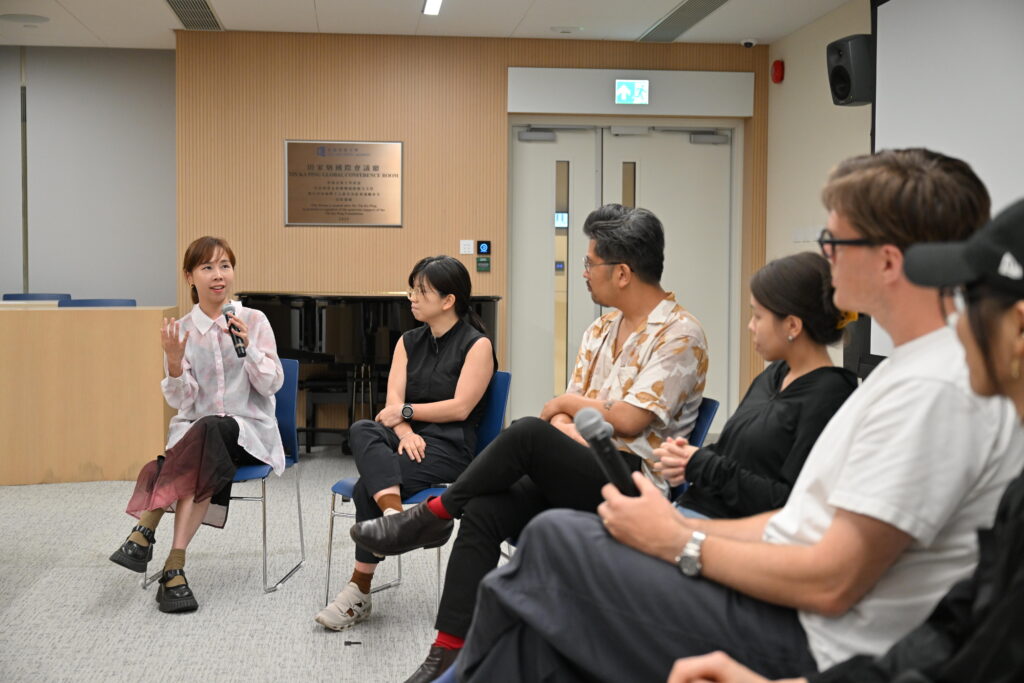
In an era where digital platforms shape cultural production and engagement, institutions are rethinking their roles beyond traditional exhibitions. This conversation explores digital community building at the intersection of art and technology, examining new infrastructures, augmented architecture, virtual worlds, and innovative models of participation and space-making.
在數位平台主導文化生產與互動的時代,機構正重新思考自身角色。此對談探討藝術與科技交匯下的數位社群構築,檢視新型基礎設施、擴增建築、虛擬世界,以及參與和空間創造的創新模式。
Since forming in 2006 in Bandung, Tromarama has produced video, installation, and algorithmic works exploring how digital technologies reshape perception, blur the boundaries between labour and leisure, and turn everyday actions into data and economic value. Moderated by Özge ERSOY, this conversation examines agency, algorithmic control, and the possibilities for more equitable digital futures in the Global South.
自2006年在萬隆成立以來,Tromarama 以影像、裝置與演算法作品,探索數位科技如何重塑感知、模糊勞動與休閒界線,並將日常行為轉化為數據與經濟價值。本場對談由 Özge ERSOY 主持,討論能動性、演算法控制,以及全球南方更平等數位未來的可能性。
Unmake Lab and Foreseen Agency will discuss how their respective artistic practices are influenced by socio-economic structures in South Korea and Hong Kong. The conversation will focus on the similarities and differences in their methodologies, how their work decentralises knowledge production, and how these processes continually feed back into their artistic and curatorial endeavours.
Unmake Lab 與 Foreseen Agency 將分享南韓與香港社會經濟結構如何影響各自的藝術實踐。對談將聚焦於雙方方法學上的異同、他們如何在創作中去中心化知識生產,並持續回饋至藝術與策展工作。
The talk explores the poetic tension between fragile human memory and digital immortality. Through ethnographic research into her family history, artist Yaloo transforms intimate scans of her grandmother into speculative characters—most notably the 86-year-old K-pop idol pirate Shininho. Together, they examine how motion capture, 3D animation, and immersive media reanimate ancestral stories into hybrid futures.
本對談探討脆弱人類記憶與數位永生的詩意張力。藝術家 Yaloo 透過家族史人類學研究,將祖母的親密掃描轉化為推測性角色——特別是86歲的K-pop偶像海盜「Shininho」。他們共同檢視動態捕捉、3D動畫與沉浸式媒體如何將祖先故事重塑為混種未來。
This talk explores world-building in games through cultural exchanges across Asia, the Arab world, and Africa. Artists Wu Ziyang and Kachi Chan present their research-driven projects on technological infrastructure in Africa and digital labour in the UAE respectively, examining how artists construct immersive virtual worlds to reflect local realities, collective memory, and speculative futures.
本對談透過亞洲、阿拉伯世界與非洲的文化交流,探索遊戲中的世界構築。兩位藝術家分別呈現非洲科技基礎設施與阿拉伯聯合大公國數位勞動的研究計劃,討論藝術家如何建構沉浸式虛擬世界,以反映在地現實、集體記憶與推測未來。
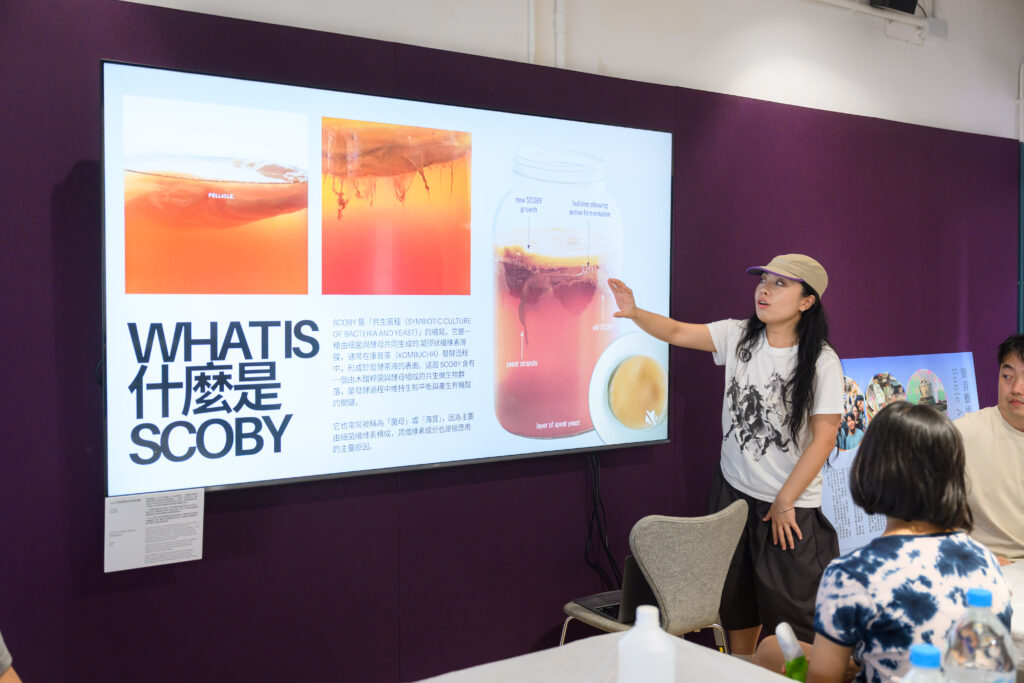
The talk explores tea as a living nexus of ecological, political, and cultural entanglements. Through the lens of Kee Heung Chun Tea Company and kombucha SCOBY fermentation, artists examine vibrant materiality, multispecies kinship, and sensory memory. The five works trace tea’s cycles of transformation, inviting us to ‘stay with the trouble’ in more-than-human worlds.
本對談以茶作為生態、政治與文化的交織生命紐帶,透過奇香村茶行與康普茶SCOBY發酵,探討物質活力、多物種親緣與感官記憶。五件作品追蹤茶的轉化循環,邀請觀眾在「多於人類」的世界中「與麻煩共存」。
In an era dominated by digital marketing and algorithms, this talk examines the exhibition on Chu Wing Kee through the lens of human touch and perception. The Sonic Art Group respond to the shop’s manual rhythms, material warmth, and ethnographic depth via sound, ceramics, microscopic gestures, interactive interfaces, and 3D reconstructions—highlighting the irreplaceable value of physical labour, memory, and human resilience against algorithmic efficiency.
*Conducted in Cantonese
在數位行銷與演算法主導的時代,本對談透過探討以朱榮記為主題的展區,探討人類觸感與感知。藝術家以聲音、陶瓷、微觀互動、介面及3D重構,回應店舖的手工節奏、物質溫度與人類學深度,強調身體勞動、記憶與人類韌性對抗演算法效率的不可替代價值。
*以粵語進行
The Graphic Art Group at Kwong Wah Printing Company explores the humanistic dimensions of letterpress printing in today’s efficiency-driven digital age. This talk reflects on the role of traditional crafts in contemporary society and their potential as forms of artistic expression. The artists will share their insights and creative processes, while Nuntinee TANSRISAKUL engages with the group through her own work and teaching experience.
光華印務公司的平面藝術組探討當代高效數位時代中活版印刷的人文面向。本對談反思傳統工藝在現代社會的角色及其作為藝術表達的潛力,藝術家將分享創作過程,主持亦結合自身創作與教學經驗進行對話。
The Electronic Art Group presents Echoes of Void, developed at Pun Han Sin Koon Seal Shop. The talk examines how process itself becomes a method when attending to overlooked fragments and negative space in everyday life—seal-carving dust, radio sounds, and the intimate neighbourhood connections within a tiny 3 x 6 feet workspace. They will discuss how electronic and new media practices can transform these subtle, often invisible traces into meaningful reflections on absence, presence, memory, and the quiet rhythms of local craftsmanship and community. We are also deeply honoured to have Master Ng Kam Chun conduct a live demonstration of seal-carving.
*Conducted in Cantonese
電子藝術組於半閒山館印章店發展的《Echoes of Void》,探討專注日常被忽略的碎片與負空間時,過程本身如何成為方法。他們將討論如何透過電子與新媒體實踐,把印章粉屑、無線電聲音及微小工作室的鄰里連結,轉化為對缺席、在場、記憶與手工藝節奏的反思。吳錦泉師傅將現場示範刻印。
*以粵語進行
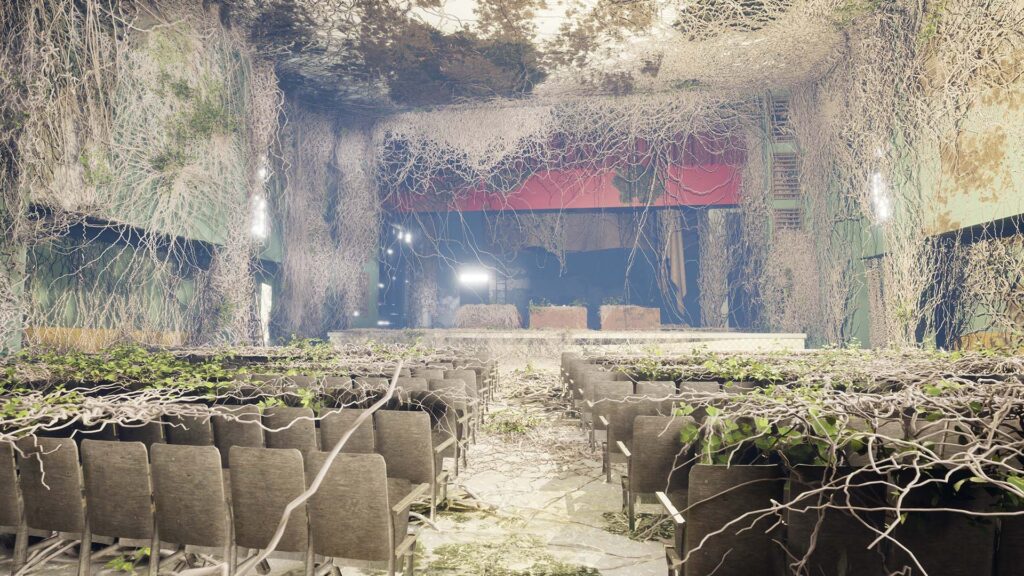
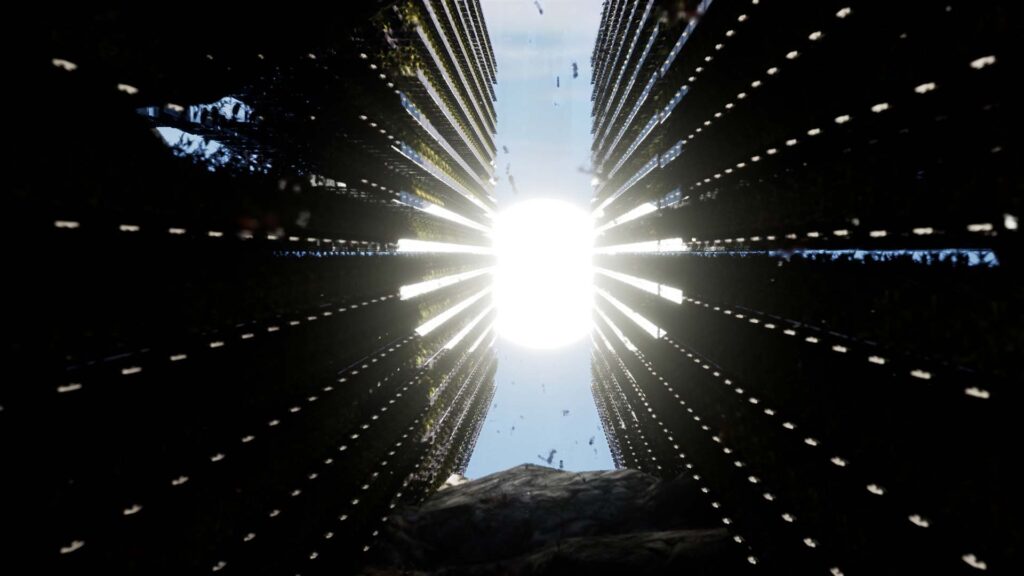
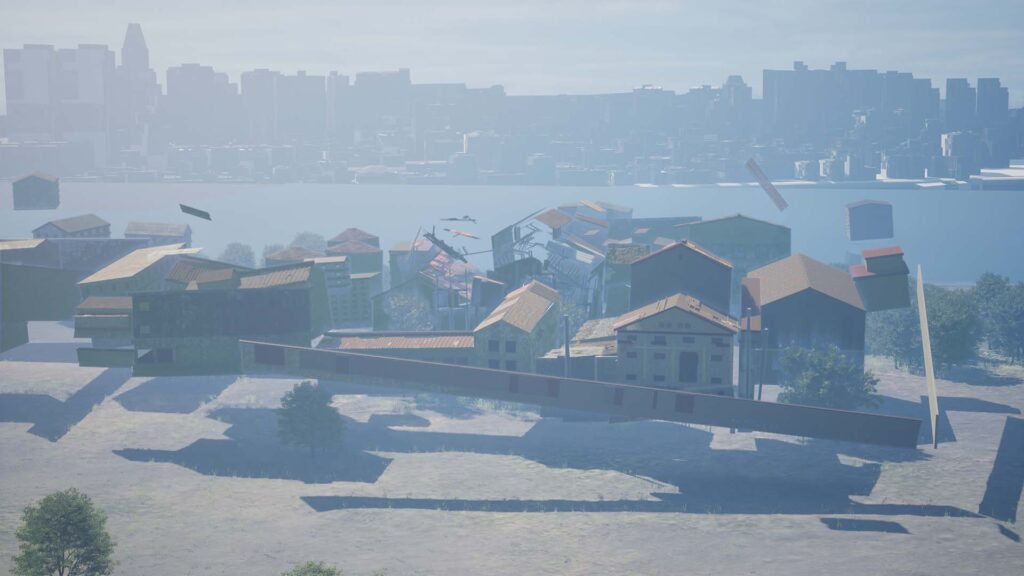
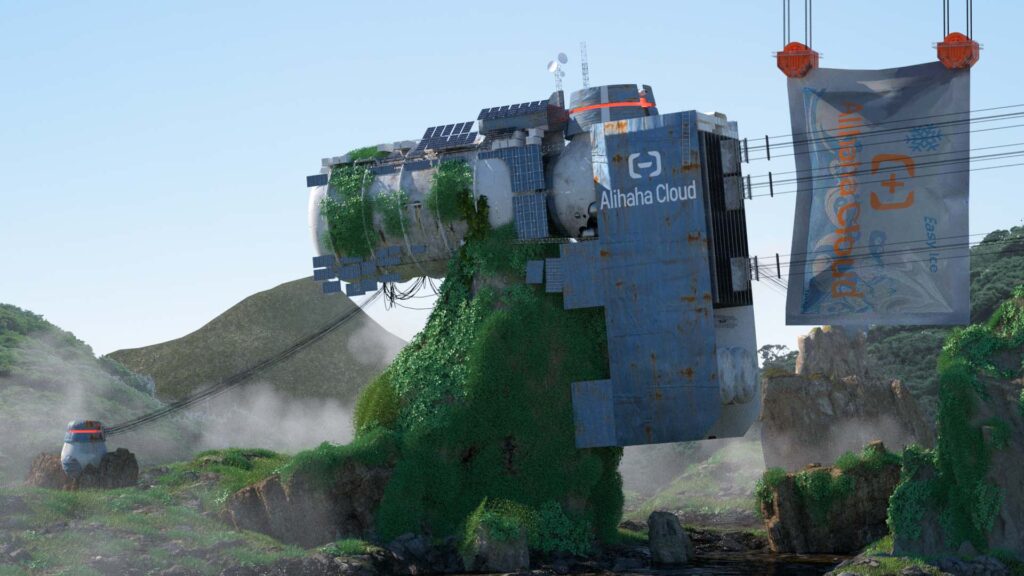
Set in an abandoned sugar factory in Guangdong, Phantom Sugar follows an AI-controlled drone tending sugarcane in a vertical farm in a post-human world. Combining drone footage with game-engine rendering and weaving together science fiction, technological critique, and local memory, the work narrates the factory’s industrial past and speculative futures.
以廣東一處廢棄的製糖廠為背景,作品描繪在後人類世界中,一架由人工智慧操控的無人機於垂直農場照料甘蔗的景象。本作結合無人機拍攝畫面與遊戲引擎渲染技術,交織科幻、科技批判與在地記憶,敘述了這座工廠的工業過往與充滿想像的未來。
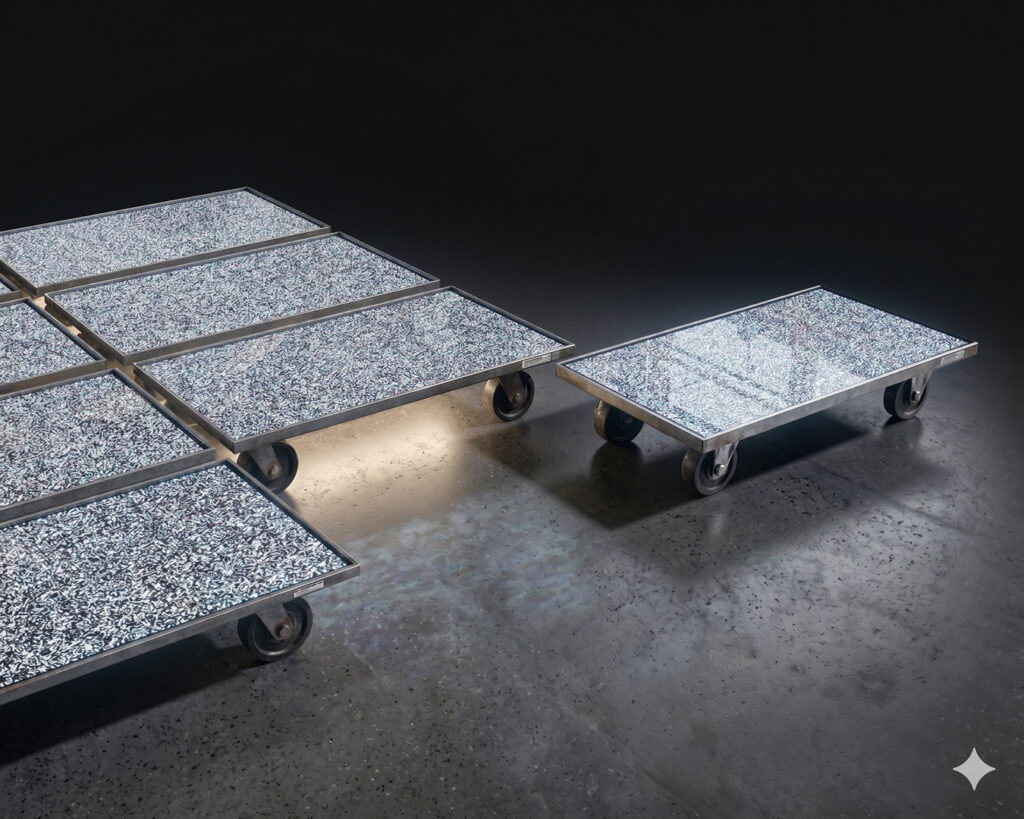
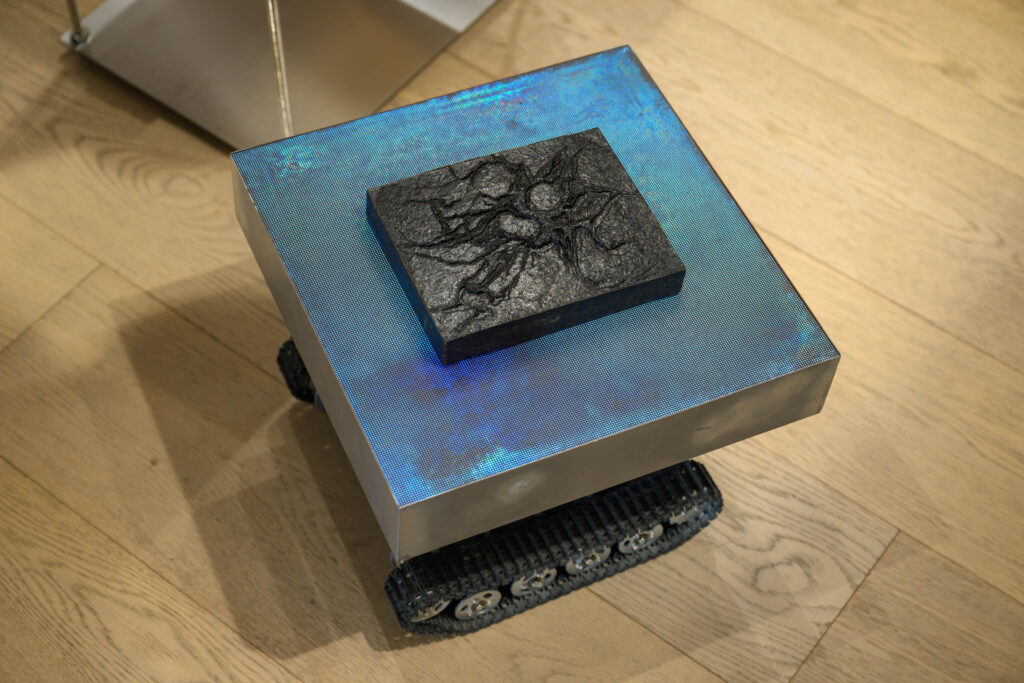
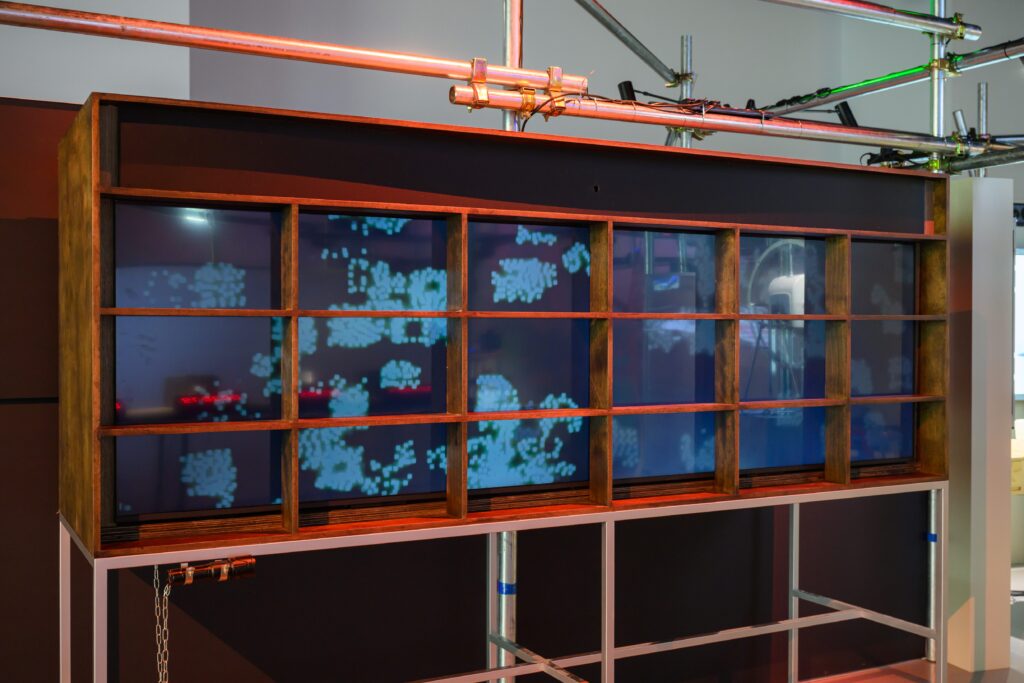
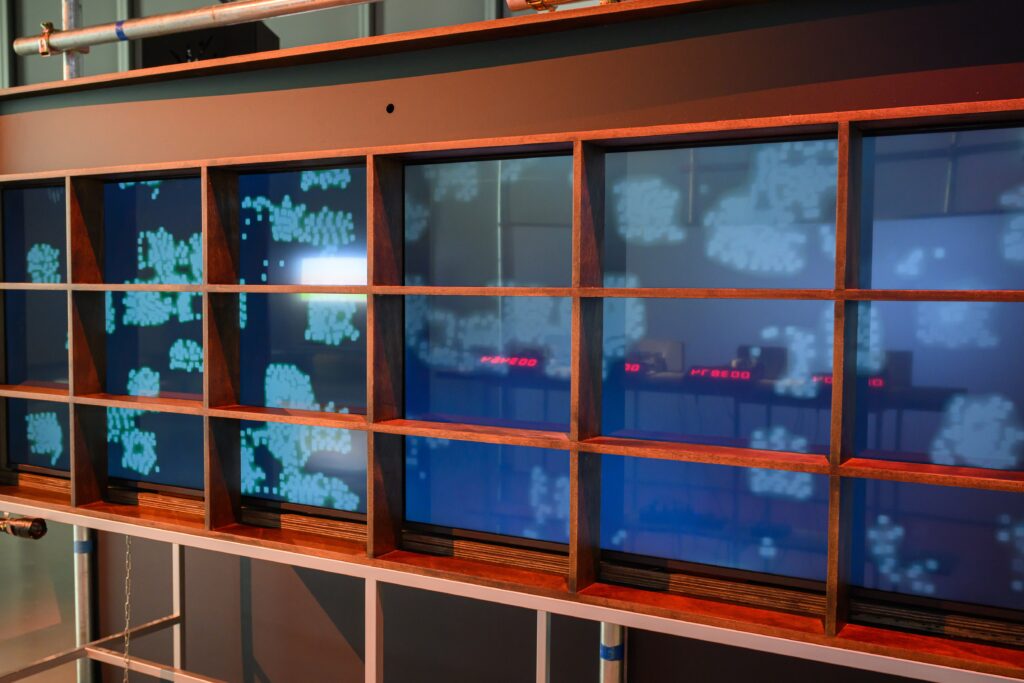
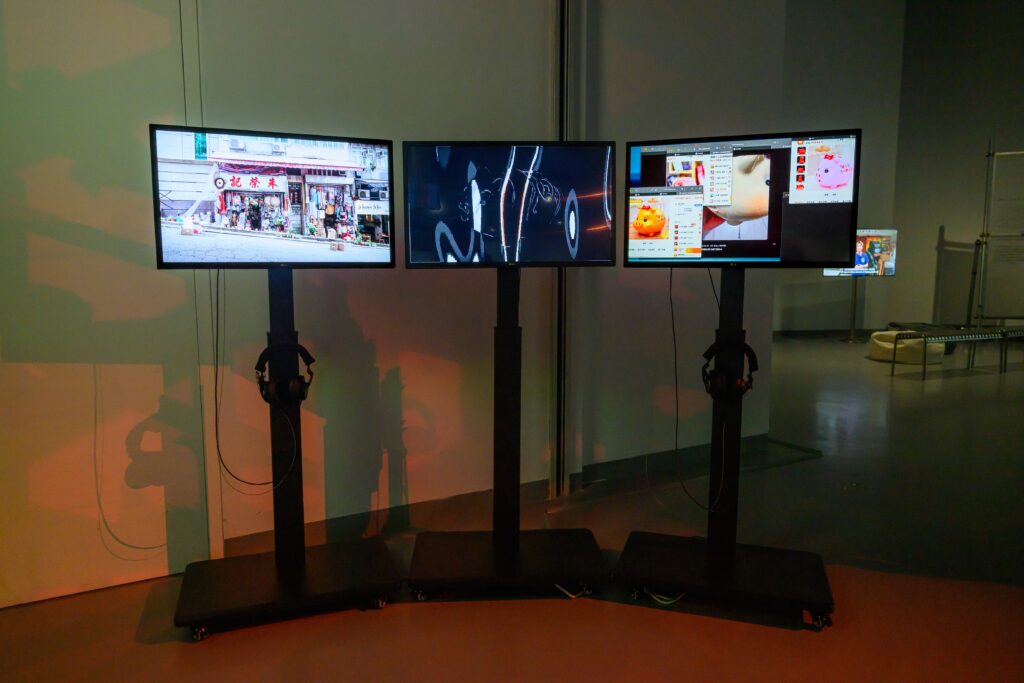
The flatbed trolley always seeks the shortest path between two points; the cost is sweat, memory, and the body’s wear. When the floor is smooth it seems to glide; workers learn instinctively to find such surfaces and avoid uneven ground.
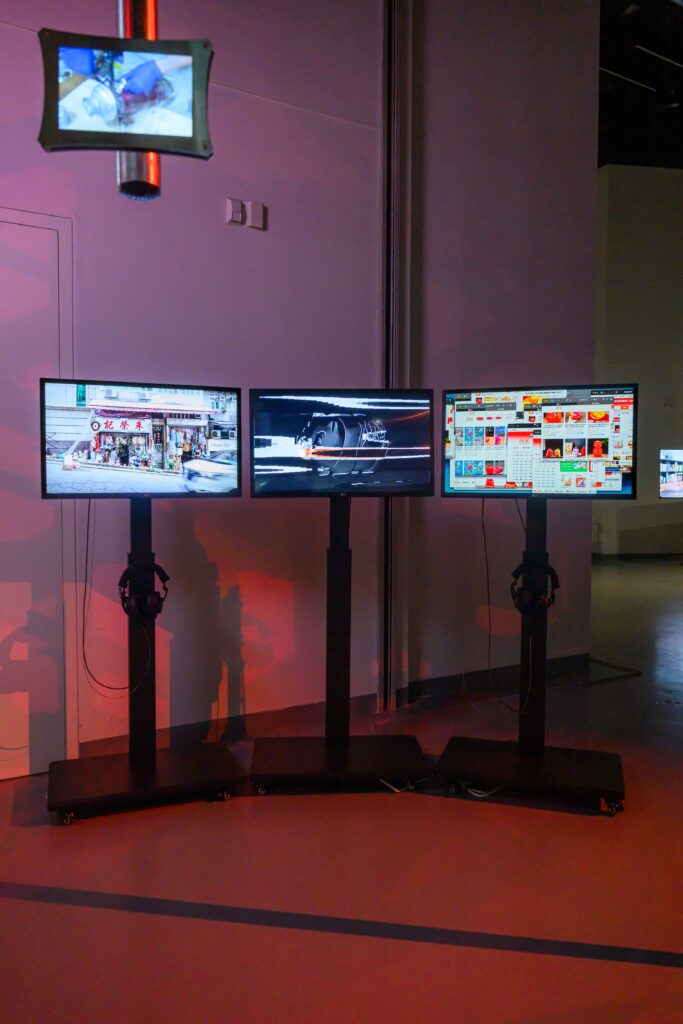
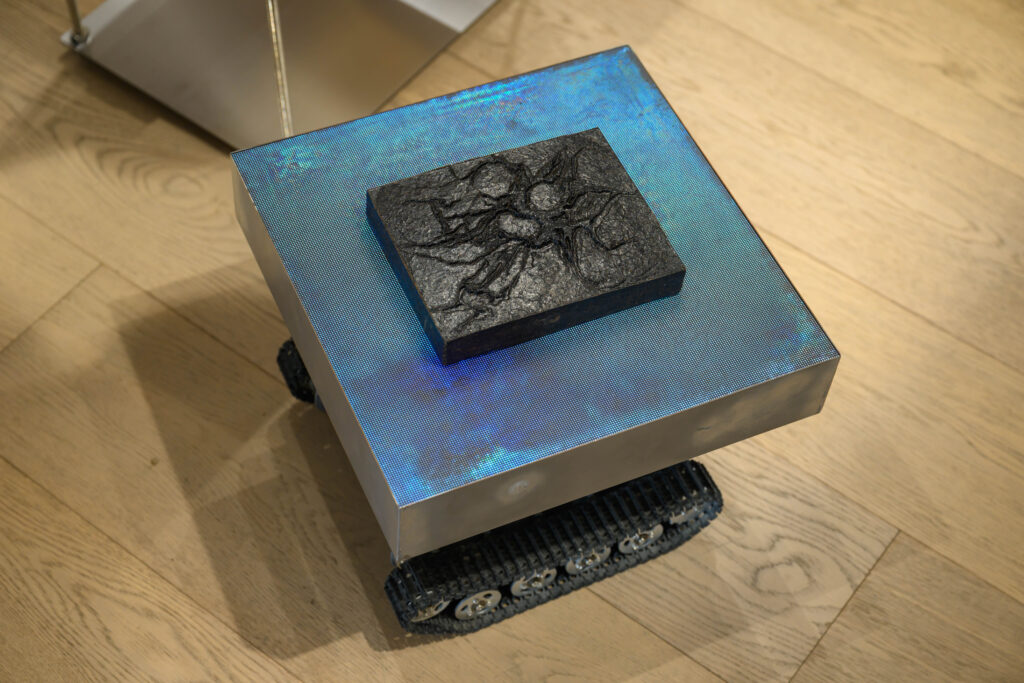
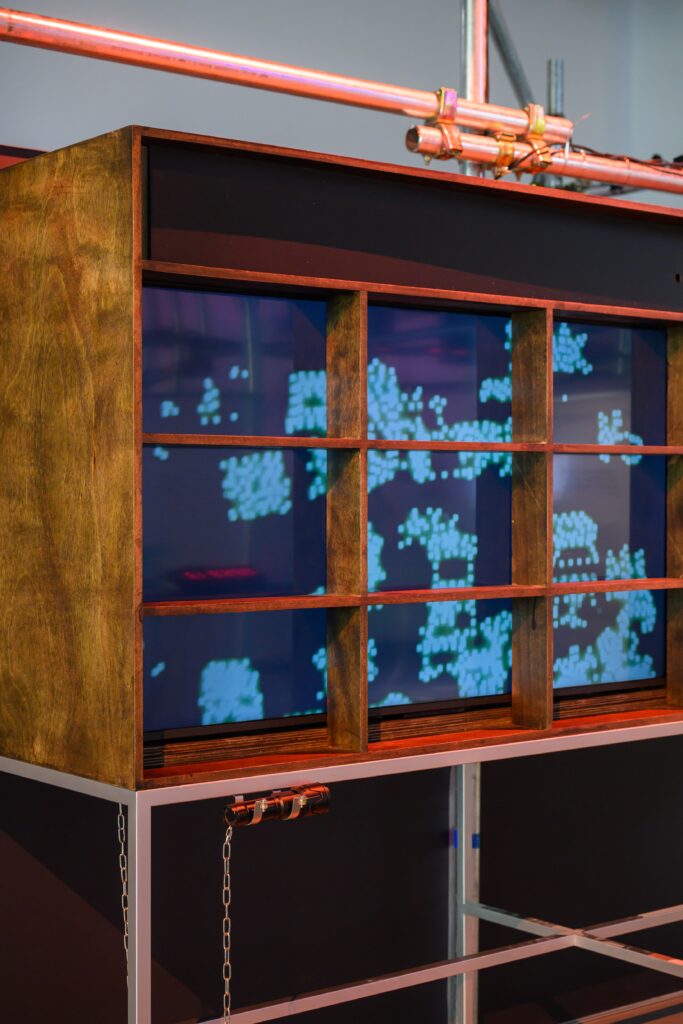
Sixteen trolleys occupy the exhibition space. Fifteen stand still. Their screens show reinforcement-learning-trained digital agents gliding frictionlessly through 3D reconstructions of real, vacant shops — moving at zero cost, optimising routes toward goods that no longer exist. Entirely free movement, entirely without meaning. The sixteenth trolley is motorised, and actually moves. It pushes forward, hits an obstacle, retreats, pushes forward again — a mechanical body trapped in an endless loop, searching for an exit that was never there. Real effort. Real friction. Real futility.
Cargo that cannot arrive. Workers who cannot leave. Weightless digital flow and laborious physical effort alike collapse into different expressions of staying still — rehearsing immobility at two speeds within the same urban grid.
板車總是選擇兩點之間最短的路徑,代價是汗水、記憶與身體的消耗。地板平滑時它看似輕盈滑行;工人憑本能尋找這樣的路徑,同時學會繞開凹凸的地面。
十六輛板車佔據展場。十五輛靜止不動,屏幕中經強化學習訓練的數位代理人正無摩擦地穿越真實空置店鋪的三維重建環境——以零成本移動,優化路徑以抵達早已不存在的貨物。移動極度自由,卻毫無意義。第十六輛是電動的,也是唯一真實運動的。它不斷前行,撞上障礙後退,再度前行——一具機械身體困陷於無盡迴圈,尋找從未存在的出口。真實的努力,真實的摩擦,真實的無力。
抵達不了的貨運。離不開的勞動者。無重量的數位流動與費力的物理勞動,最終都化為「停留」的不同樣態——在同一座城市的網格中,以兩種速度,反覆演練著不動性。
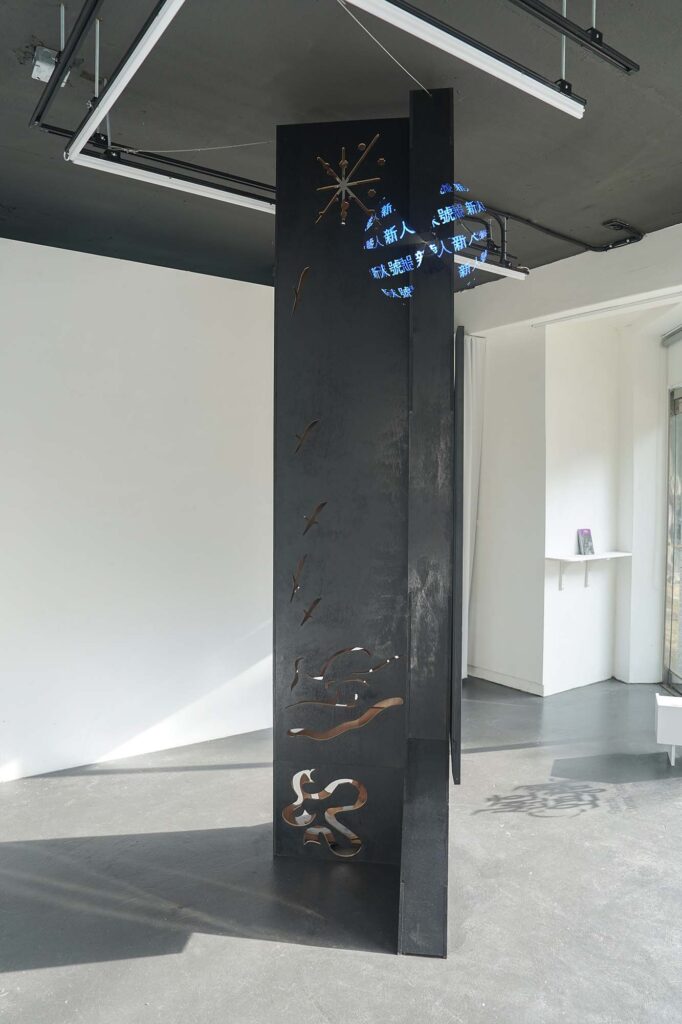
Shininho Opening Number is a pre-production workshop and experimental installation developed by Yaloo and her collaborators in summer 2024, marking the first step in embarking on the larger journey of Project Shininho. Combining video, cinematic soundscape, sculpture, text, the work introduces Shin In-Ho—an 86-year-old grandmother reimagined as a K-pop idol and pirate ship captain navigating a speculative Pacific Rim mythology of aging, data, memory, and power.
《Shininho Opening Number》是由Yaloo與其合作者於2024年夏季共同發展的前期製作工作坊及實驗性裝置,標誌著「Shininho計劃」這段更宏大旅程的第一步。作品融合錄像、電影感音景、雕塑與文本,引介Shin In-Ho——一位八十六歲的祖母,被重新想像為K-pop偶像與海盜船長,在一個關於乎老齡、數據、記憶與權力的思辨環太平洋神話中航行。
Artist 藝術家: Yaloo
Video 錄像: Yaloo
Text 文本: Seulbi Lee
Visual Identity 視覺識別: Handi Kim
Sound 音效: Yatsuby
Installation 裝置: Almond Technology
3D scan 3D掃描: Replica 3D
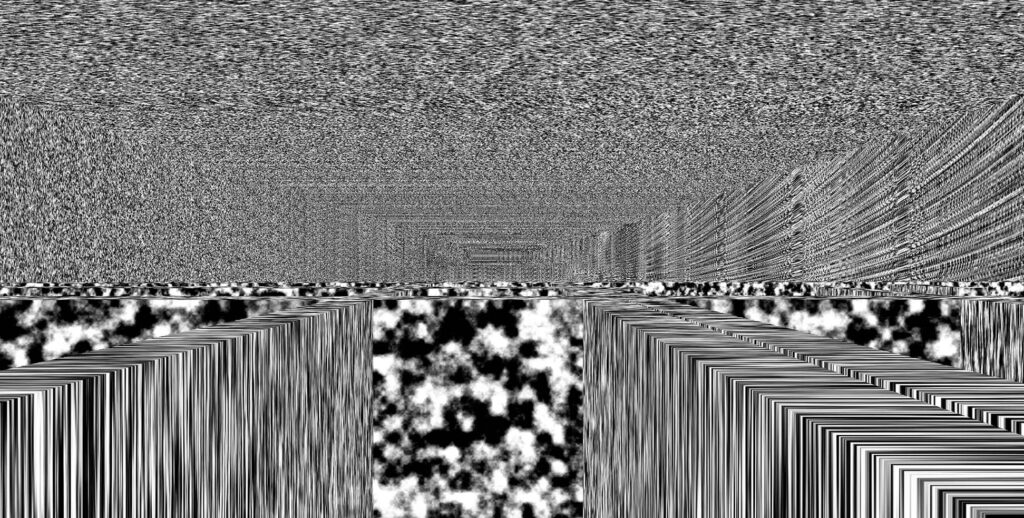
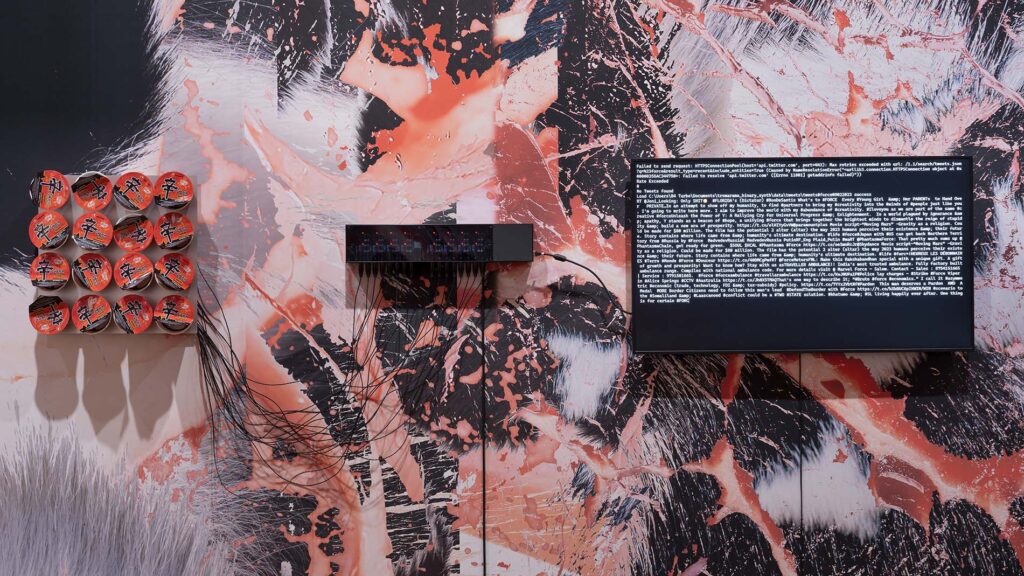
We consider eating Korean instant noodle cups as one of our leisure activities. We often enjoy them while hanging out with friends or watching movies at home. Through this work, we contrast this simple moment of pleasure with a sound composition inspired by muscle cramps caused by intense physical activity. Each noodle cup contains a speaker connected to custom software that collects tweets with the hashtag #force. The TV monitor on the right side of the installation displays the collected tweets as they are continuously translated into binary code, which activates the speakers inside the cups and generates a sound composition that evokes the sensation of muscle cramps.
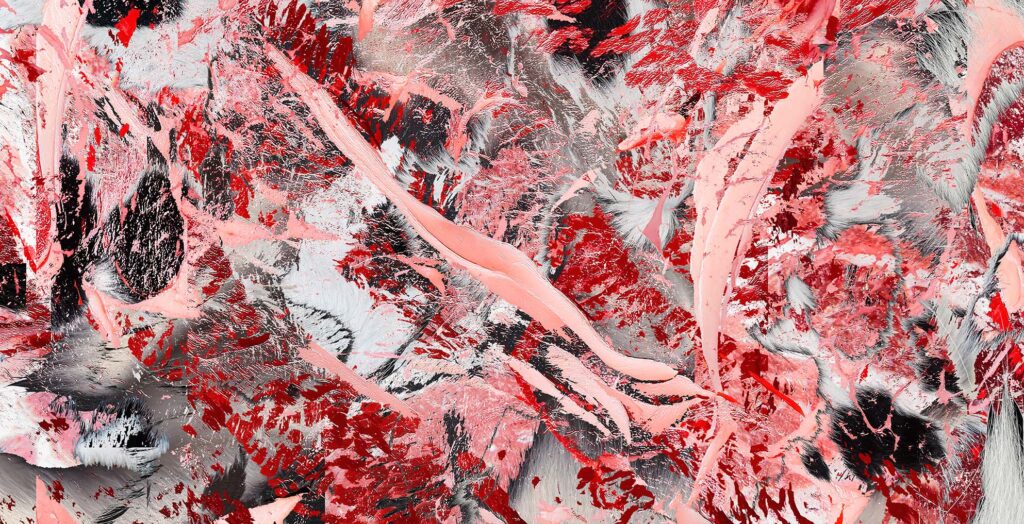
The work reflects on how new economic platforms have transformed what was once perceived as leisure into another form of labor. Surrounding the installation is wallpaper featuring overlapping images of cow skin and meat that appear broken and glitched. These visuals refer to sapi perah, an Indonesian term describing labor that is continuously exploited by employers. At the same time, the work points to the idea of labor being treated as a “cash cow” within contemporary economic systems.
我們將享用韓式杯麵視為一種休閒活動。我們常在與朋友聚會或在家看電影時品嚐杯麵。透過作品,我們將這簡單的愉悅時刻,與一首受劇烈體能活動所引發的肌肉痙攣啟發而創作的聲音作品進行對比。每個杯麵內皆裝有揚聲器,並連接至專用軟體,該軟體會收集帶有 #force 標籤的推文。裝置右側的電視螢幕會即時顯示這些推文,並將其持續轉換為二進位碼,進而觸發杯麵內揚聲器,生成一組能喚起肌肉痙攣感官體驗的聲音作品。
作品反思新興經濟平台如何將昔日被視為休閒的活動,轉變為另一種勞動形式。裝置周圍的壁紙上,牛皮與肉塊的圖像相互疊加,呈現出破碎且出現故障的視覺效果。這些視覺意象呼應了印尼語「sapi perah」一詞,該詞描述了持續遭受雇主剝削的勞動。同時,作品也指向當代經濟體系中,勞動被視為「搖錢樹」的觀念。
Courtesy of the artist, ROH, SONGEUN
All photos by Studio JAYBEE
作品由藝術家、ROH、SONGEUN 提供
圖片由 Studio JAYBEE 提供
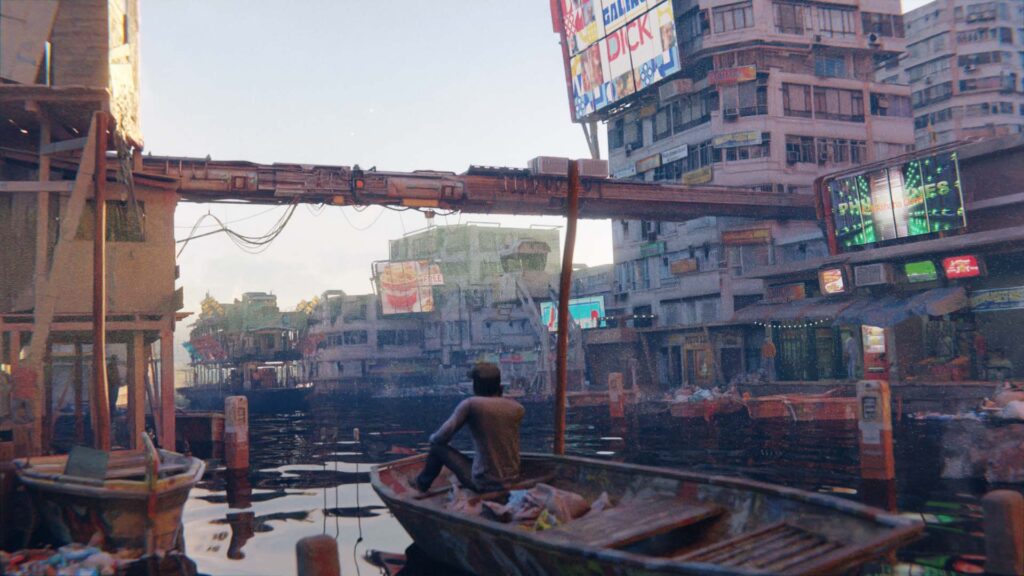
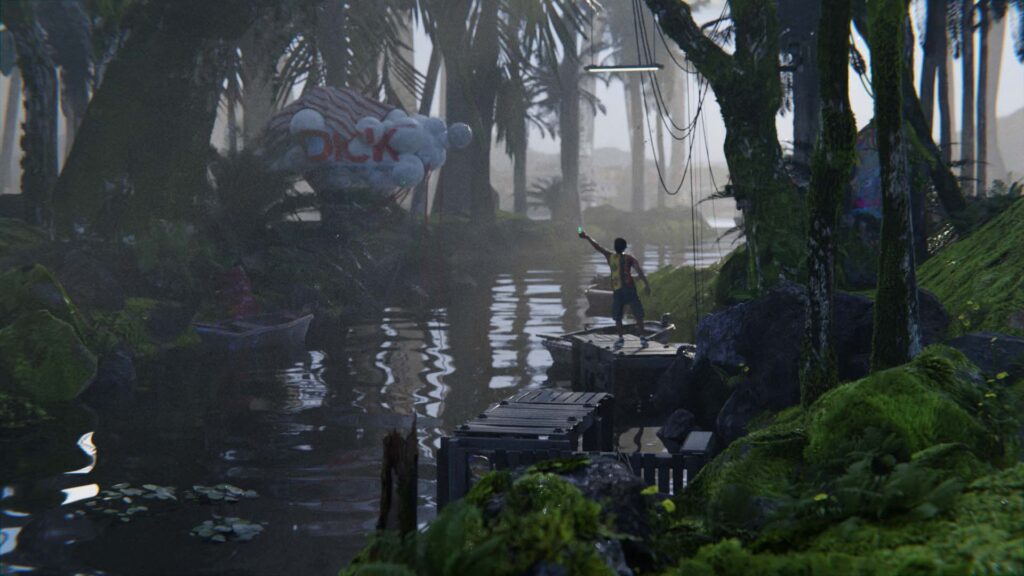
Set in a fictional 2030 Philippines, the work follows a local internet provider and blockchain company, envisioning the future digital life in developing countries. At its centre is the Pasig River in Manila, declared ecologically dead but now restored in CGI against a backdrop of digital surveillance and colonisation. Humorously absurd, the work highlights tensions between digital structures and material reality, hinting at the risks embedded in future ‘upgrades’.
Pasig River 2030 – 6 Plus is part of and based on the collaborative work ‘Future_Forecast with artist Mark Ramos.
本作以虛構的2030年菲律賓為背景,透過一家當地網路服務供應商暨區塊鏈公司的視角,描繪發展中國家未來的數位生活樣貌。故事核心聚焦於馬尼拉的帕西格河——這條曾被宣告生態死亡的河流,如今在電腦生成影像(CGI)技術的呈現下重獲新生,背景則交織著數位監控與殖民化的陰影。作品以荒誕幽默的手法,凸顯數位結構與物質現實之間的張力,並暗喻未來「升級」所潛藏的風險。
《巴石河 2030 – 6 Plus》是與藝術家 Mark Ramos 合作項目「Future_Forecast」的一部分,並以此為基礎創作而成。
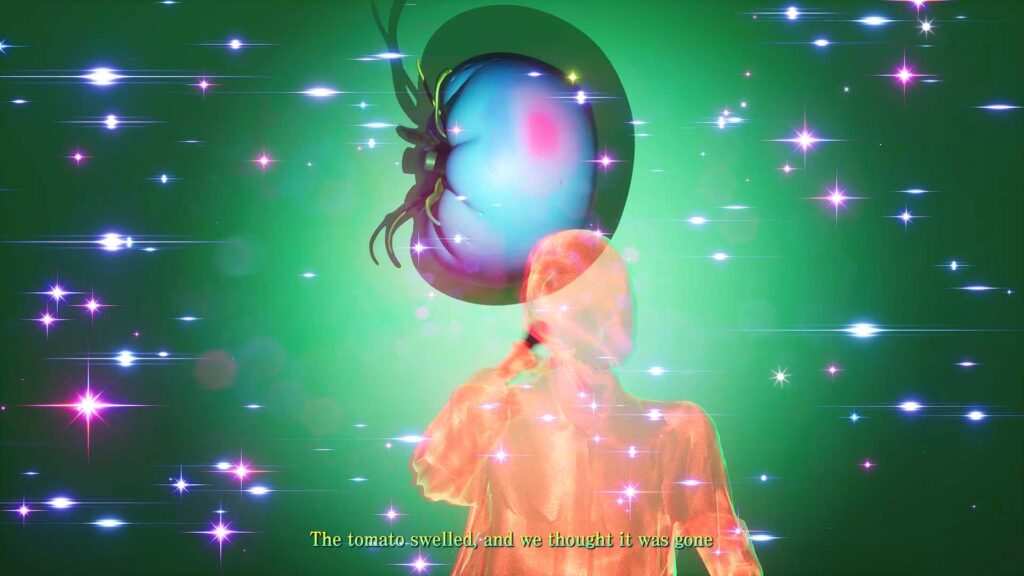
In a paradoxical utopian allegory set in South Korea’s Delta, a smart city is under construction. A simulation village emerges, inhabited by the ‘Delta Family’, the first residents of a future yet to come. Meanwhile, the delta’s saline soil transforms the local salty sweet tomato, which mutates in response to the city’s shifting logic. A story about a fragile landscape strained and unsettled by technological visions of the future.
在以韓國三角洲為背景的悖論式烏托邦寓言中,一座智慧城市正在興建。一個模擬村莊逐漸成形,由「三角洲家族」——這個尚未到來的未來的首批居民——所居住。與此同時,三角洲的鹹性土壤改變了當地鹹甜番茄的特性,使其因應城市不斷變化的邏輯而產生變異。這是一個關於脆弱景觀的故事,它因對未來的科技願景而承受著壓力,並陷入動盪不安之中。
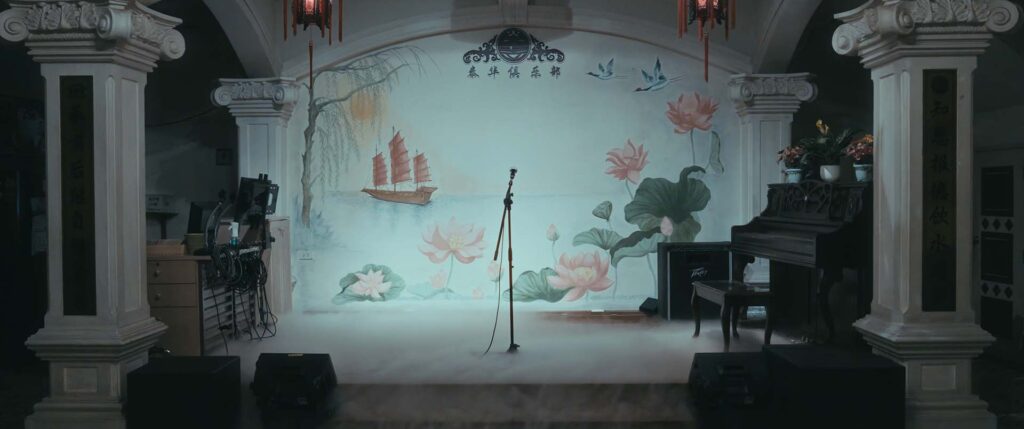
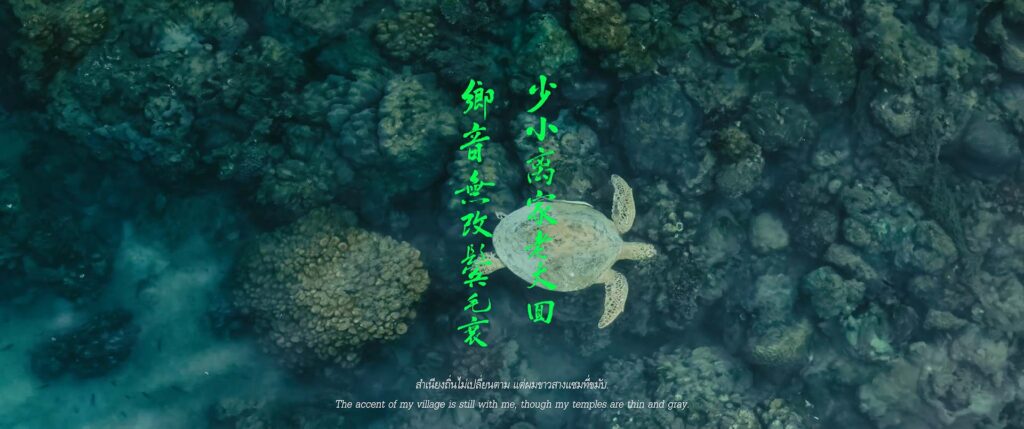
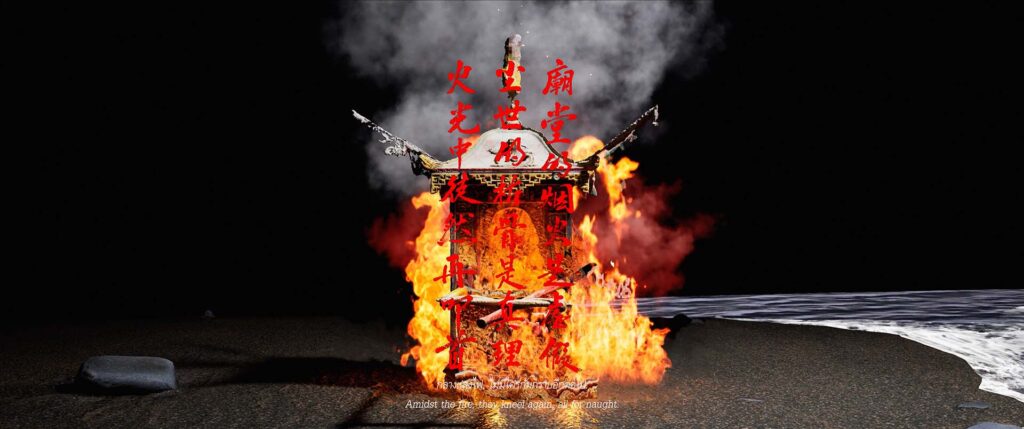
[[ir]reversible] reflects on ritual, memory, and migration through cycles of return and loss. The work unfolds as an installation of video, light, smoke, bringing into dialogue three narrative strands, each revealing how cultural practices and natural instincts carry the weight of memory across time and space. This version undergoes intentional reduction, shifting into a minimalist melody and an empty stage.
《[[ir]reversible]》透過回歸與失去的循環,反思儀式、記憶與遷徙。作品以影像、光線與煙霧的裝置形式展開,交織出三條敘事脈絡,各自揭示文化實踐與自然本能如何在時空之中承載記憶的重量。此版本經過刻意精簡,轉化為一首極簡主義的旋律與一片空曠的舞台。
Set within a simulated club, a metahuman figure moves through strobe lights and bass-driven rhythms, exploring exhaustion, repetition, and the blurred boundaries between labour and release, staging the rave as both an afterlife of labour and a contested site for collective emergence.
故事背景設定於一個模擬的夜店空間,一名超人類形象穿梭於閃光燈與低音驅動的節奏之間,探索疲憊、重複,以及勞動與釋放之間模糊的界線,將狂歡派對呈現為勞動的來世,同時也是集體覺醒的爭議場域。
Resonant
This zone highlights embodied and relational time—the warmth of physical labour, the rhythm of human gestures, and the irreplaceable value of tactile experience that digital systems cannot replicate.
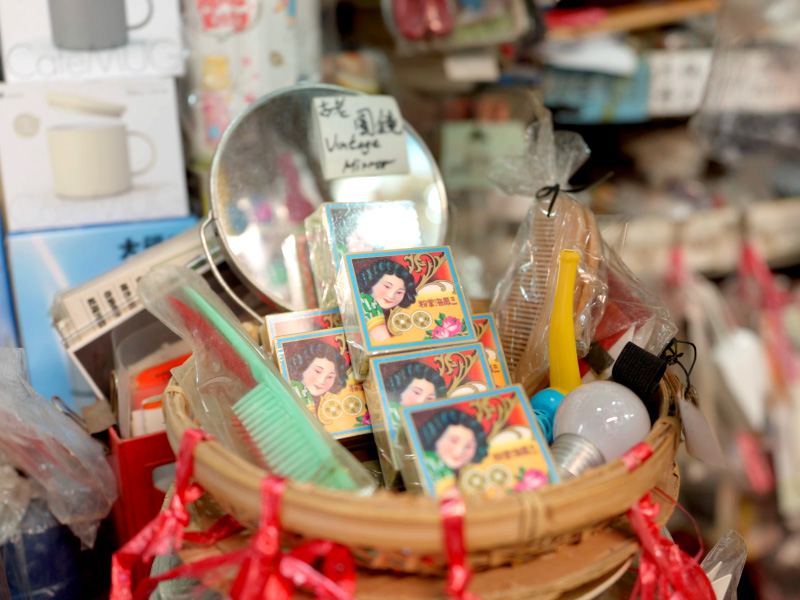
In an era of digital marketing and algorithmic logic, this zone explores Chu Wing Kee to initiate a conceptual experiment on the monotony of modern consumption. We focus on the ‘Value of Touch and Perception’—a warmth accumulated through physical labor and a form of human resilience that digital logic cannot replicate. Rooted in long-term ethnographic research, the project documents the shop’s manual rhythms: from the physical weight of fetching stock to the systematic labour of categorising thousands of everyday objects using index cards and intuitive memory. These threads transform the shop’s materiality into sensory interventions that challenge the sanitised order of modern retail, highlighting a back-to-basics, people-oriented approach that reshapes our cognition and problem-solving abilities.
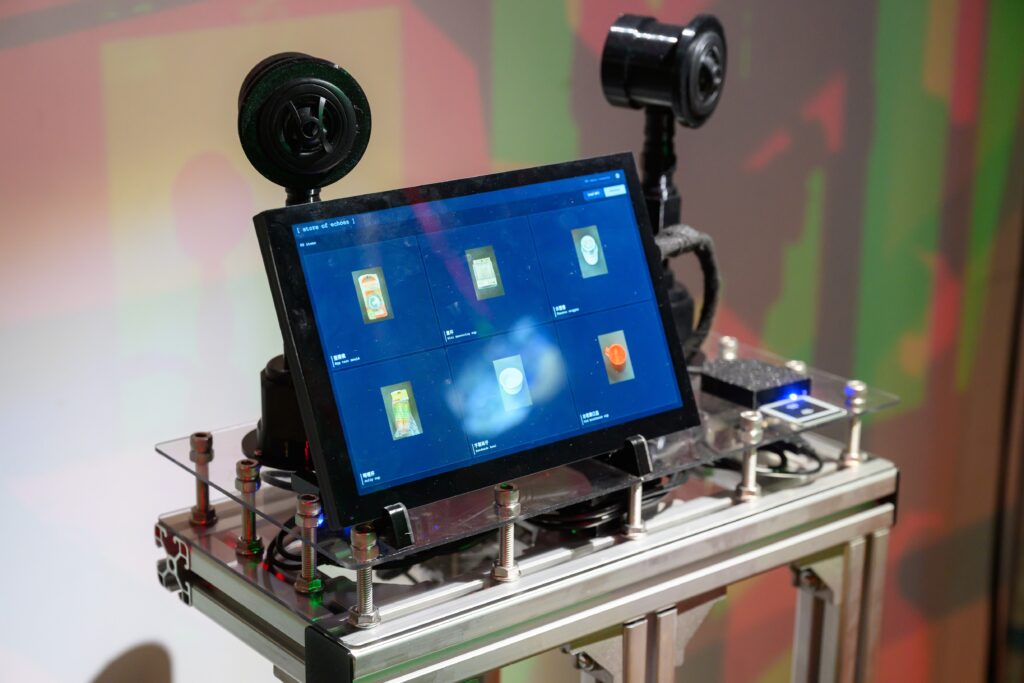
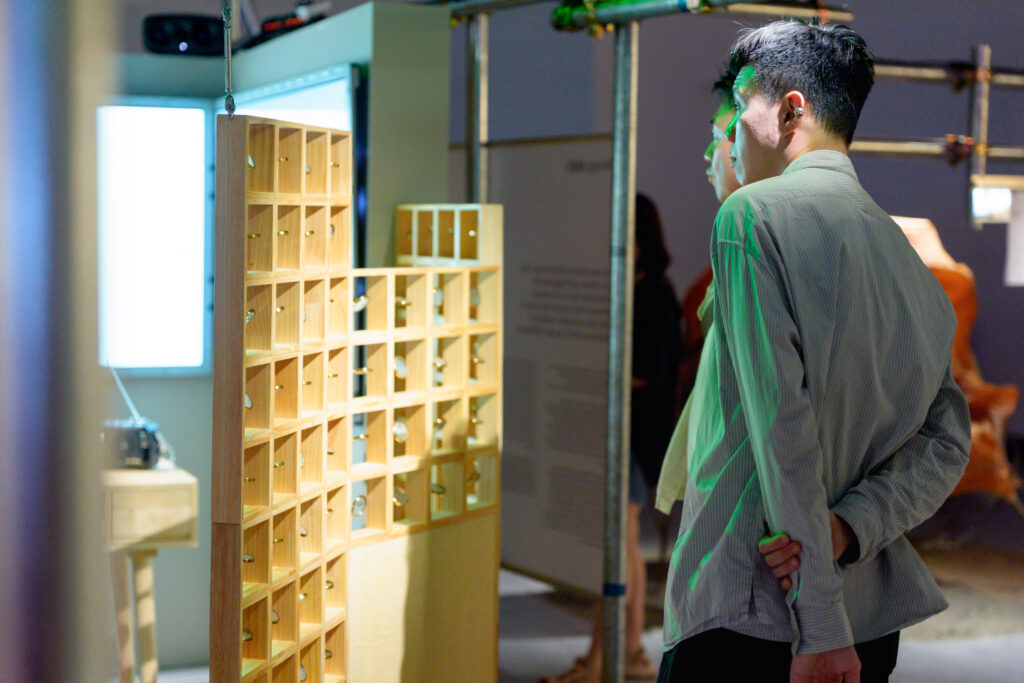
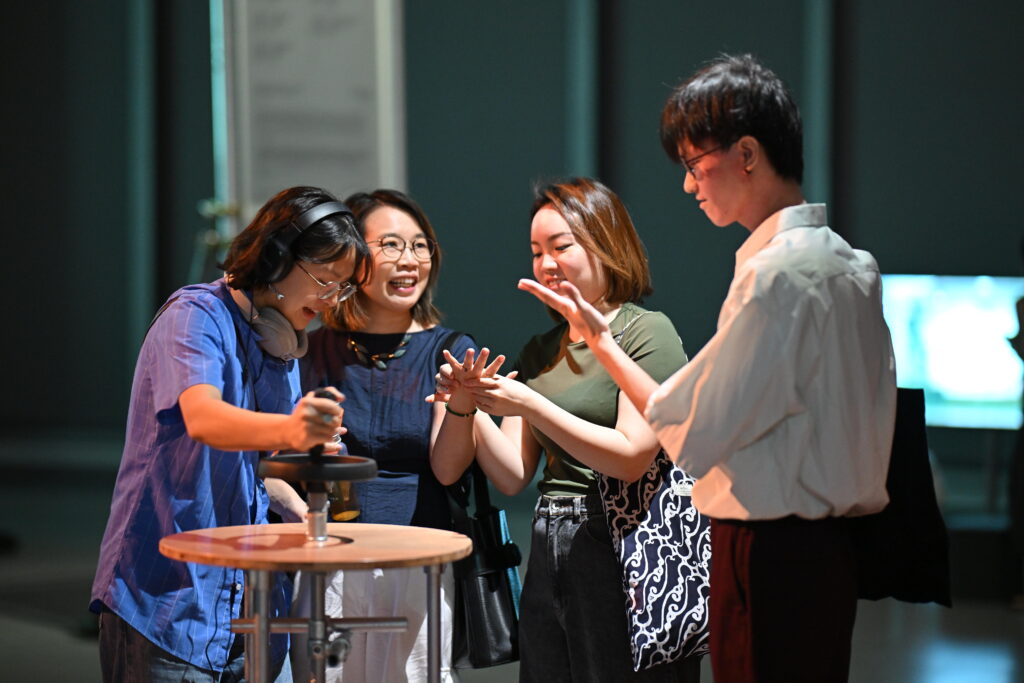
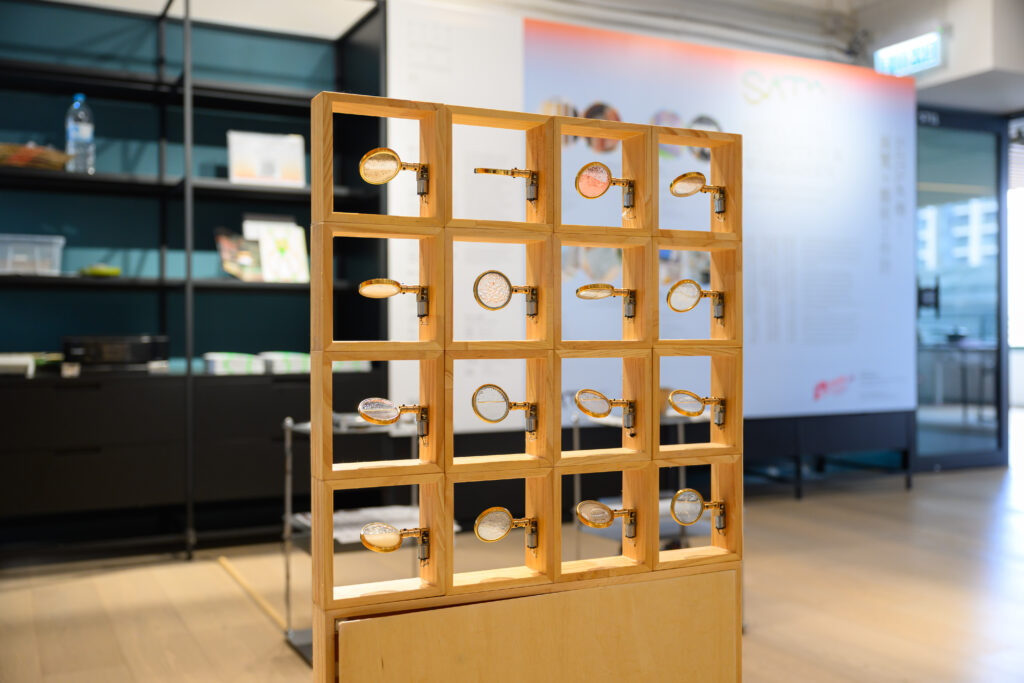
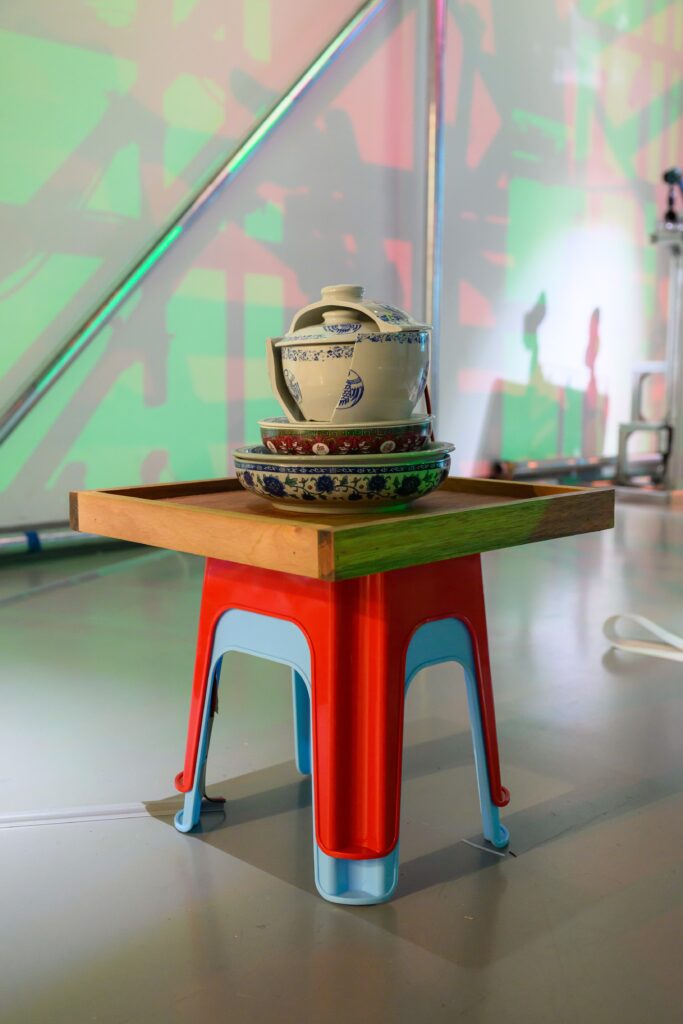
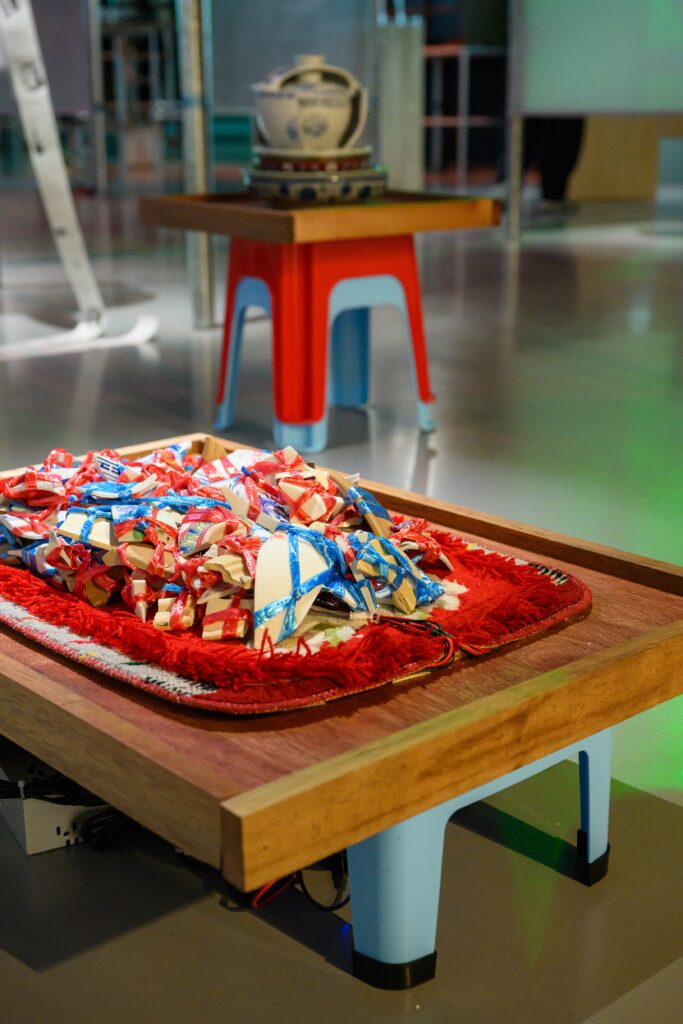
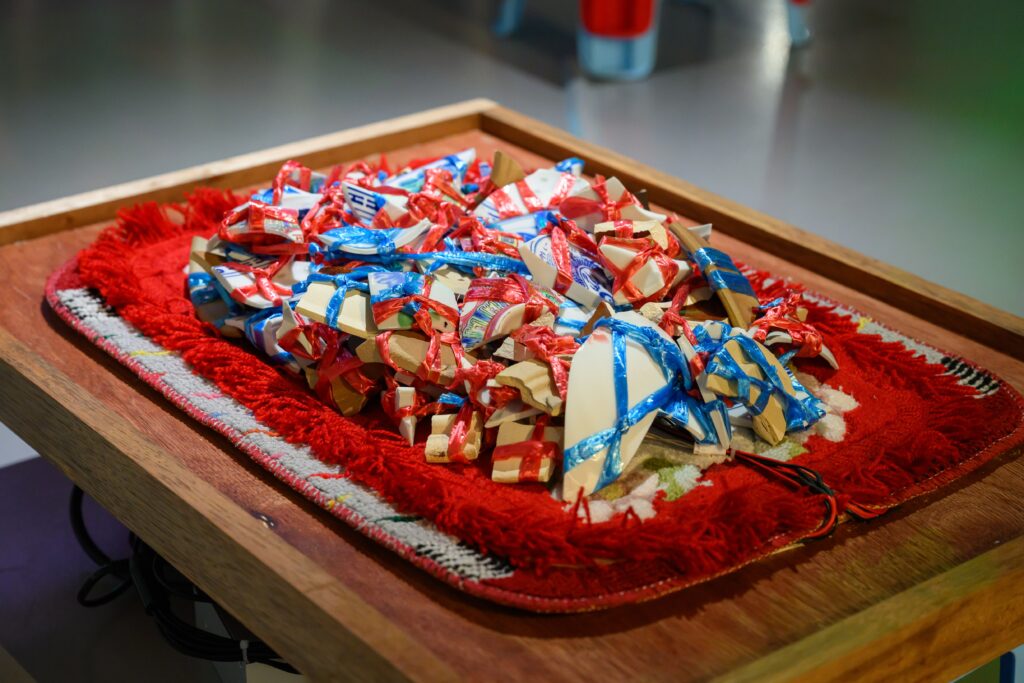
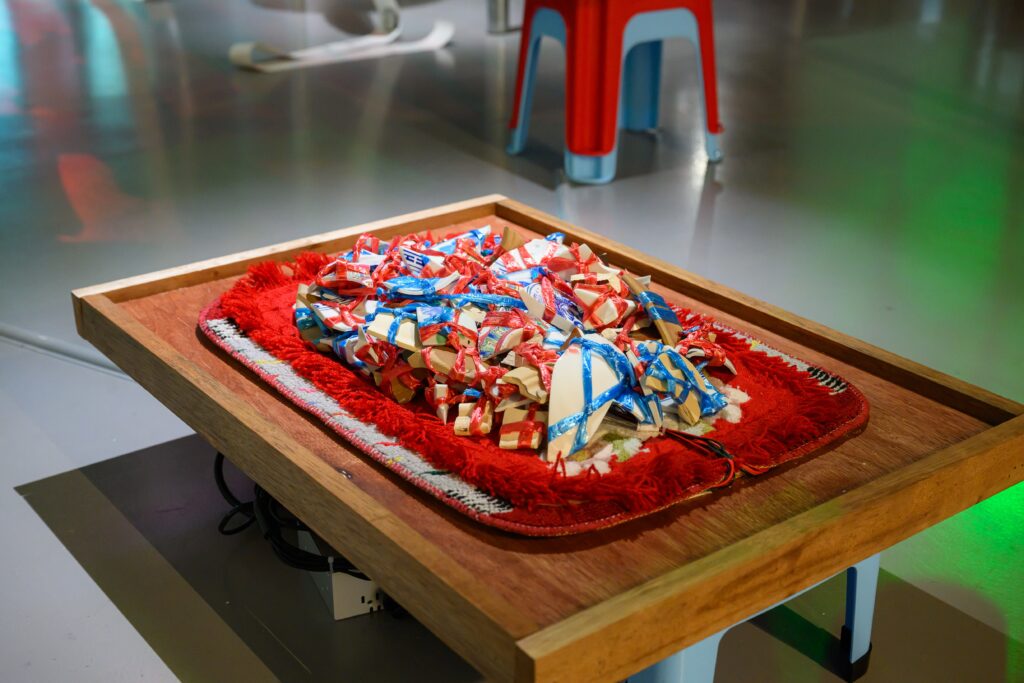
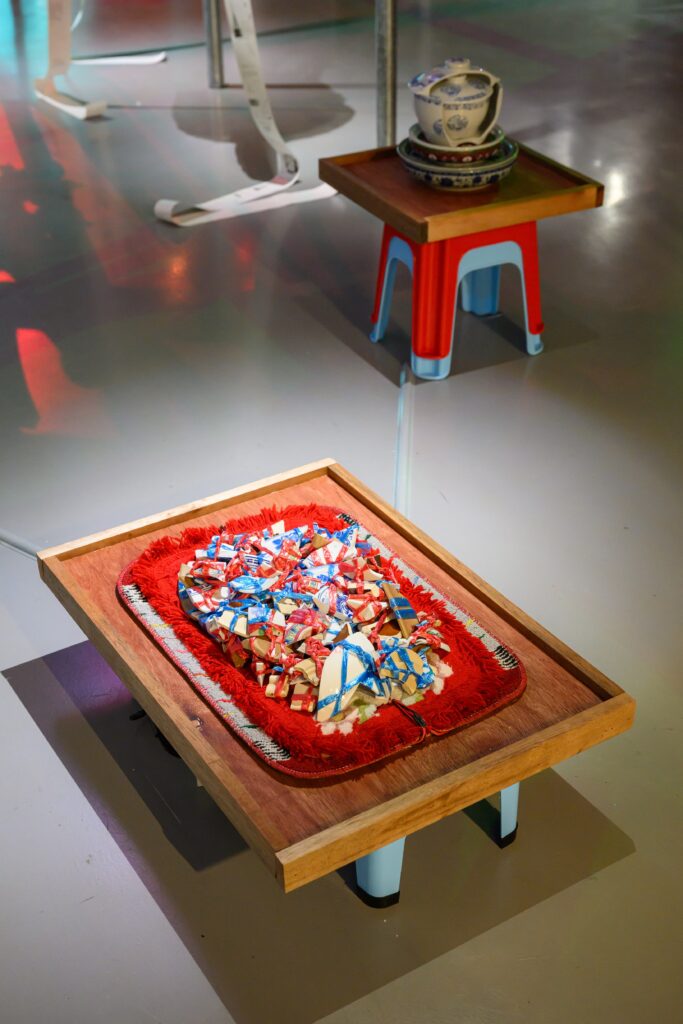
Beginning with an auditory exploration of material, Wong Winsome Dumalagan, Chet Pong investigate the acoustic properties of ceramics by recording the sounds of tapping and touching—mimicking the proprietor’s quality-testing methods. By reassembling broken fragments and utilising sonic transducers, they transform the ‘material chorus’ into a tactile sensory experience. This auditory focus extends to the act of consumer ‘selection’ in the work of Pang Chun Fu William. Through an interactive interface, visitors compose arrangements using recorded shop sounds. By paralleling artistic choice with daily purchasing, and storing these compositions on NFC tags, the work challenges our understanding of ownership and the tension between physical souvenirs and data.
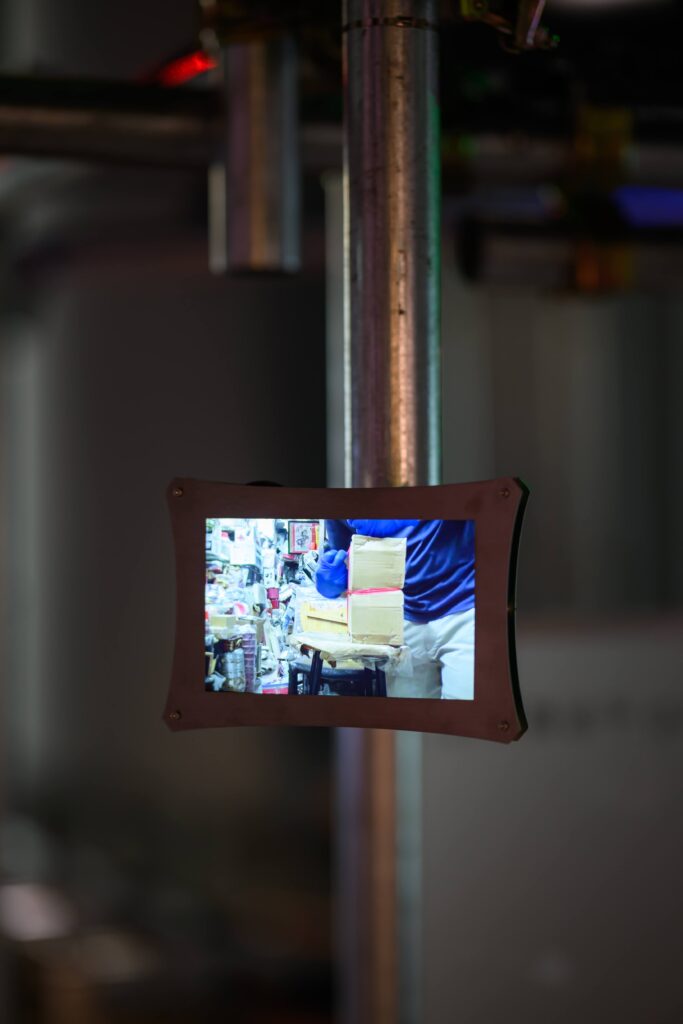
The focus then shifts to the operational core. Wu Ho Mui utilises microscopic visual records to center on the proprietor’s hands. Her imagery delicately captures the skilled gestures and traces of movement accumulated over decades. By materialising the abstraction of ‘time’, she prompts viewers to reconsider the importance of human presence, encouraging a deeper gaze and a longer stay within the physical space.
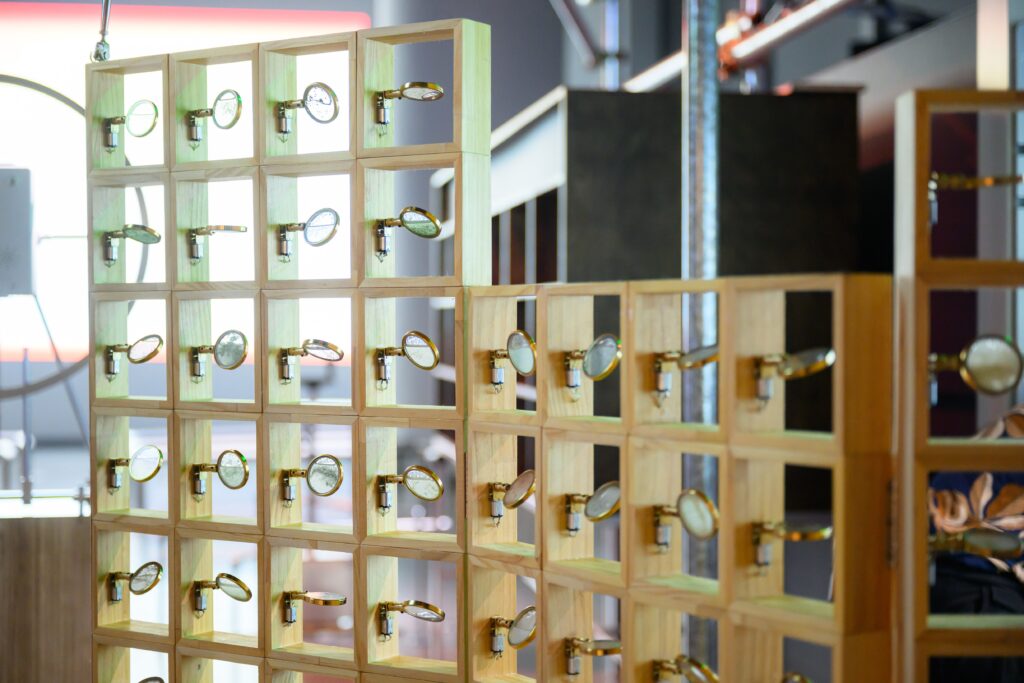
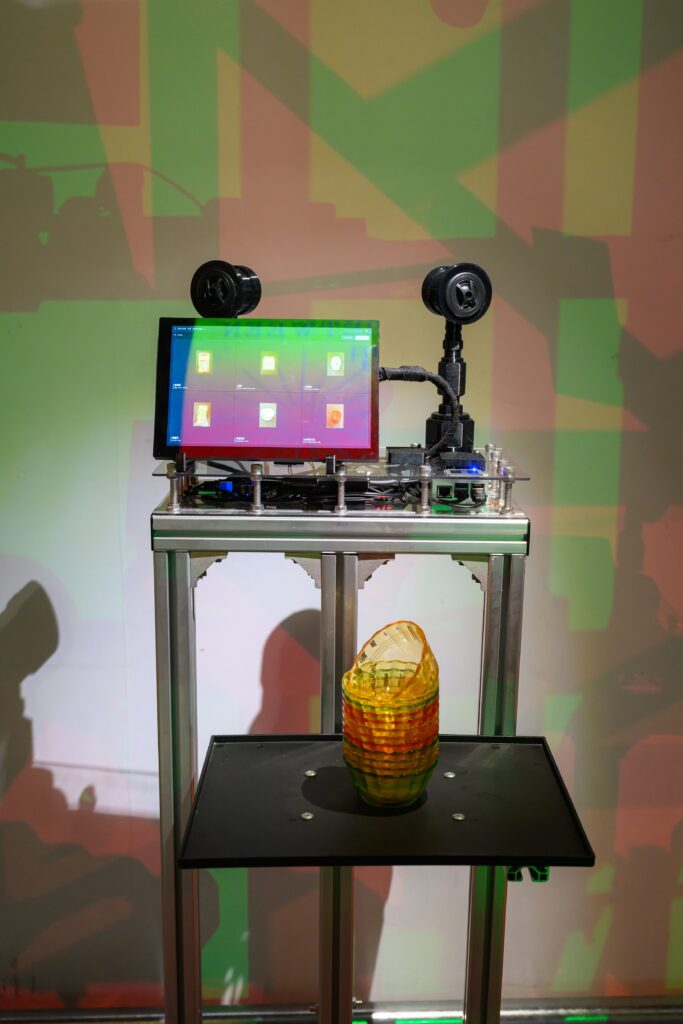
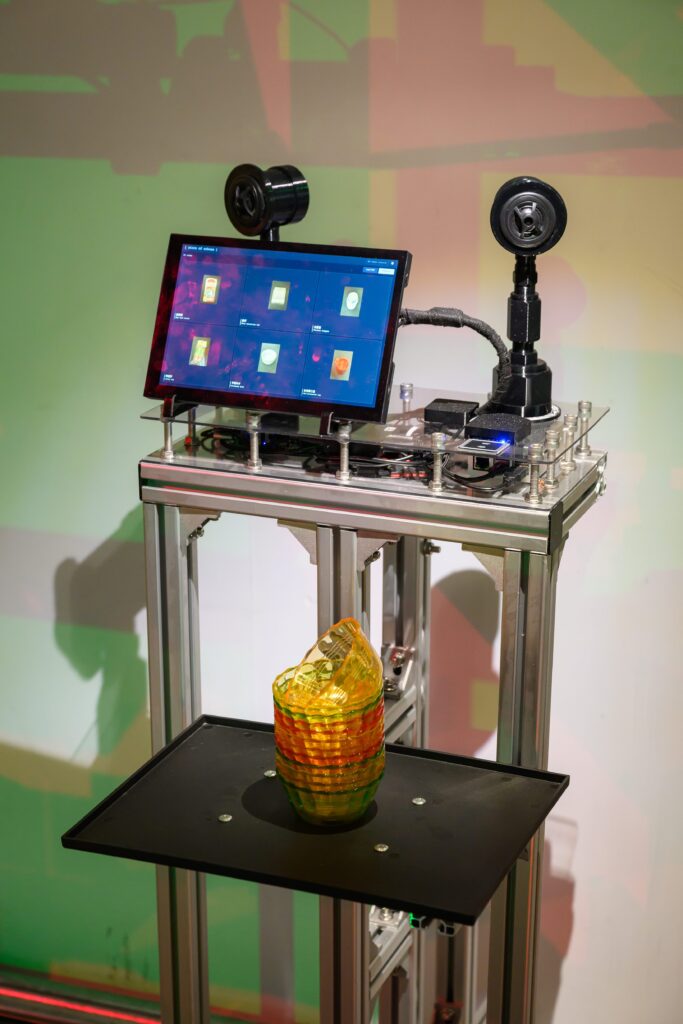
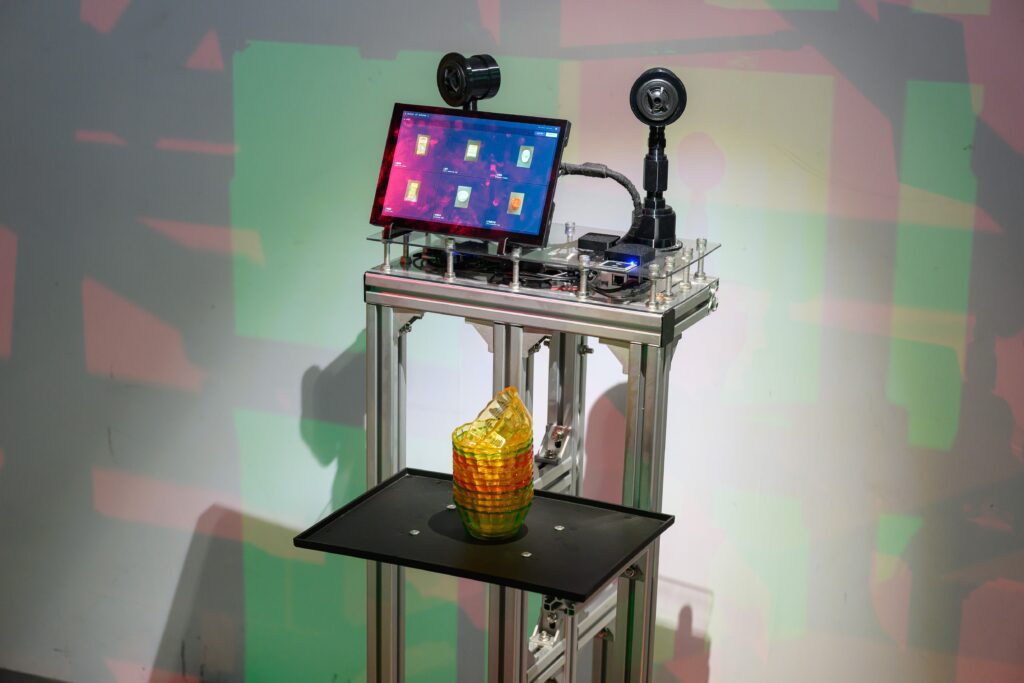
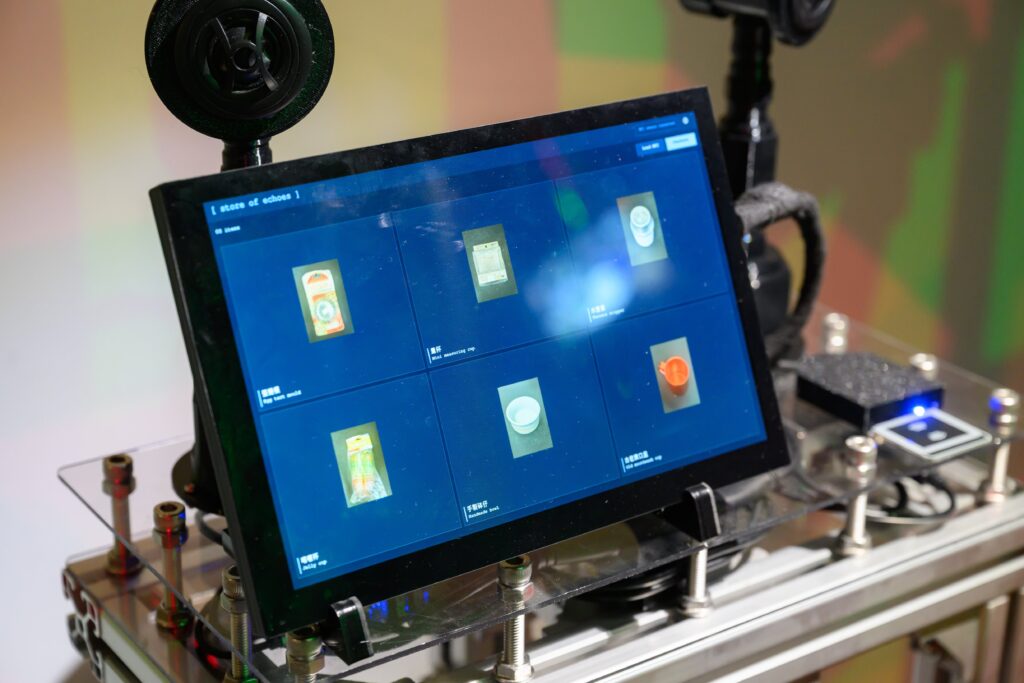
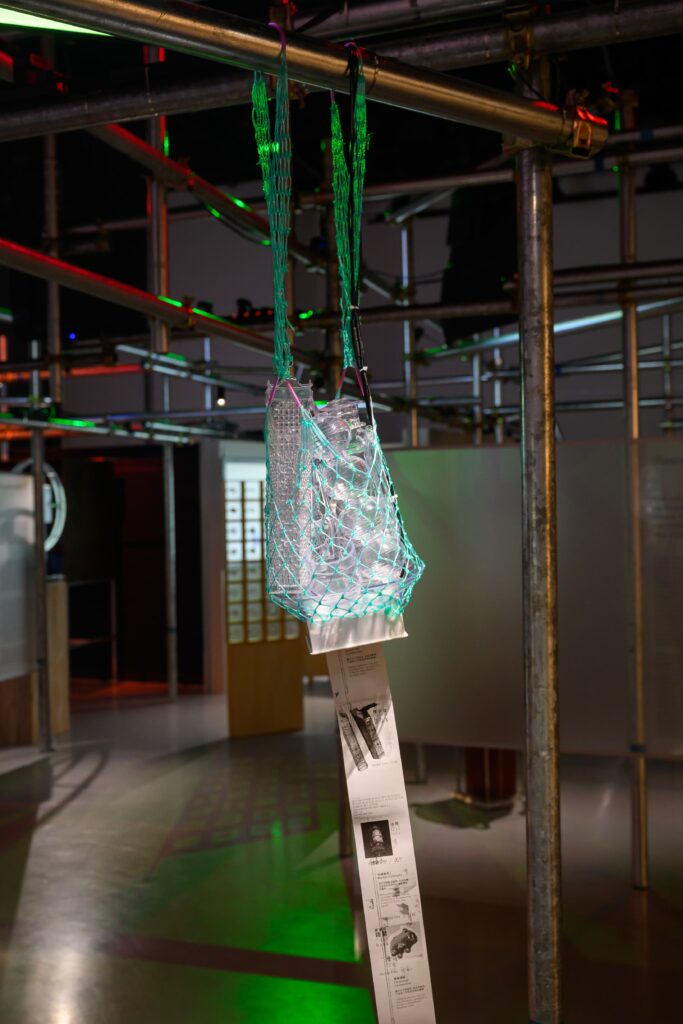
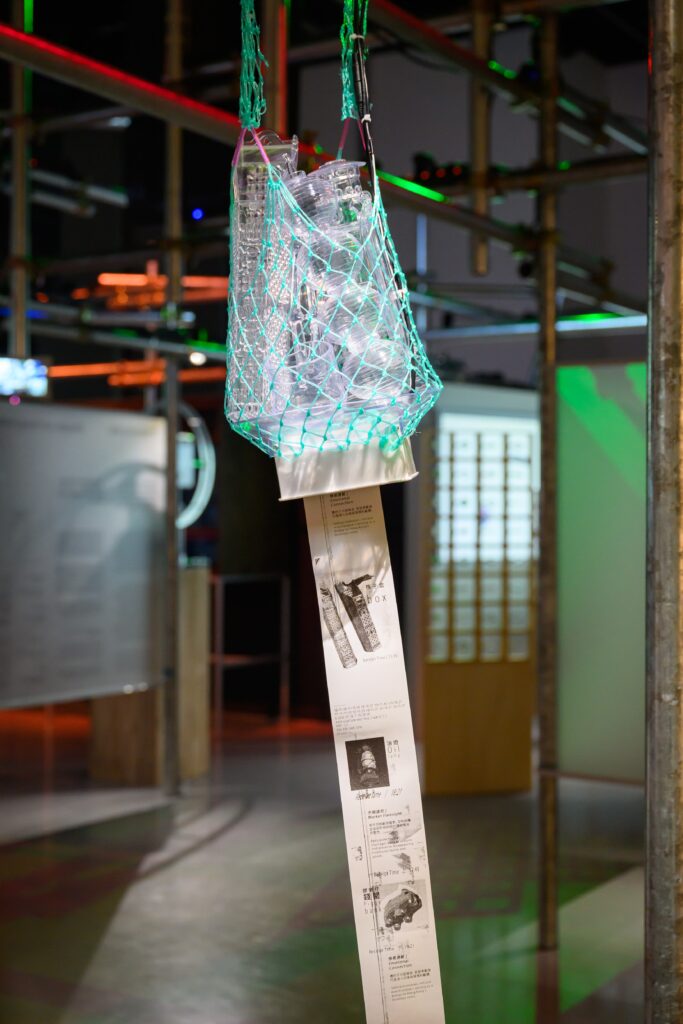
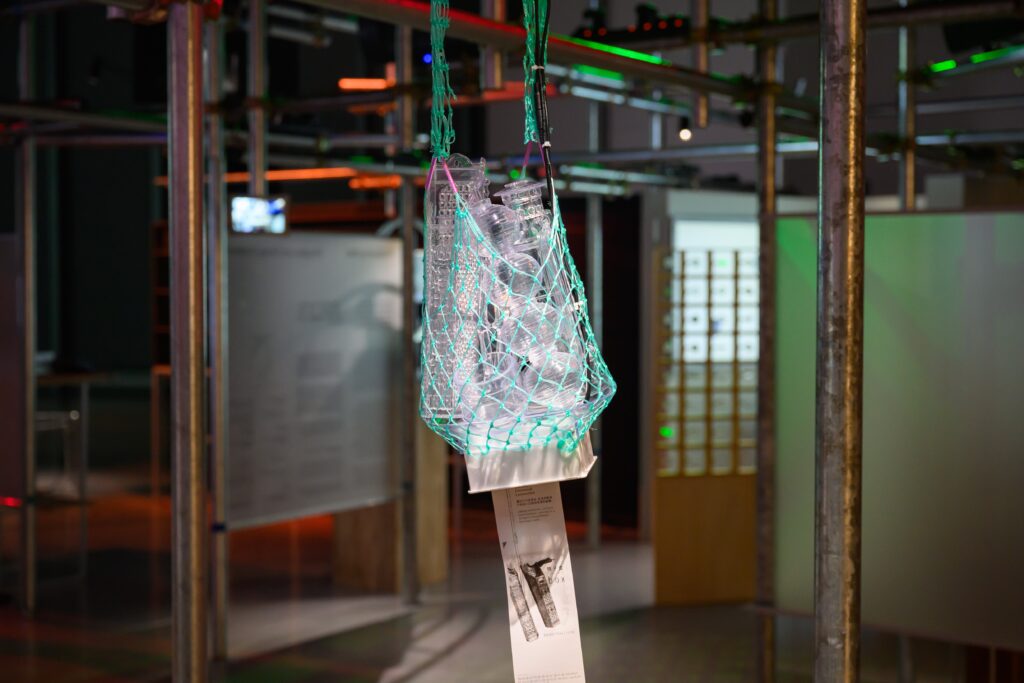
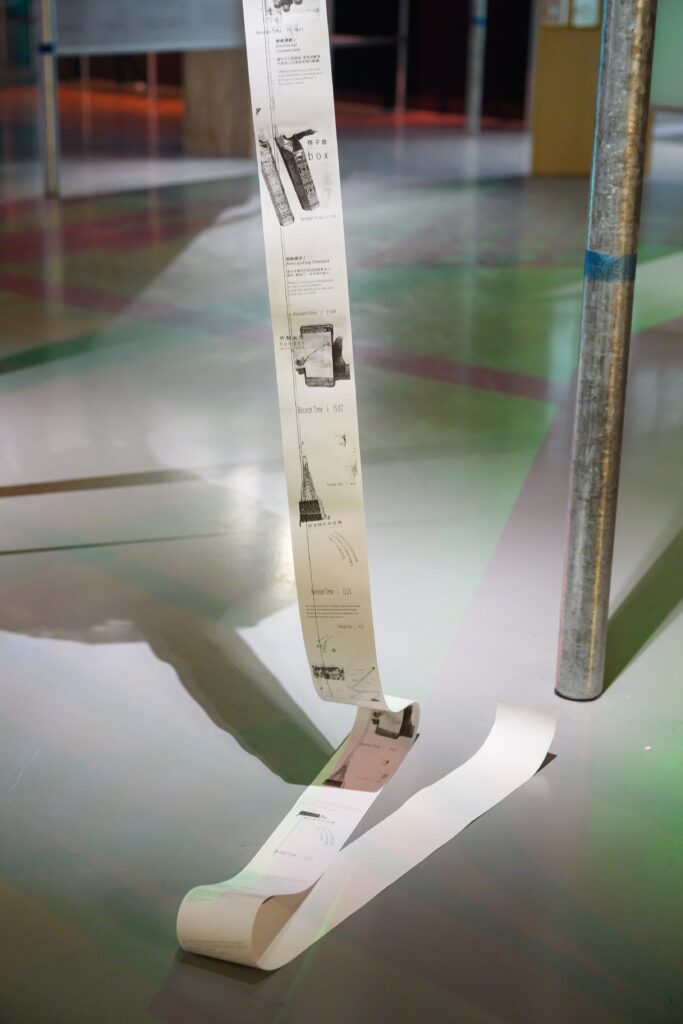
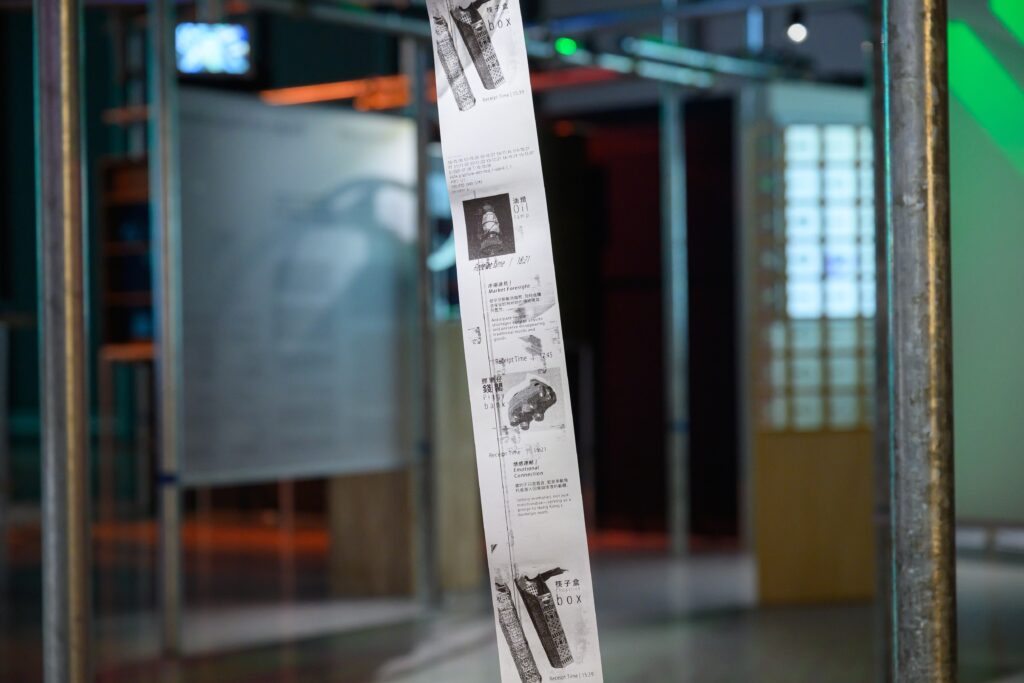
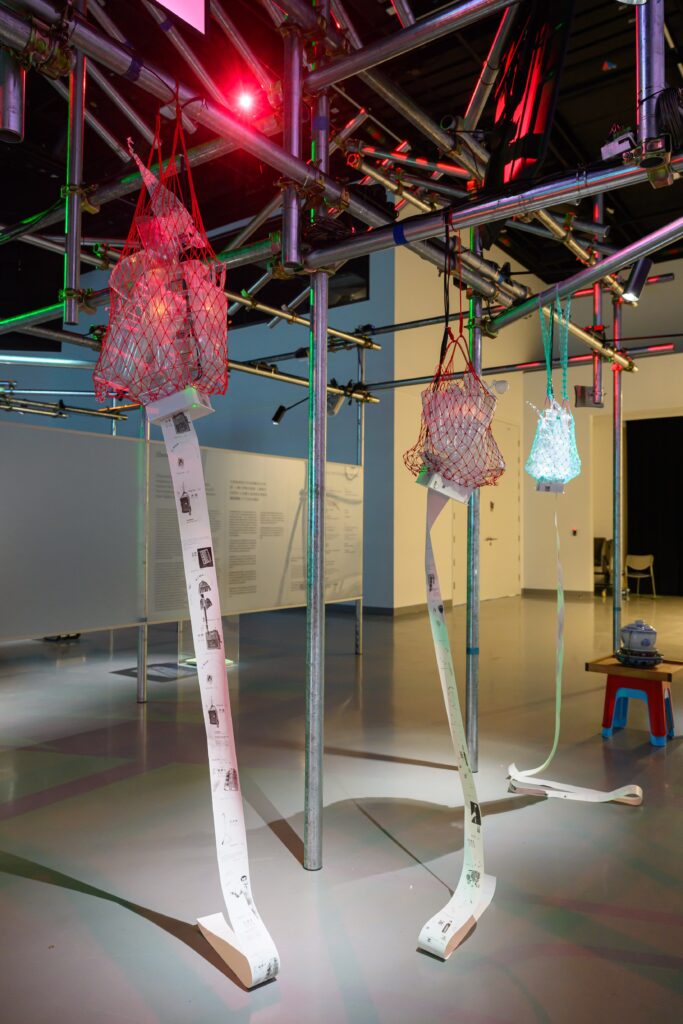
Sing Jantzen Tse examines the shop’s unique labeling strategy, transforming forgotten objects into transparent 3D models. Paired with real-time printed transcripts of store conversations, the work reconstructs a dialogue between the ‘soul-like’ essence of objects and their authentic narratives.
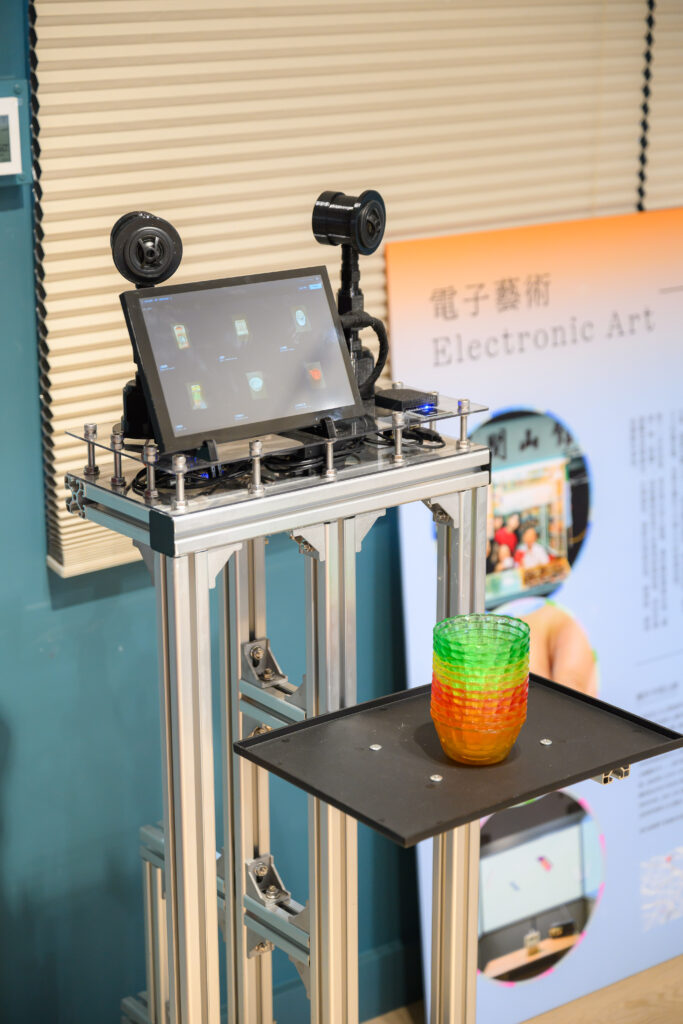
Finally, Vincent Cheung confronts the impact of e-commerce by deconstructing ‘search by image’ algorithms. By highlighting the gap between human visual warmth and machine computation, the work invites reflection on the unquantifiable memories and community bonds lost to efficiency. Together, these responses remind us that in this space, stories are never silent. Reflecting the proprietor’s philosophy, this shop offers more than goods; it offers a soulful human flexibility built on authentic dialogue.
共振
本展區著重於具身與關係性的時間——體力勞動的溫暖、人類動作的節奏,以及數位系統無法複製的觸覺體驗之不可取代價值。
在網絡營銷與演算法時代,本展區旨在透過探索「朱榮記」,開啟一場再思現代消費單調性的概念實驗。我們聚焦於「觸碰和感知的價值」——這是一種由勞動參與所累積的溫度,更是數位邏輯無法複製的人文韌性。研究過程植根於店內環境的長期考察:從高架取貨的體力負擔,到老闆運用索引紙卡與直覺記憶分類數千件生活用品的系統化勞作。這些線索將店內的物質性與真實敘事,轉化為一系列對抗無塵化零售秩序的感官干預,藉此帶出老闆所強調反璞歸真、以人為本的銷售方式,重塑我們對物品的認知與解難能力。
區域首先從聽覺出發,引導觀眾探索店內的物料。黃慧心與龐百勤深入研究陶瓷的聲學特性,透過記錄敲擊與觸碰的音訊——模擬店主測試品質的手法——將破碎的陶瓷碎片重新拼合。這些物件透過音波傳感器,將店內的「物質合奏」轉化為可觸知的感官經驗。
這種聽覺探索進一步延伸至顧客的「選擇」行為。彭俊富透過互動界面,邀請觀眾利用店內錄製的聲音進行創作。作品將藝術選取與日常購物並置,並透過 NFC 數據標籤挑戰我們對擁有權的認知,探討物質紀念品與數據之間的張力。
視角隨後轉向店舖的營運核心。胡昊梅以微觀的視覺記錄聚焦於店主的雙手。影像細膩捕捉了經營者在漫長歲月中留下的熟練手勢與動作痕跡,將抽象的「時間」具象化,誘發觀眾重新思考「人的參與」之重要性,進而在實體空間中投射更多的逗留與凝視。
謝振聲則研究店主獨特的標籤策略,將被時代遺忘的物件轉化為透明的 3D 模型,並配合即時打印的店內對話文稿,在物件的「靈魂精髓」與真實存在的敘事之間重構對話。
最後,區域直面網絡營銷對實體店的衝擊。張志麟透過解構電商平台的「以圖搜尋」演算法,批判全球化貿易的擴張。作品揭示了人類視覺溫度與機器計算之間的落差,邀請觀眾反思在追求效率的背後,那些無法被系統量化的記憶、關係與社區溫度。
這些集體回應提醒著我們:在這個空間裡,故事總是有跡可循,而物件從不真正沈默。回到朱老闆的經營哲學,這所店所提供的從來不只是商品或解難服務,更是一種建立於對話的人際交流,一種無法被替代的人心靈活。
Sweep
This zone explores leftover time—the dust, echoes, and fragments left behind after the act of making. It addresses what remains when time is spent: the overlooked residues of traditional craft in an age of efficiency.
‘Silent Echoes: Letting scattered whispers shape the space.’ The works bring into focus the overlooked, the discarded, and the marginal—fragments of daily life often swept away.
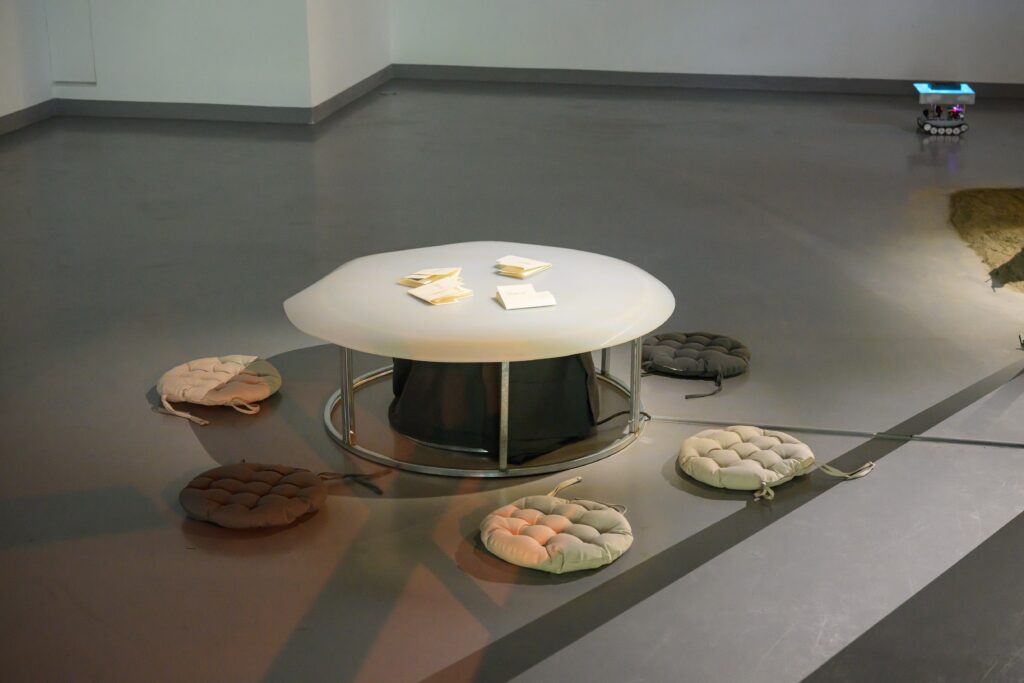
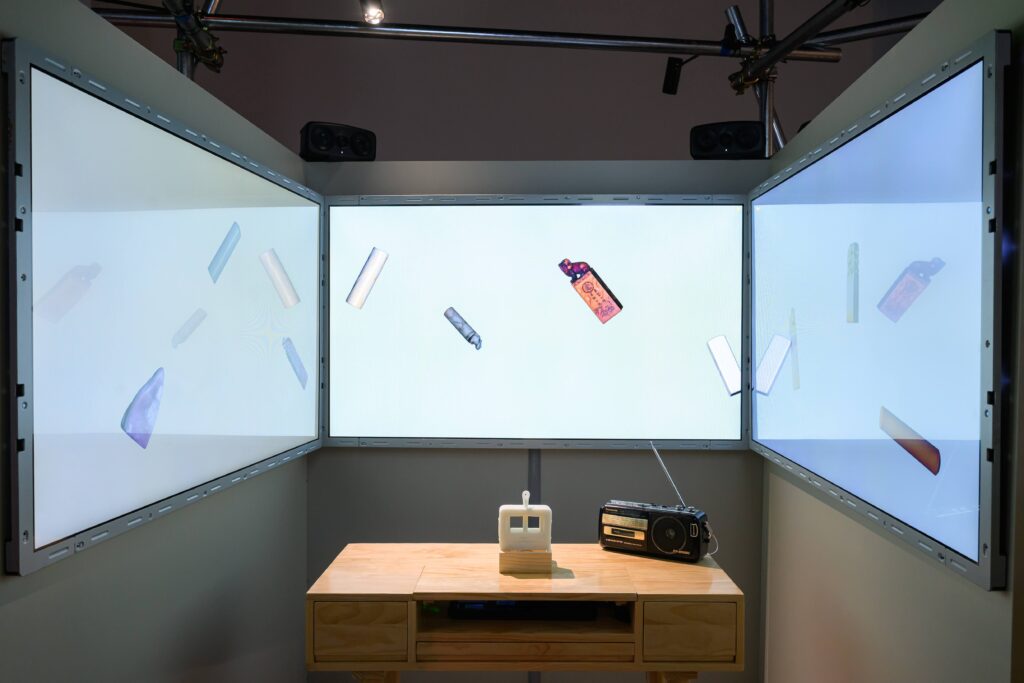
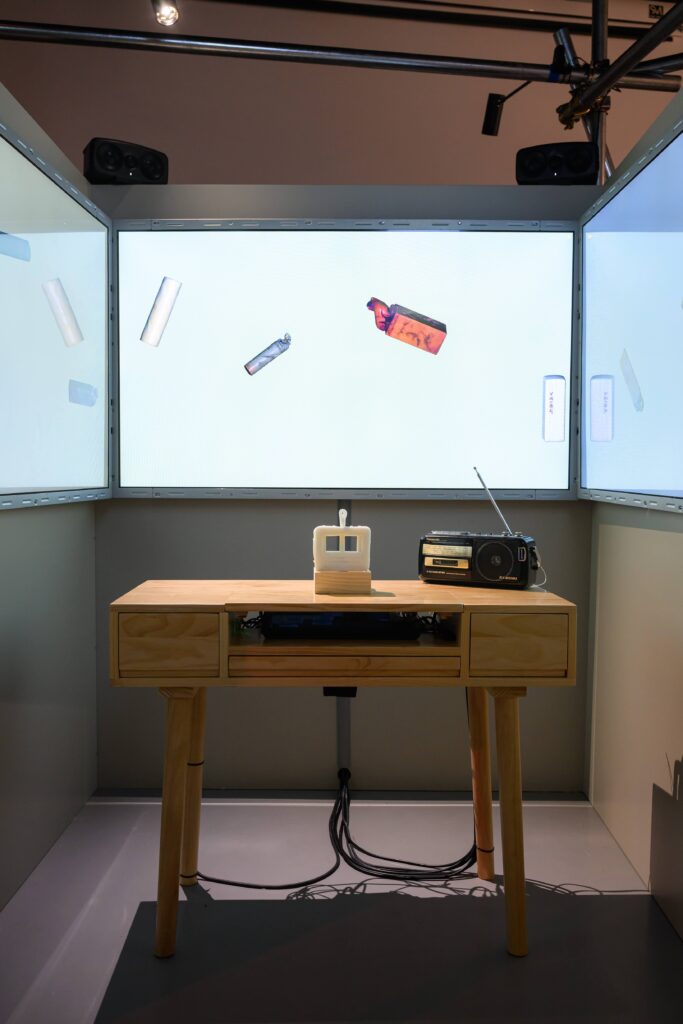
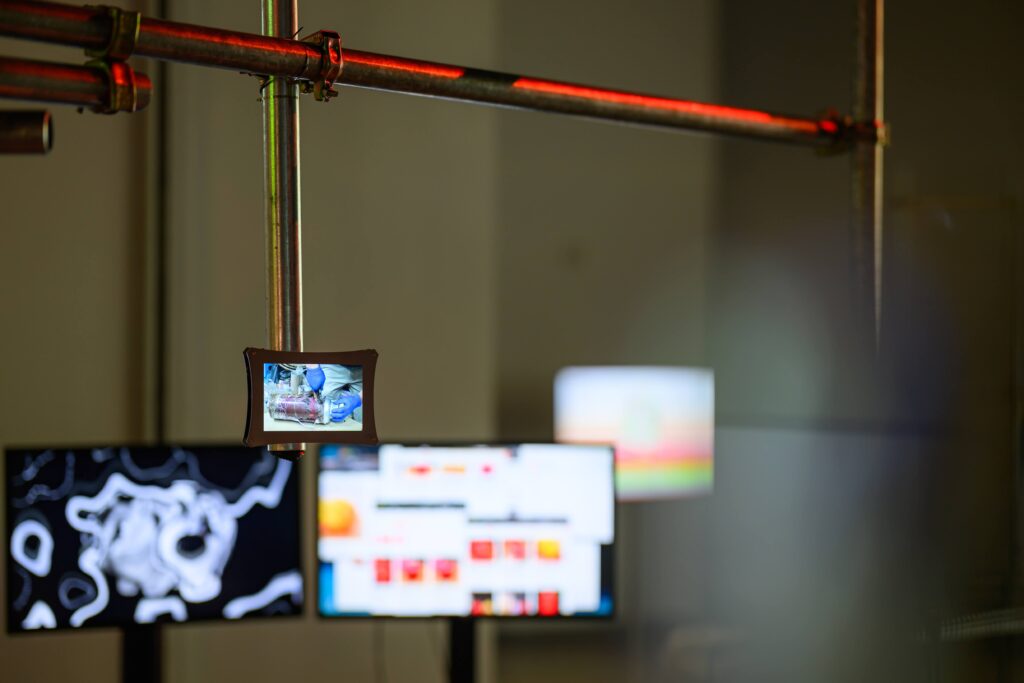
The works unfold in two parts—‘Gaze’ and ‘Listening’—as a group’s interpretation of Pun Han Sin Koon. It invites visitors to experience how fragments casually scattered in simple daily routines are reassembled and re-situated within a confined space. ‘Gaze’ and ‘Listening’ form a continuous shift of attention: ‘Gazing’ through the traces left behind, and ‘Listening’ through the connections caught within the space.
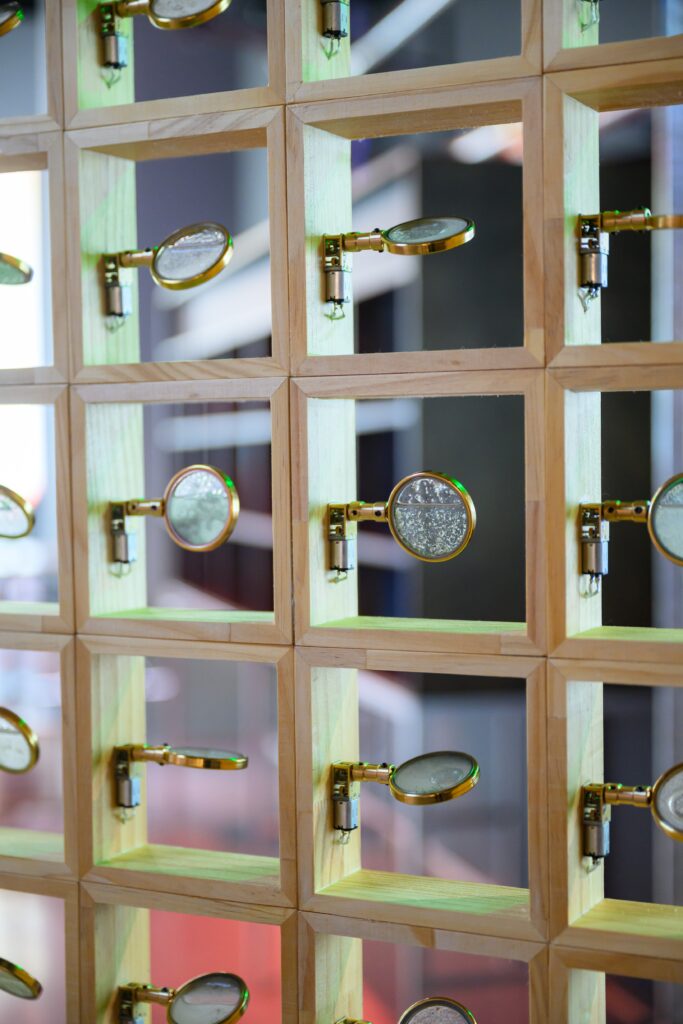
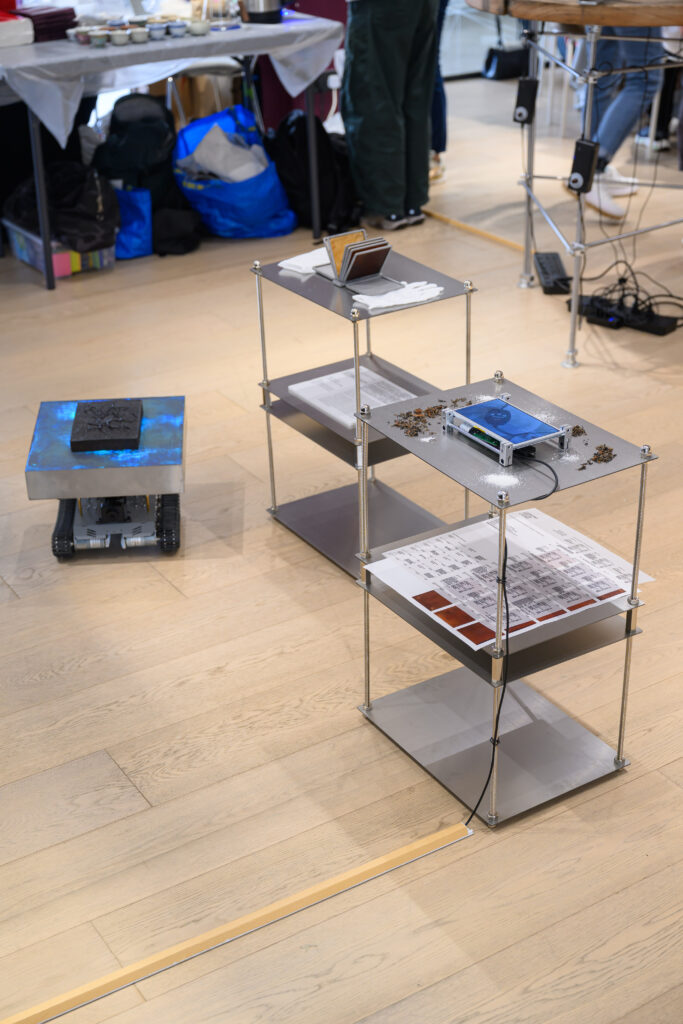
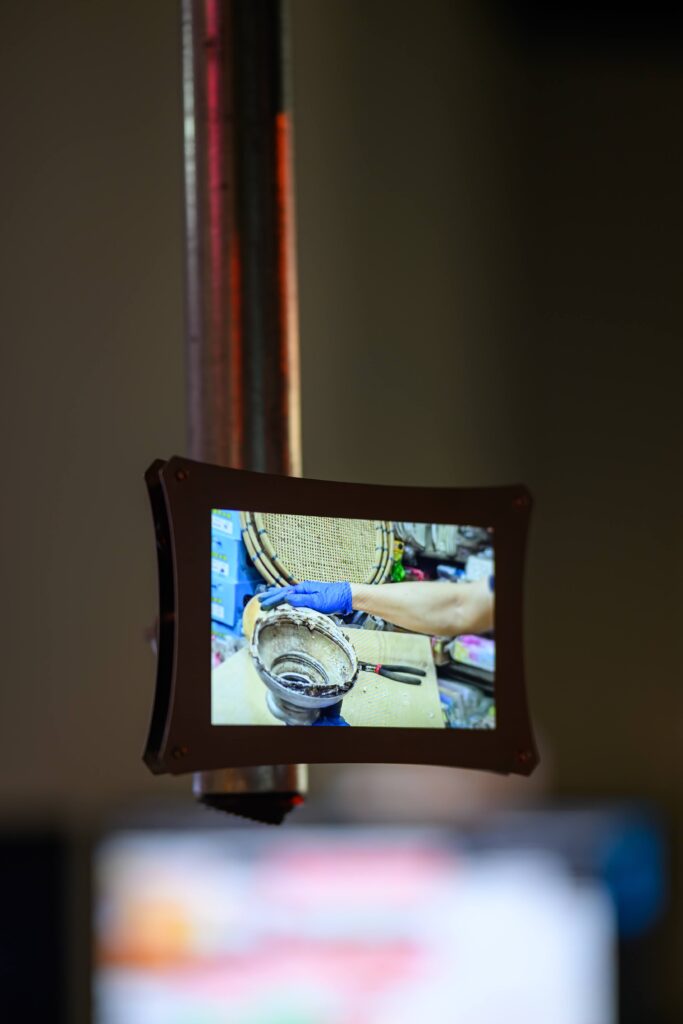
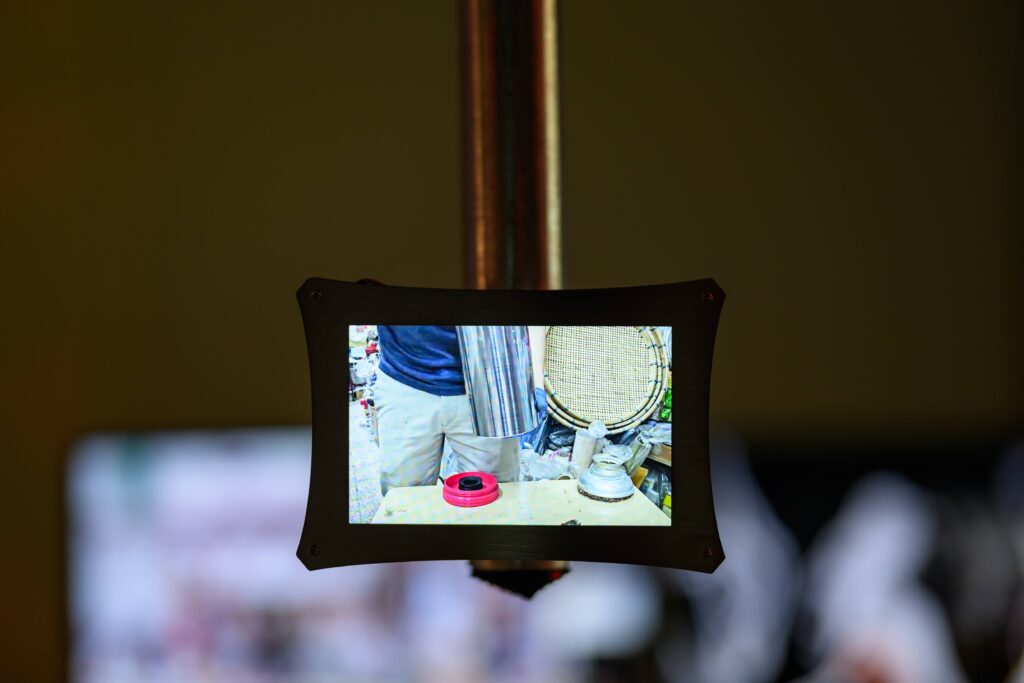
Drift with the Wind focuses on traditional seal carving, where powder is often regarded as useless. When the seal-carving tool presses down and the master blows and brushes, the powder becomes a product of negative space—dispersed, swept aside, and vanished into a series of simple gestures. The work collects those powders that are meant to be discarded, placing them into a rotating vessel so they continue to flow. Here, the powder is no longer merely neglected debris; it becomes an echo of negative space and a fragment of names.
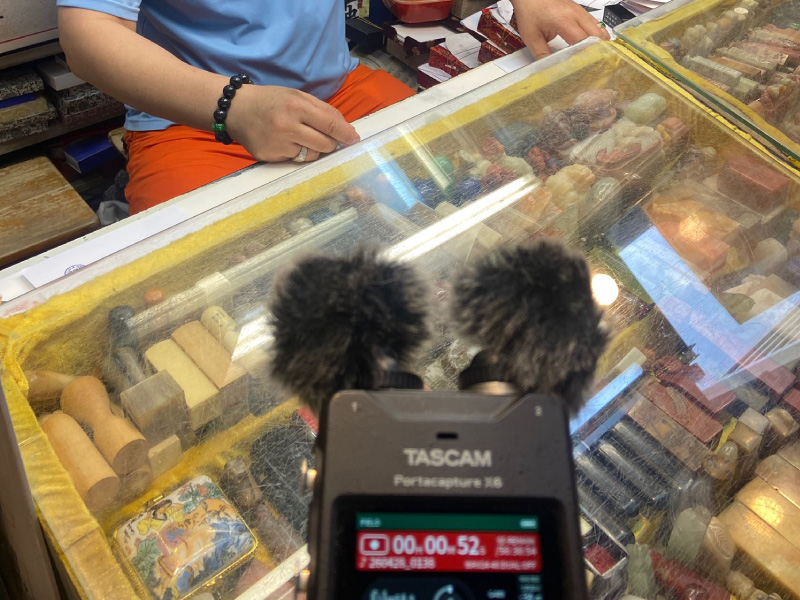
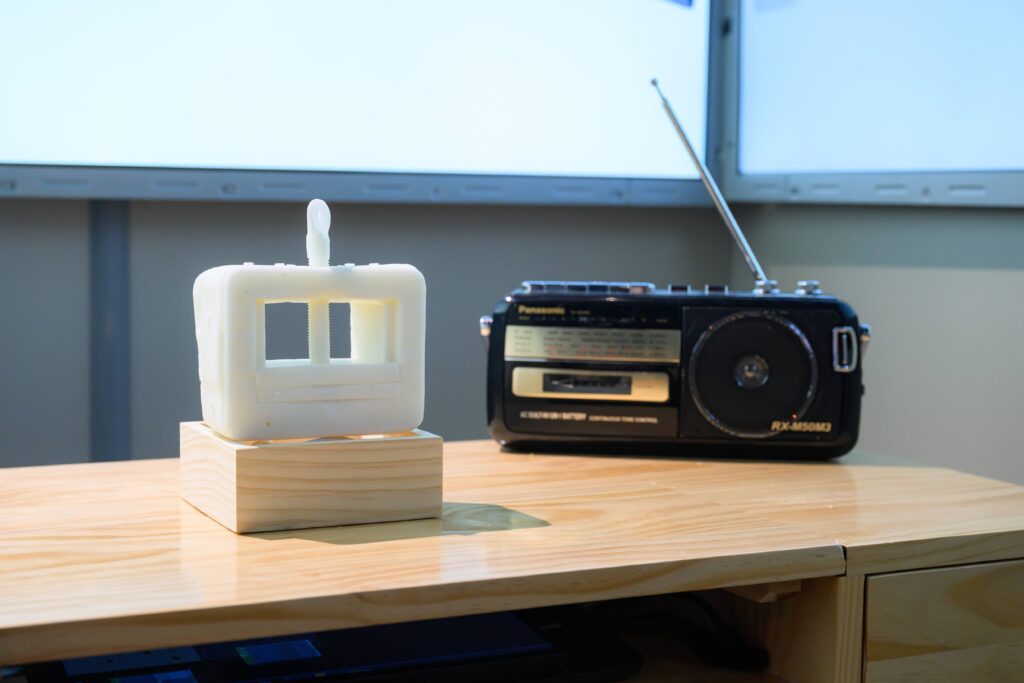
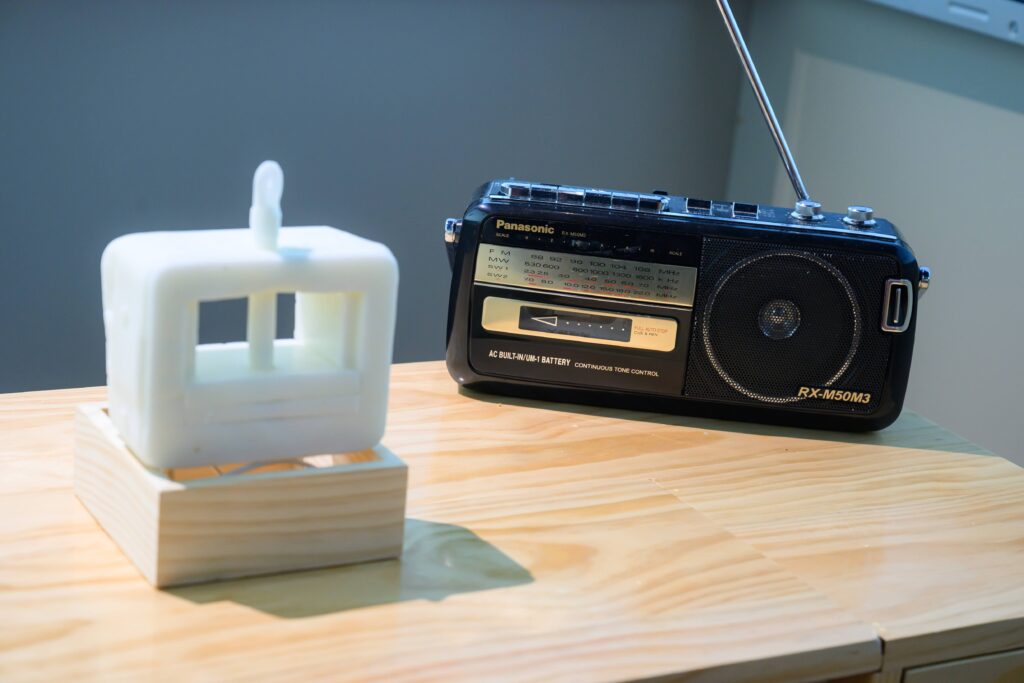
3 x 6 feet focuses on the essence of the shop and the master’s relationship to it. Within a working space measuring only 3 x 6 feet, a radio serves as a medium connecting to the outside world, interwoven with customers’ inquiries. Listening becomes an essential mode of perception in the shop—an attention that reaches out toward people and things nearby. The work attempts to compose a sound map: chatter from all directions, the quick passage of moving workers through narrow lanes, and information drifting in from the radio at the back—these layers intersect. Through active listening, visitors enter the soundscape and come to know a corner of Man Wa Lane.
The artworks do not seek to restore a pure original form. Instead, it presents how fragments and frequencies within negative space are made visible and audible in the present—and how, through the viewer’s intervention, what has been overlooked can be reintroduced as the starting point of narrative.
掃動
本展區探討「殘餘的時間」——創作行為結束後留下的塵埃、回聲與碎片。它探討時間流逝後所留下的痕跡:在這個崇尚效率的時代,傳統工藝中那些被忽略的殘餘。
「空白回聲,讓被吹散的細響成為場域的形狀。」作品希望把日常中被忽視、被清除或被視為邊緣的事物呈現於這展覽區域之中。
作品以「凝視」與「聆聽」兩個部分呈現小組對於半閒山館的詮釋。體驗如何以那些在簡單日常吹散的片段重組於狹小空間中在此被重新安置。凝視由印章雕刻留下的碎屑,聆聽於空間中所捕捉的外界聯繫。
《張揚》聚焦於傳統印章雕刻中常被視為無用之物。篆刻刀用力按下,師傅一吹、一撥,粉末便是負空間的產物,它們被揮散、被清掃,消失在簡單的動作之中。作品旨在收集那些理應被丟置的粉末,並置入旋轉器皿內持續流動。粉末在此不再是被忽略的碎屑,而成為負空間的回聲與名字的碎片。
《3 x 6 尺》則關注店舖的本質與師傅自身的關係。在僅有 3 x 6 尺的工作空間中,收音機作為聯繫外界的媒介,並穿插客人的查詢。聆聽成了店舖中一個重要的感知,探視身邊的人和事。作品嘗試製作一張聲音地圖:四方八面傳來街坊的嘮叨話語、搬貨工人的穿梭聲響,與後方收音機傳來的資訊彼此交疊。觀眾透過主動聆聽(active listening)進入聲音景觀,以聲音認識文華里的一角。
作品並用意在復原一個純粹的原貌,而是在當下呈現負空間裡的碎屑與頻率如何被看見、被聽見,並在觀者介入中將被忽略之物重新呈現為敘事的起點。
Composing
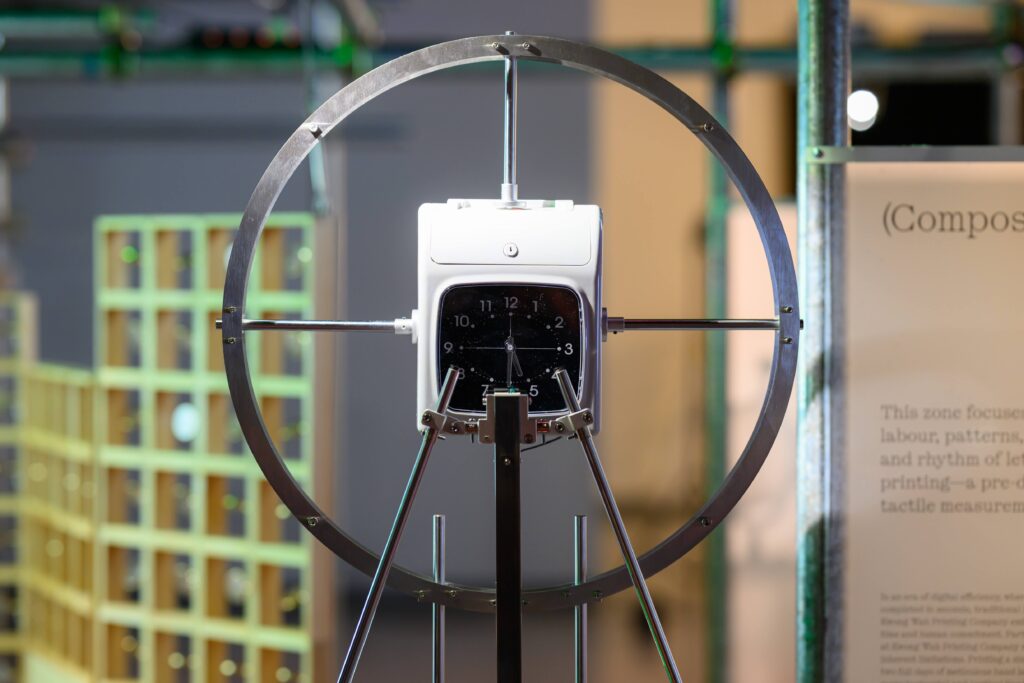
This zone focuses on the labour, patterns, pressure, and rhythm of letterpress printing—a pre-digital, tactile measurement of time.
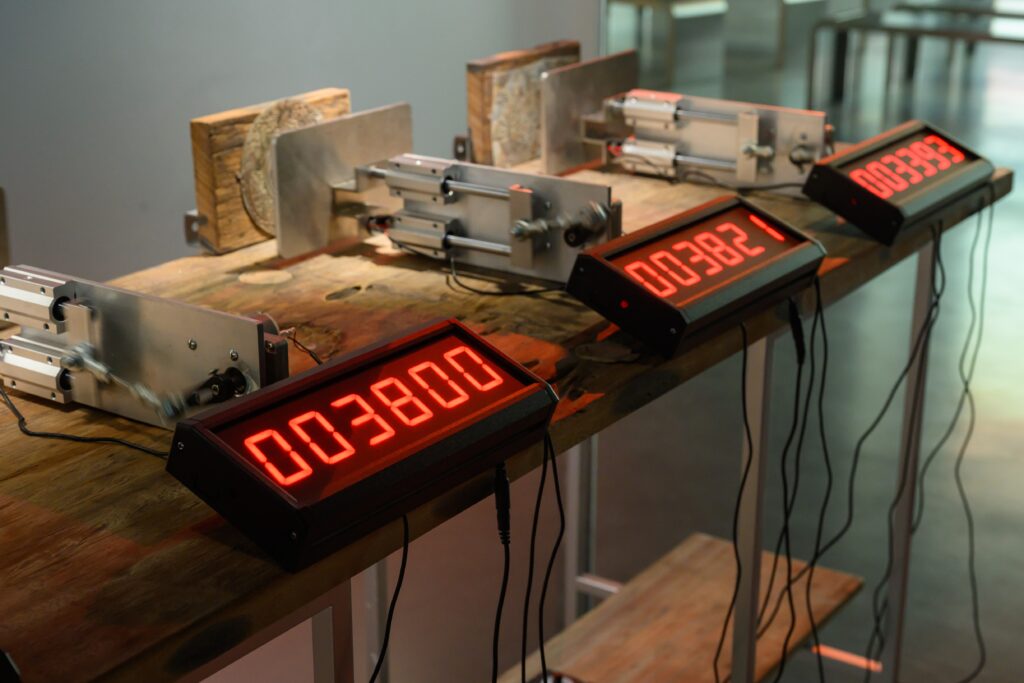
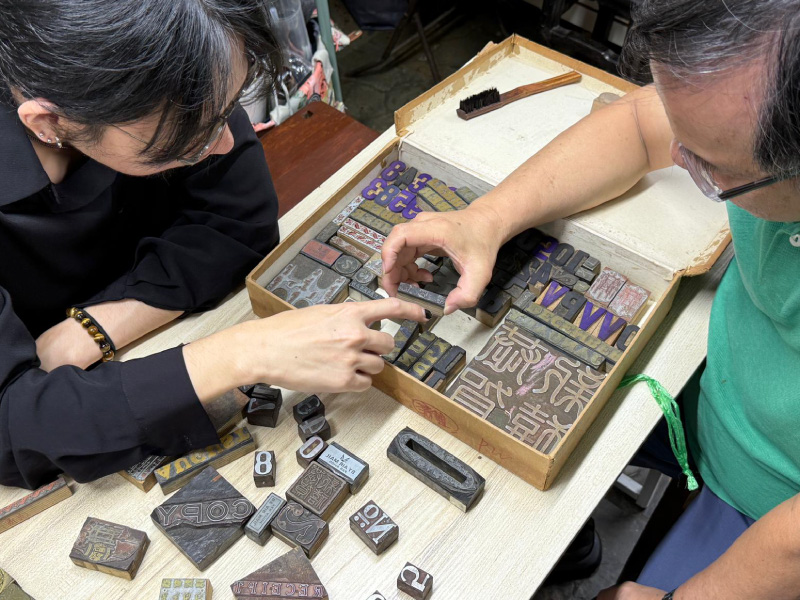
In an era of digital efficiency, where complex layouts are completed in seconds, traditional letterpress workshops like Kwong Wah Printing Company embody a profound density of time and human commitment. Participation in the workshop at Kwong Wah Printing Company revealed the craft’s inherent limitations. Printing a simple table required one to two full days of meticulous hand labour, carefully aligning every horizontal and vertical line by hand, while the same task takes mere seconds in the digital realm. This contrast prompts reflection on how technology, which promises greater efficiency and easier lives, has paradoxically left people busier and more overwhelmed. These constraints offer fresh insight into the human dimensions of time, labour, and the humanity of machines.
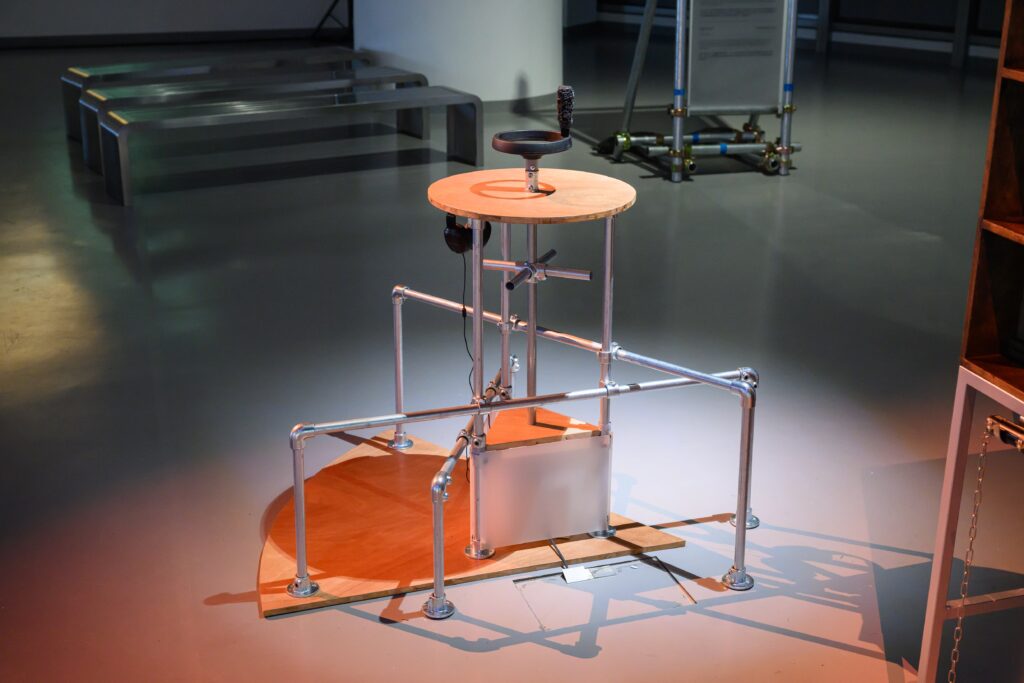
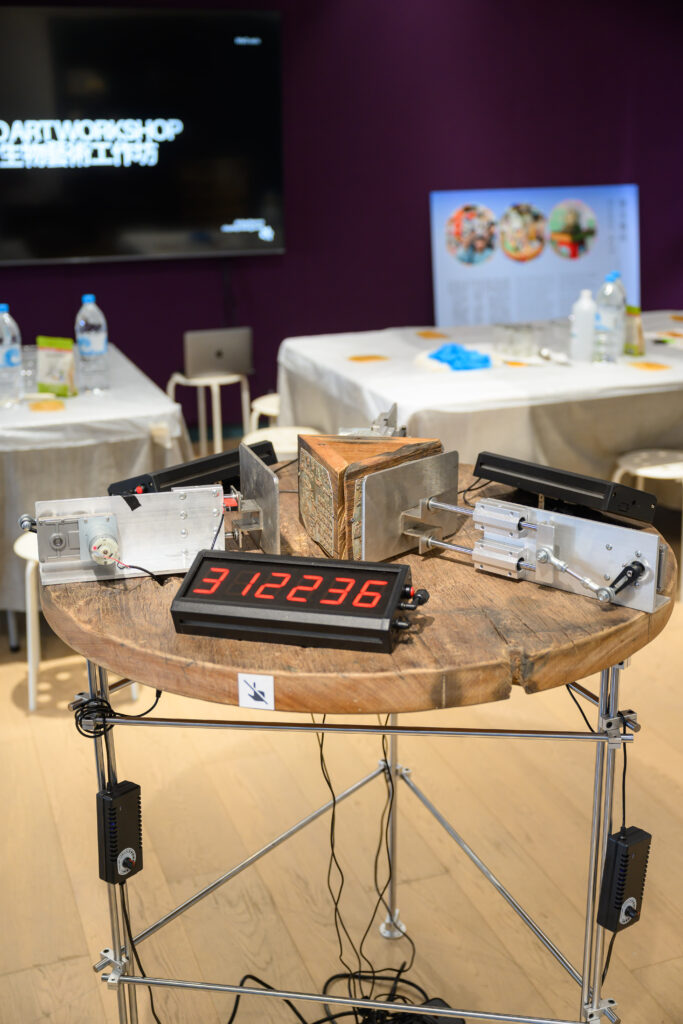
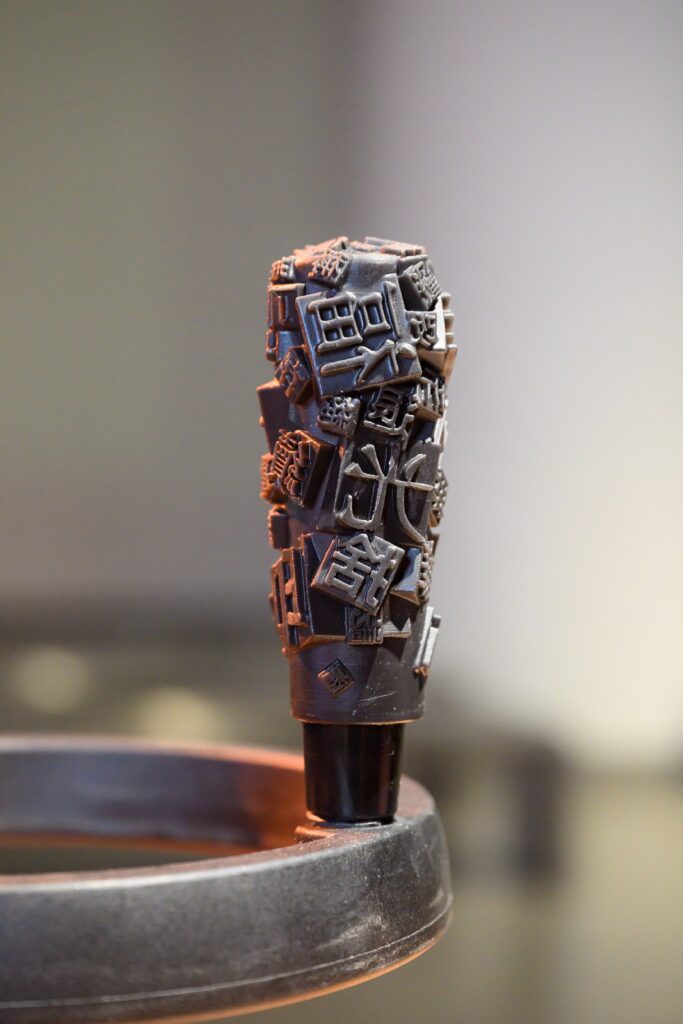
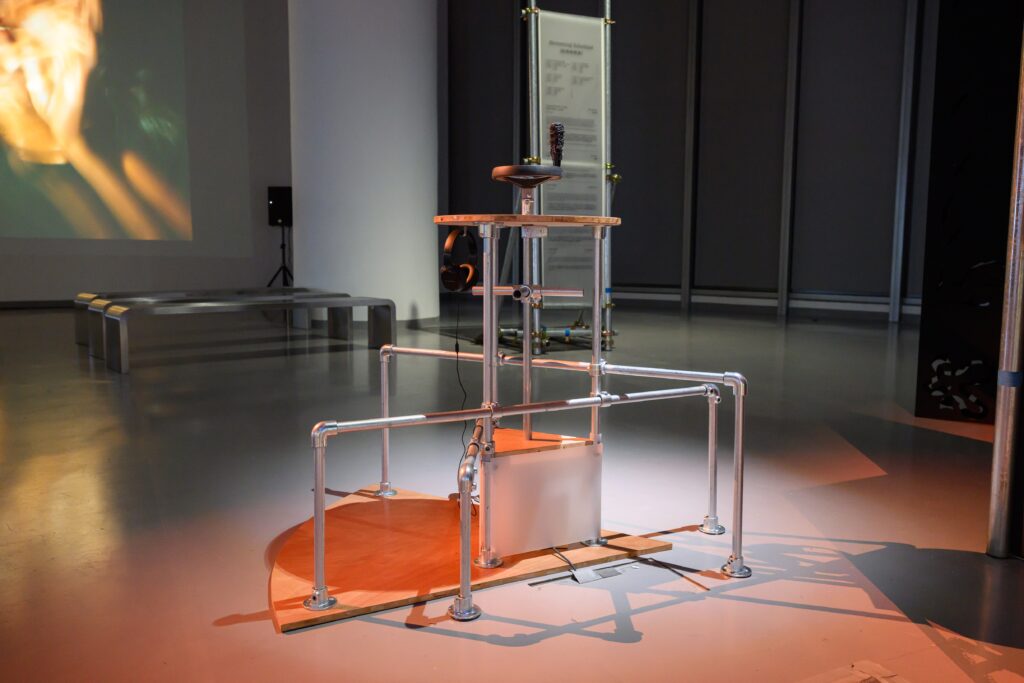
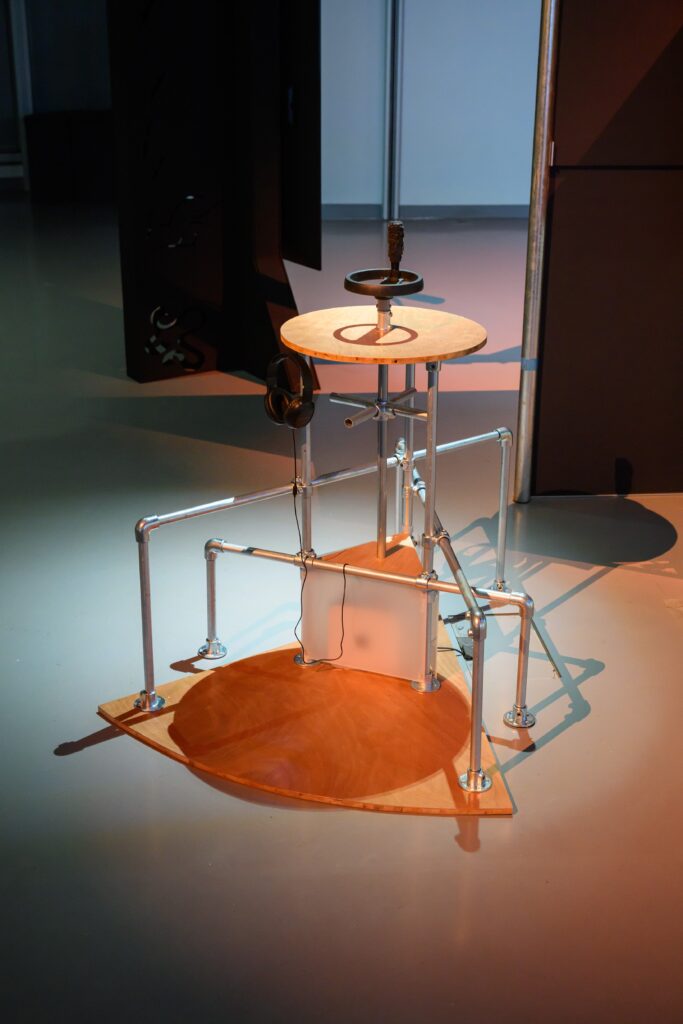
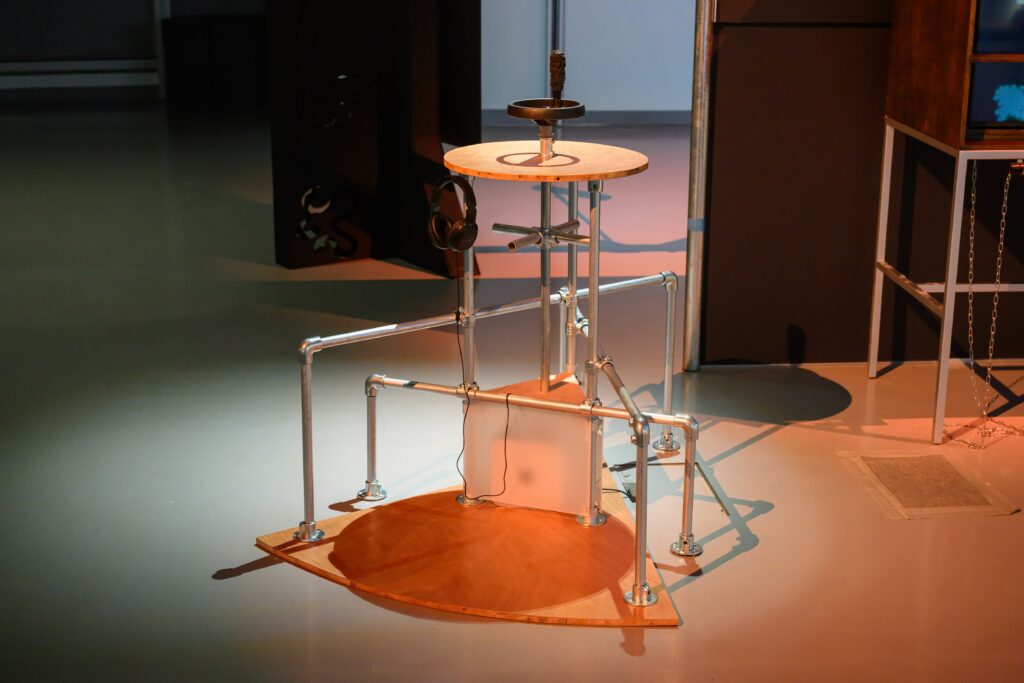
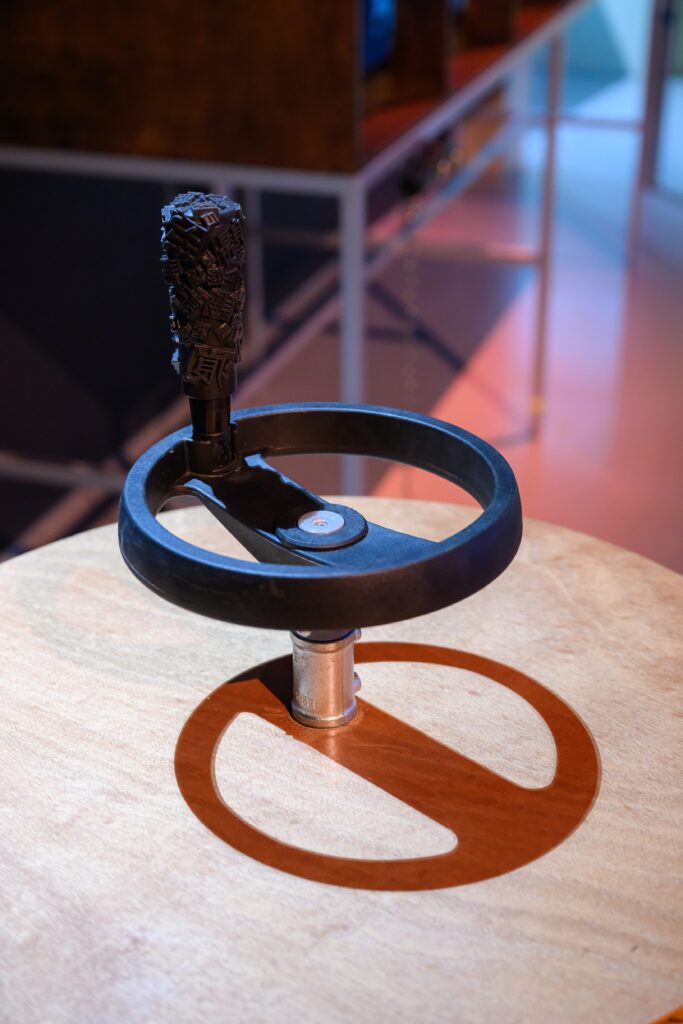
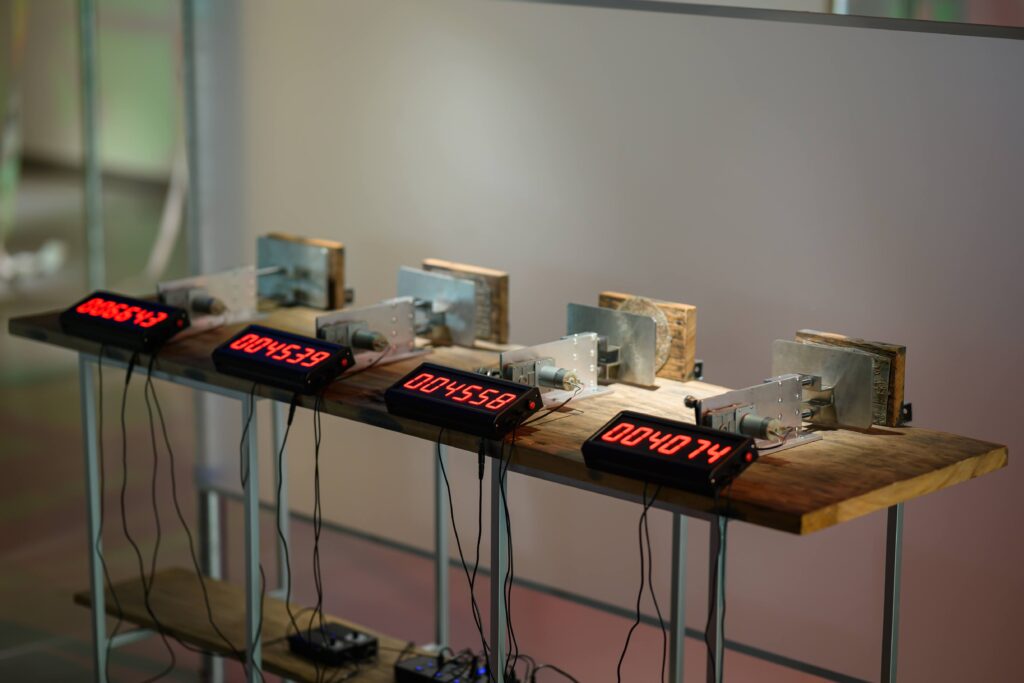
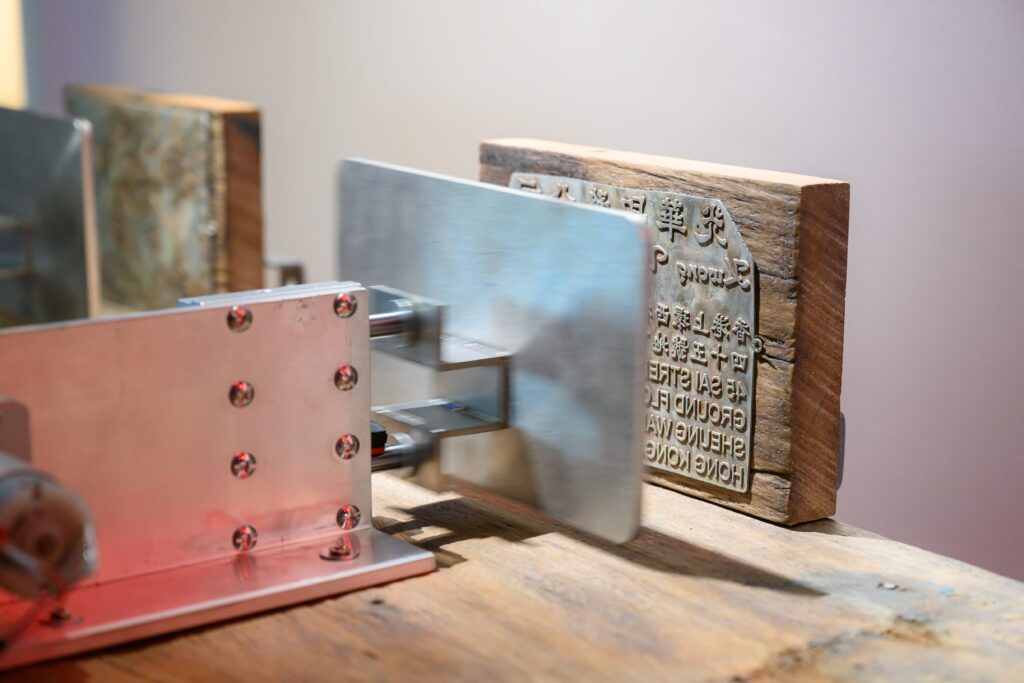
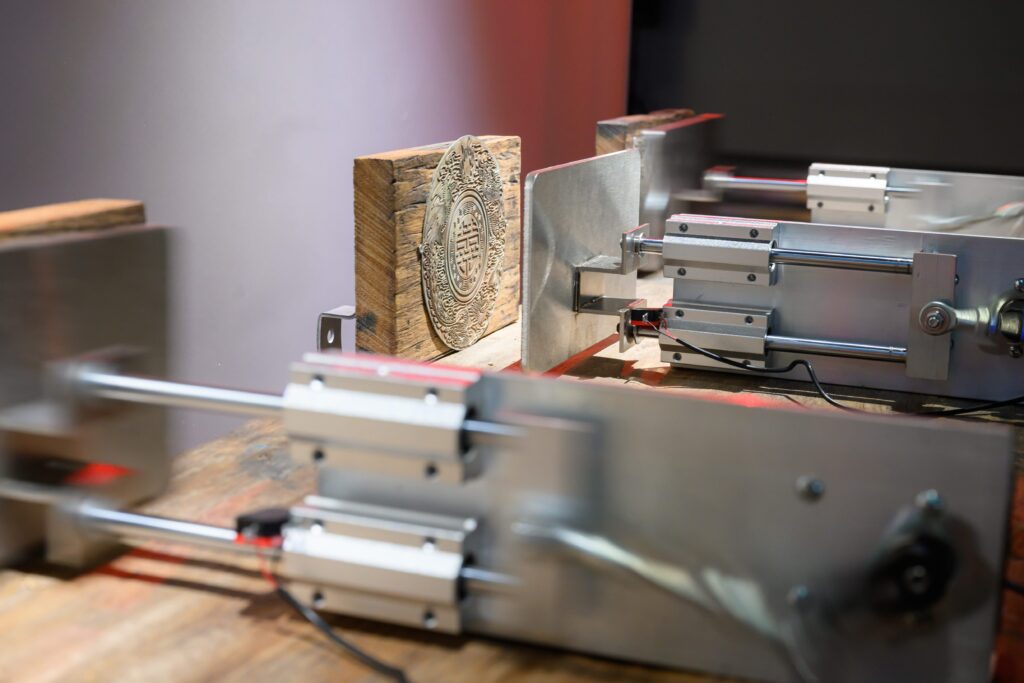
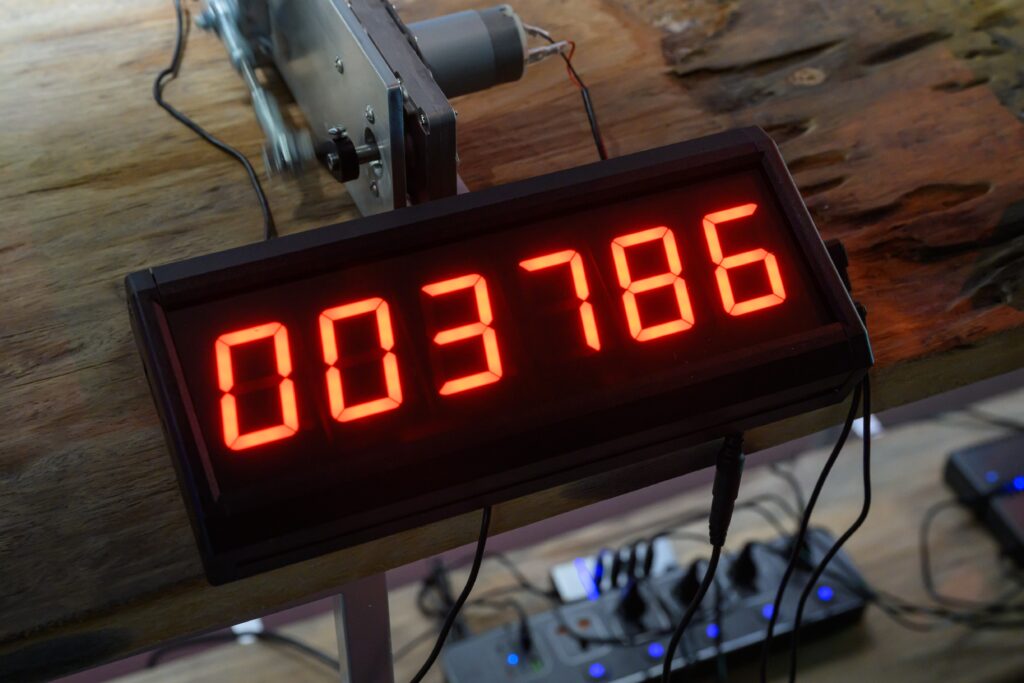
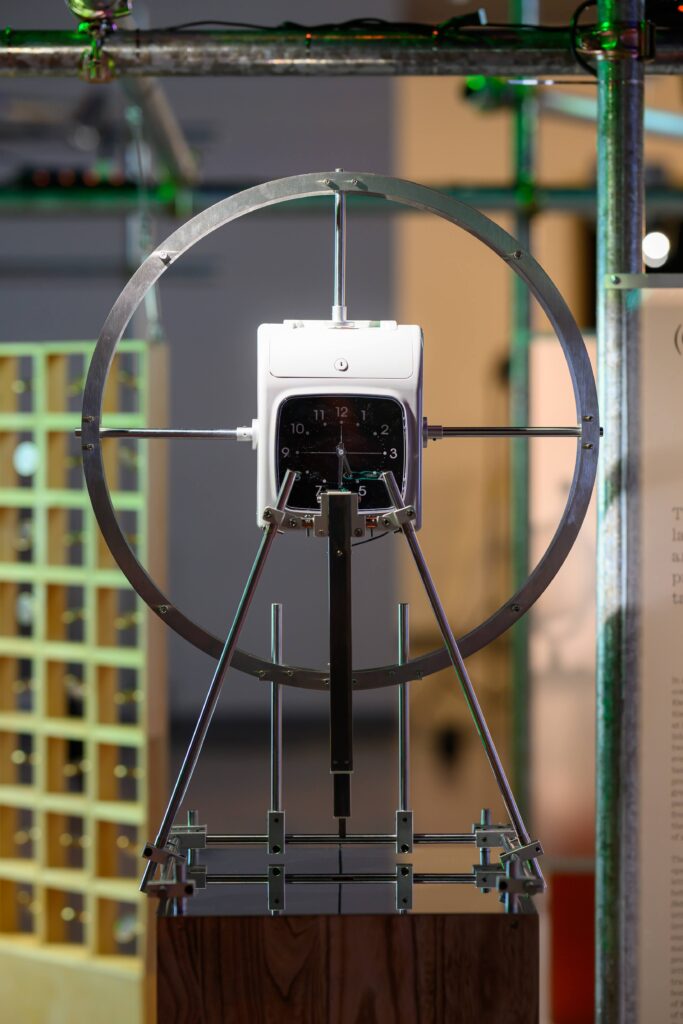
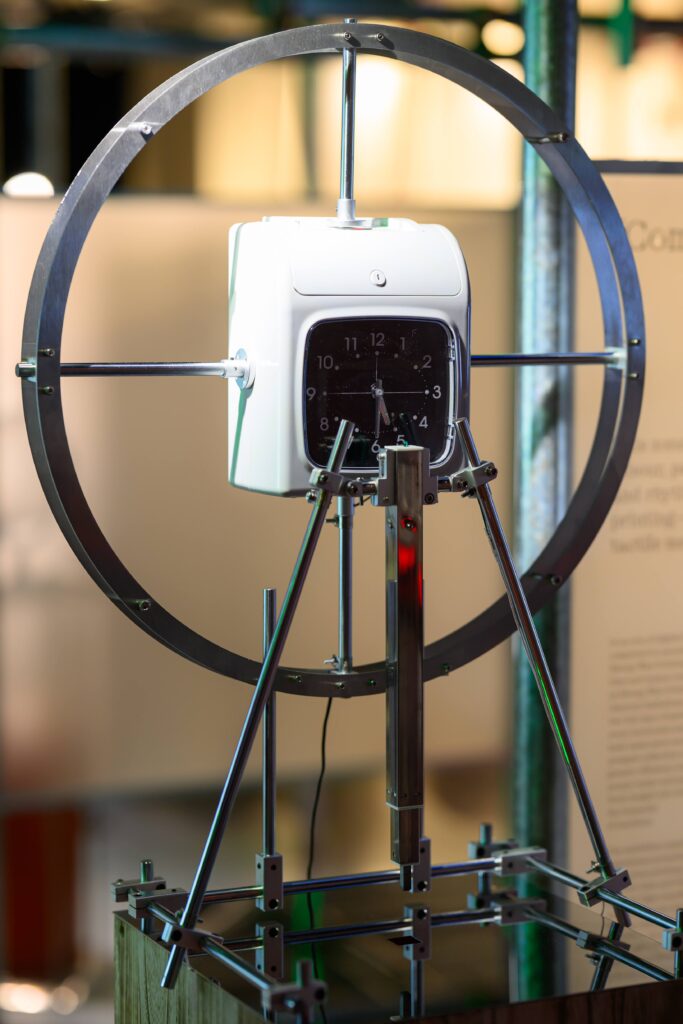
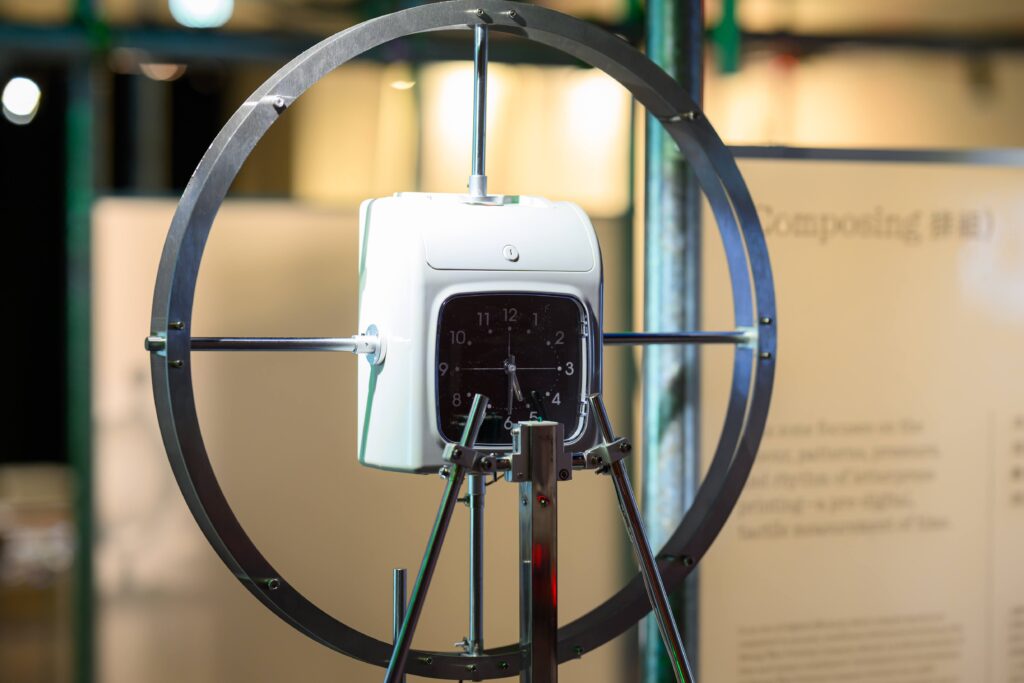
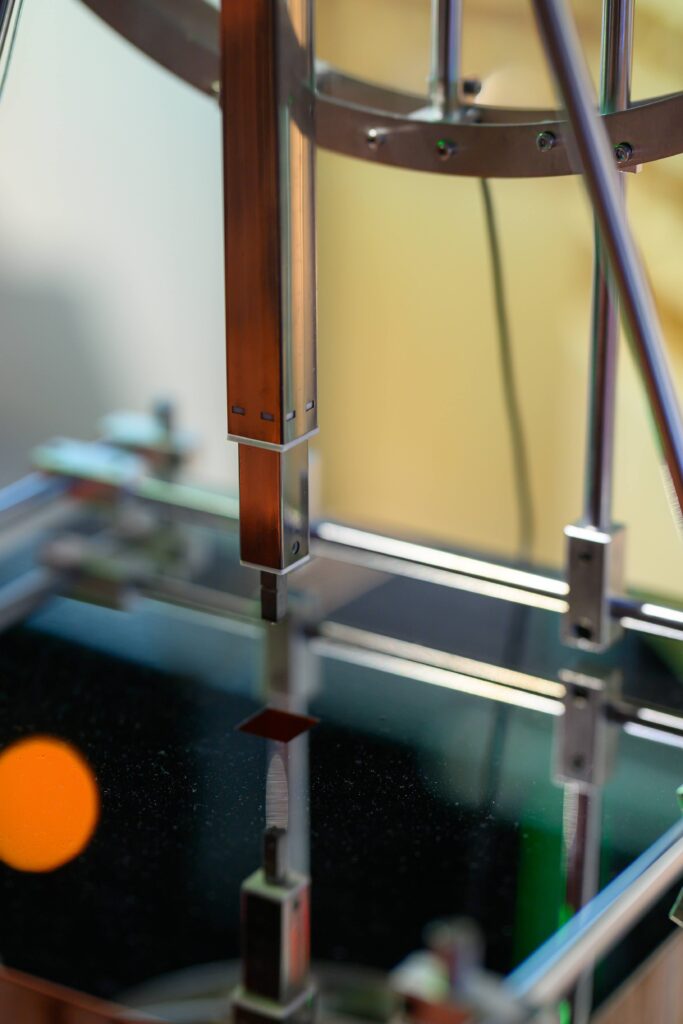
The exhibition consists of four works inspired by the operational procedures and intrinsic constraints of letterpress printing. These works explore the relationship between time and the humanity of machines. Sams Cheung’s Between Type transforms the tedious hunt for individual letterpress sorts into a playful, tactile game of discovery, inviting viewers to linger in the quiet joy of material encounter. Yiu Cheng and Issac Li’s Six Thirty utilises a malfunctioning clock as the driving mechanism for the printing process, reflecting on the contemporary possibilities of letterpress printing. Ceci Lavina’s The Human Crank translates the visual syntax of letterpress into a visceral, bodily experience, threading the intimate personal histories of Kwong Wah Printing Company’s owner through the rhythm of the press. Finally, Frank Chan and Rogerger Ng’s Entropic Process subjects copper plates to calibrated pressure, revealing the fragility and resilience of both material and maker in a poignant meditation on impermanence and endurance.
Through these works, the exhibition encourages viewers to move beyond regarding letterpress as a mere relic of the past and to embrace it instead as a living, deeply humanistic practice that bridges history and the present, labour and creativity, materiality and emotion. It further explores how movable-type printing can transcend its original functional role to become a vital artistic medium that extends across disciplines and media.
排組
本展區著重探討活字印刷的勞動、規律、壓力與節奏——這是一種在數位時代當下、透過觸感來丈量時間的方式。
在數位效率主導的時代,複雜的版面設計只需數秒就能完成,而像光華印務公司這樣的傳統活字印刷工作室,卻體現了時間的深厚密度與人類的投入。參與光華印務的工作坊讓人深刻體會到這門工藝的本質限制。即使排印一張簡單的表格,也得用上一至兩天以人手逐條橫線和直線對上;在數位時代,同樣的工作只需短短幾秒就能完成。這種對比促使我們反思,科技帶來更高的效率,但高效率反而讓人們變得更加忙碌與疲憊。這門傳統工藝的限制令我們對時間、勞動,以及機器的「人性」有了新的體會。
本展區由四件作品組成,這些作品皆從活字印刷的工序與本質限制中獲得啟發,並共同探討時間與機器的「人性」之間的關係。張琛的《辦尋》將尋找活字的繁瑣過程,轉化為一場充滿遊戲性與觸感的發現之旅,邀請觀者沉浸在與物質相遇的靜謐喜悅之中。鄭耀林與李競暉的《六點三十分》以故障的時鐘作為推動壓印工序的機制,反思活字印刷在當代的各種可能性。余思行的《The Human Crank》把活字印刷的視覺語法轉譯成一種內在且身體性的感受,並連繫著光華印務的故事與回憶。陳意峰與伍啟豪的《熵化過程》以為銅板的壓力測試為主要媒介,探問一段關係的韌性。
透過這些作品,本區域鼓勵大眾不再將活字印刷視為過去的遺跡,而是擁抱它作為一種充滿生命力且深具人文性的實踐,連結歷史與當代、勞動與創造、物質與情感。本區域也進一步探索活字印刷如何超越其原本的功能性角色,轉化為一種跨越多重領域與媒介的重要藝術形式。
Duration
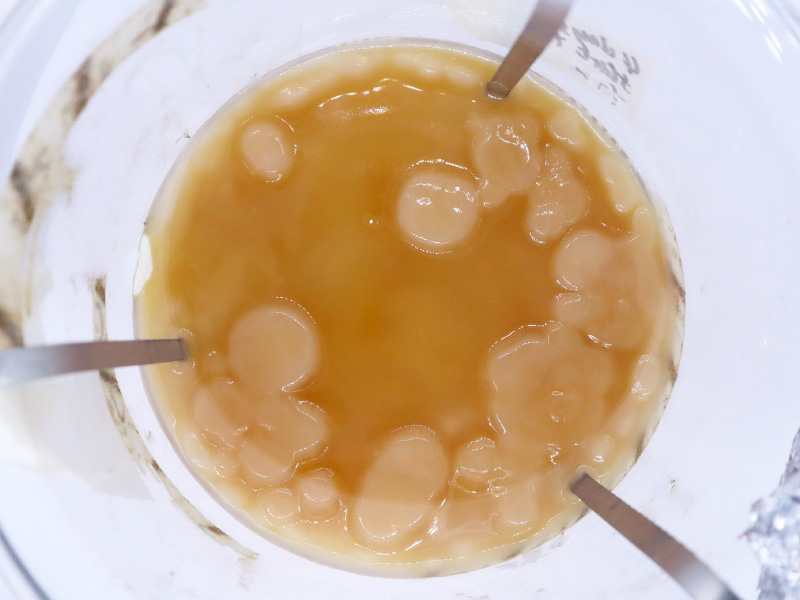
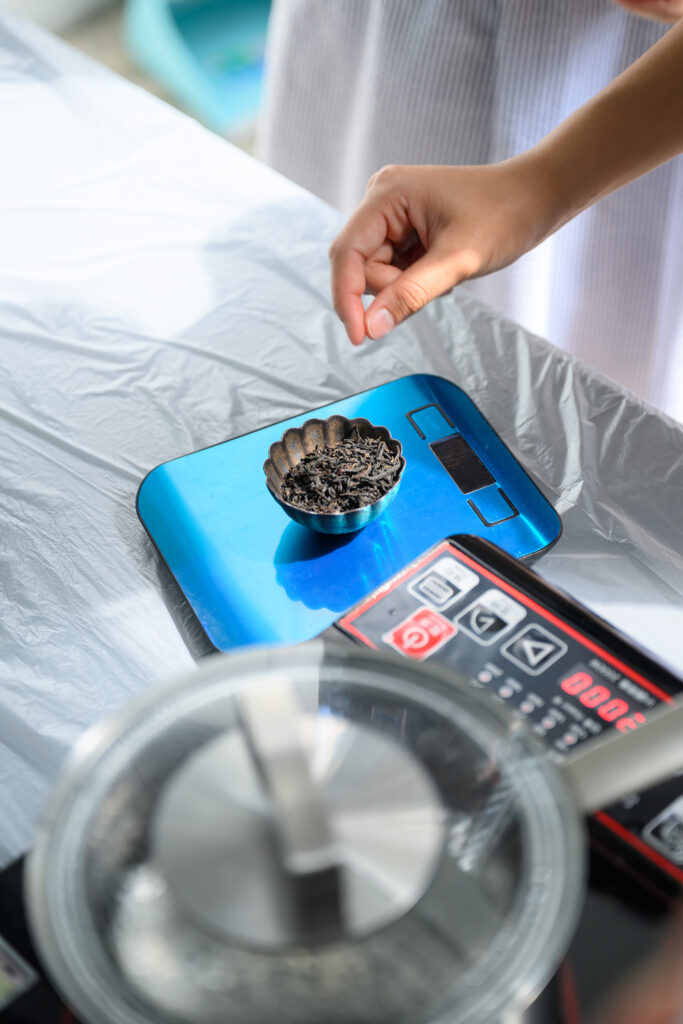
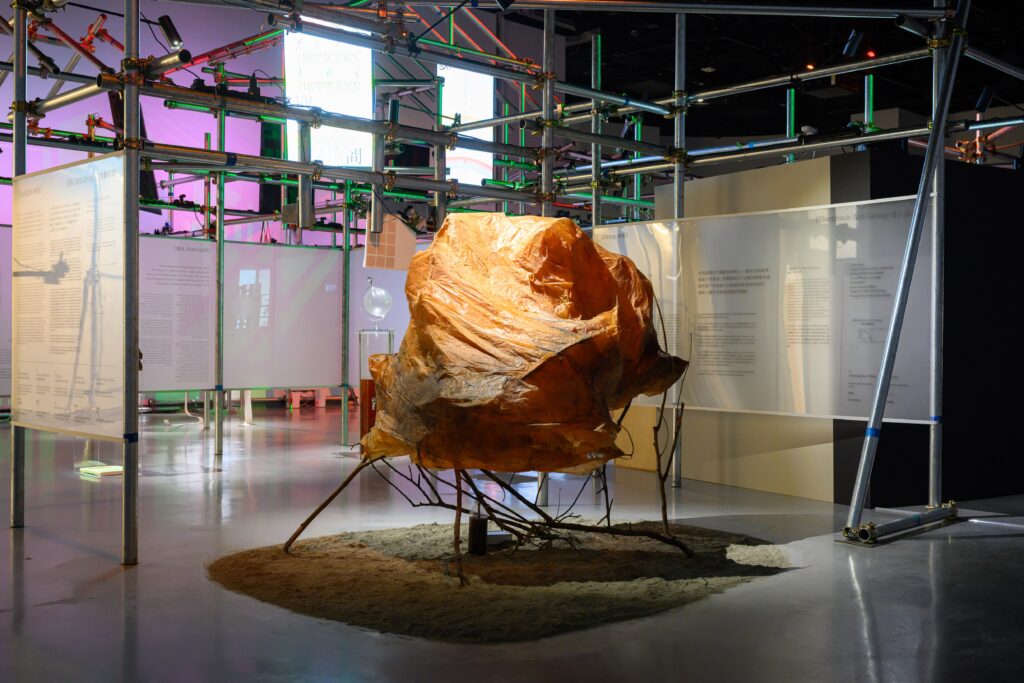
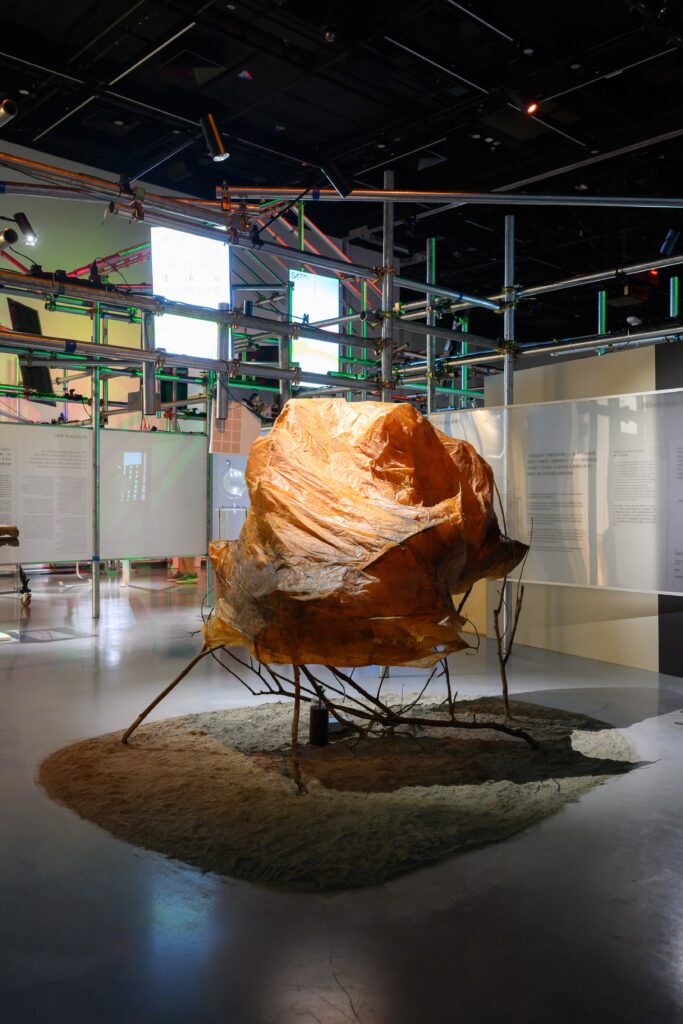
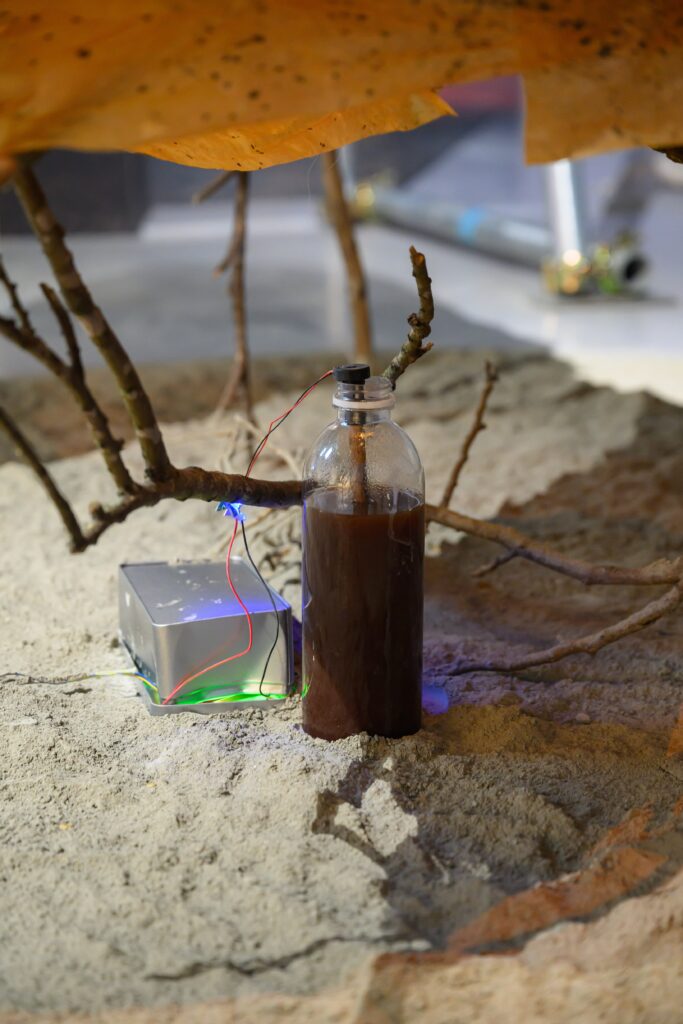
This zone represents organic, non-linear time—the slow, messy, biological rhythms that negotiate with control and measurement / slip away from neat quantification.The living SCOBY and tea works embody durée (lived time) in contrast to commodified clock time.
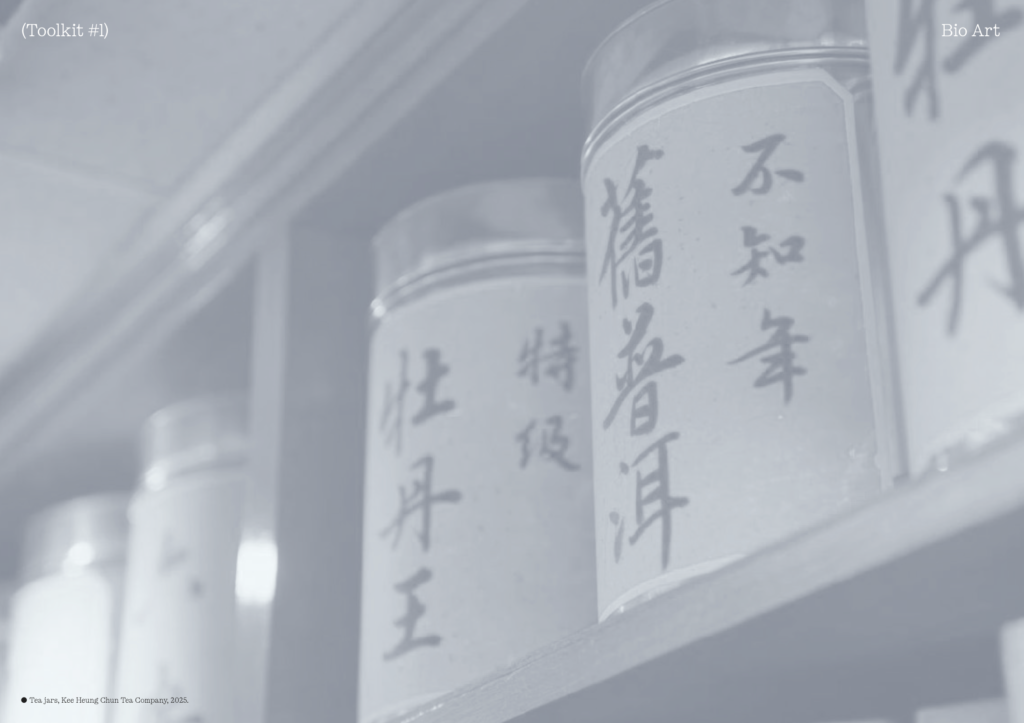
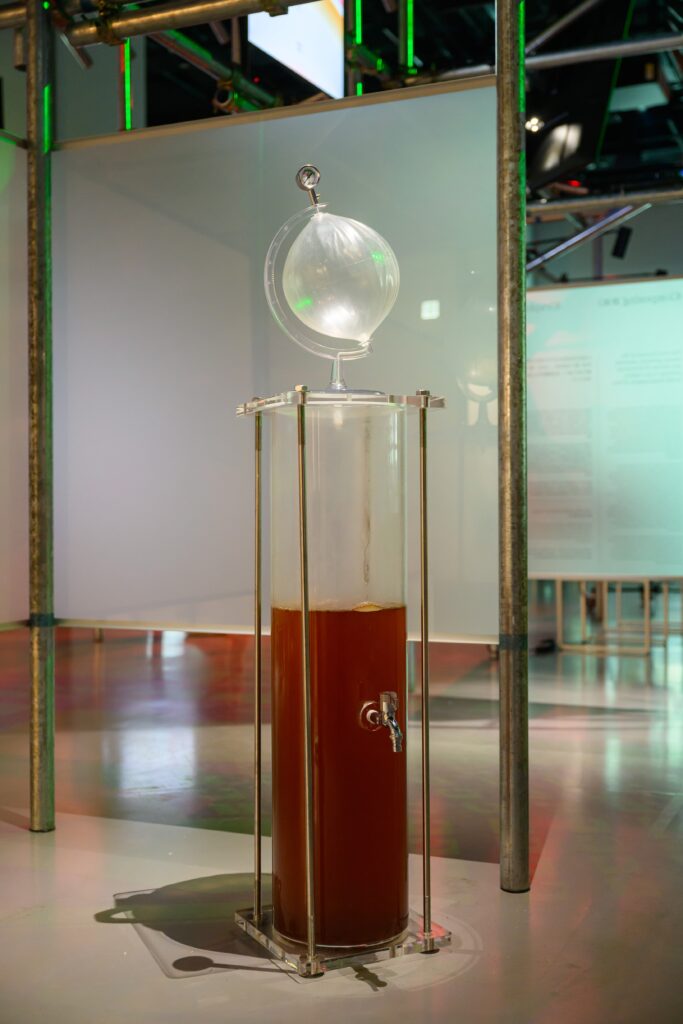
Tea, as it circulates globally, plays a crucial role at the ecological, political, and cultural nexus. From soil and bodies to microbial communities, its interactions reveal dense ecological entanglements. Old tea shops, as key vessels of Hong Kong’s community history, have witnessed everyday neighbourhood life, migration routes, and trans-local connections; Kee Heung Chun Tea Co. is one such site where sensory memories and travelling stories gather.
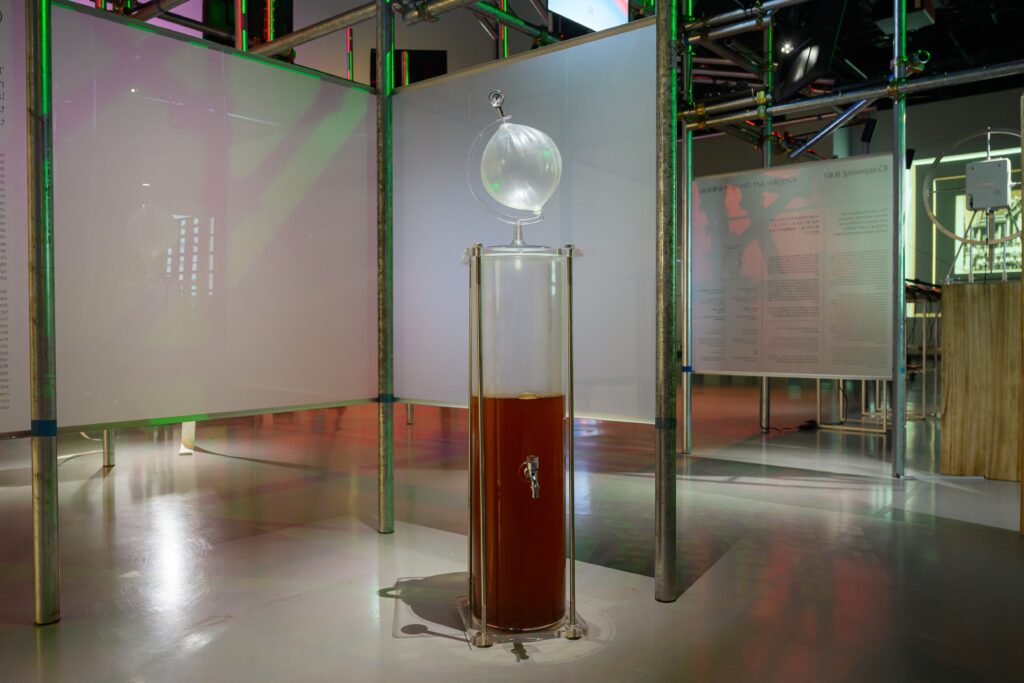
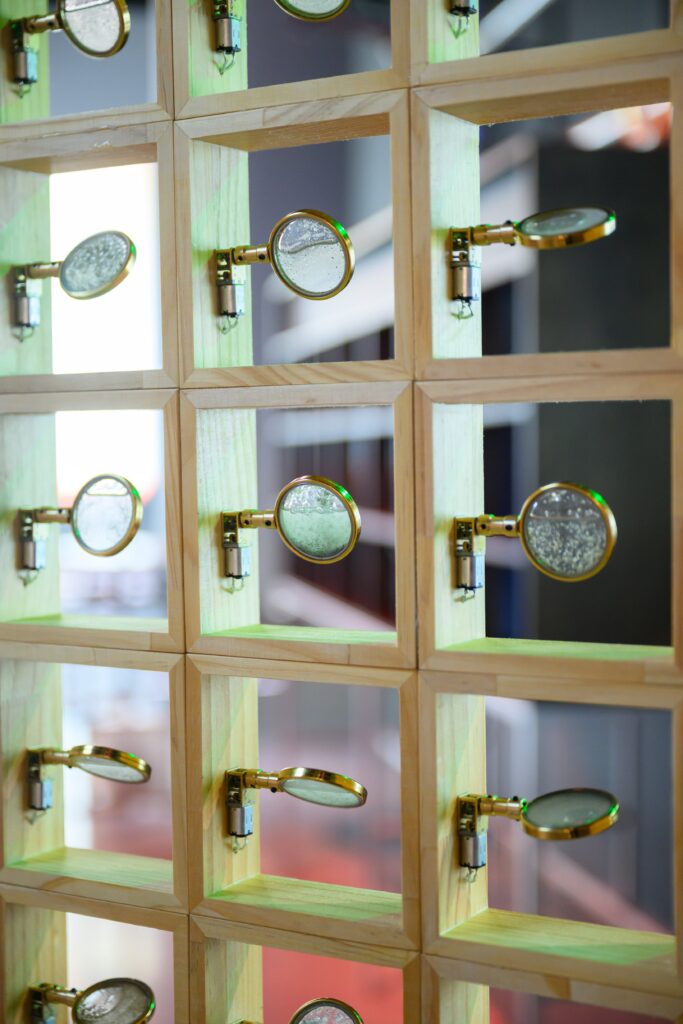
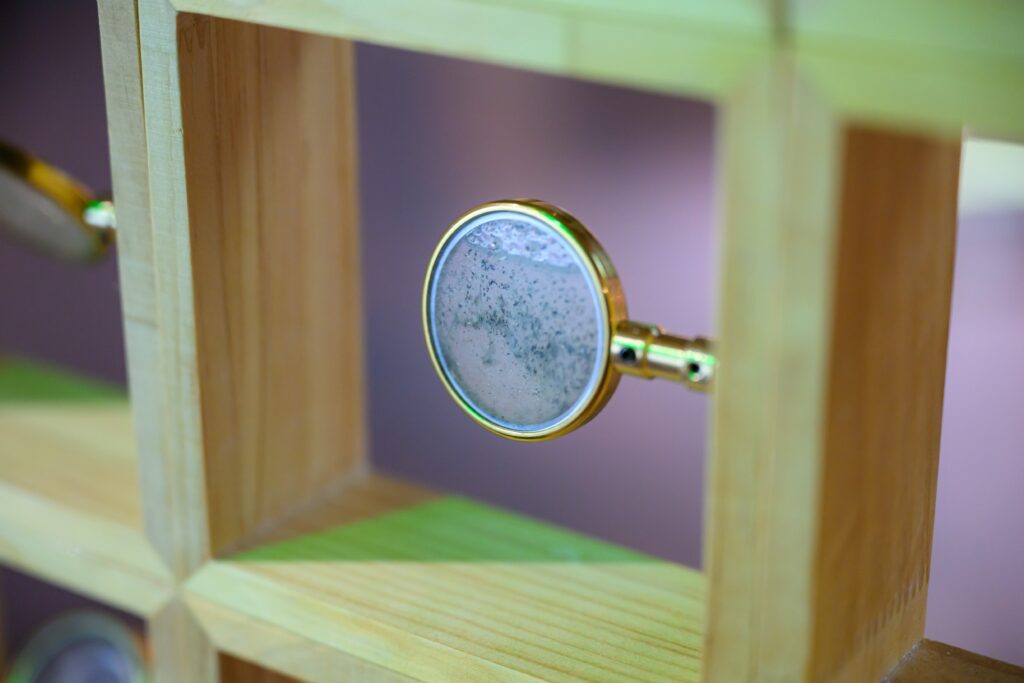
The exhibition is approached as a continuously operating living network, tracing how tea, SCOBY cultures, humans, and other species intra-act to reshape matter and meaning. Here, the life of tea is not a linear cycle but a process that repeatedly unfolds—across cultivation, fermentation, circulation as commodity, ingestion, and decomposition—each phase becoming a site of transformation across species and scales.
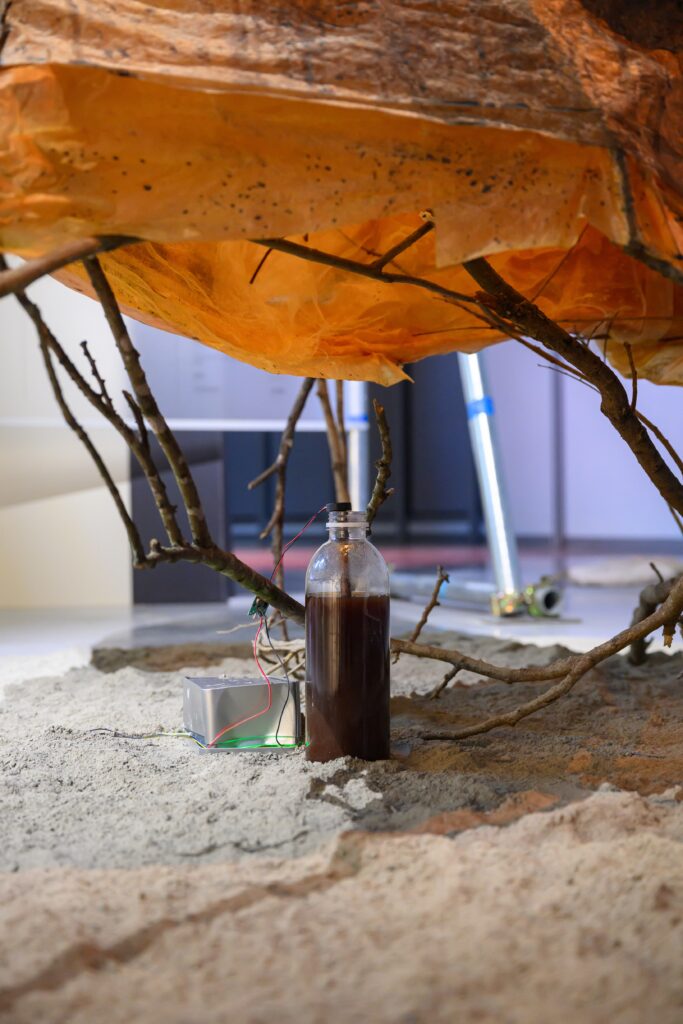
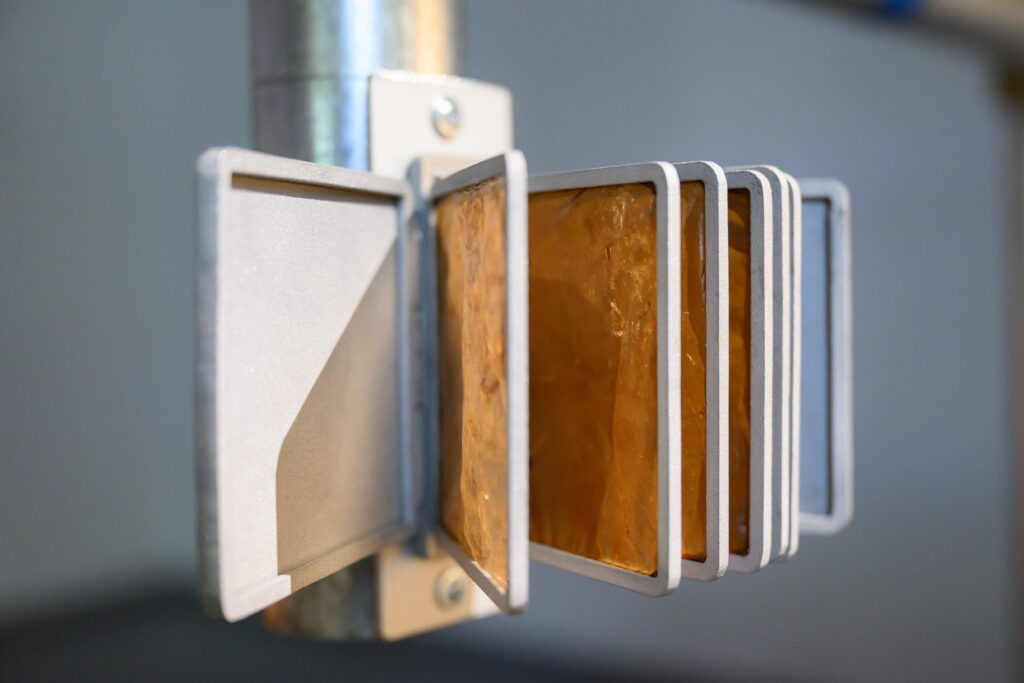
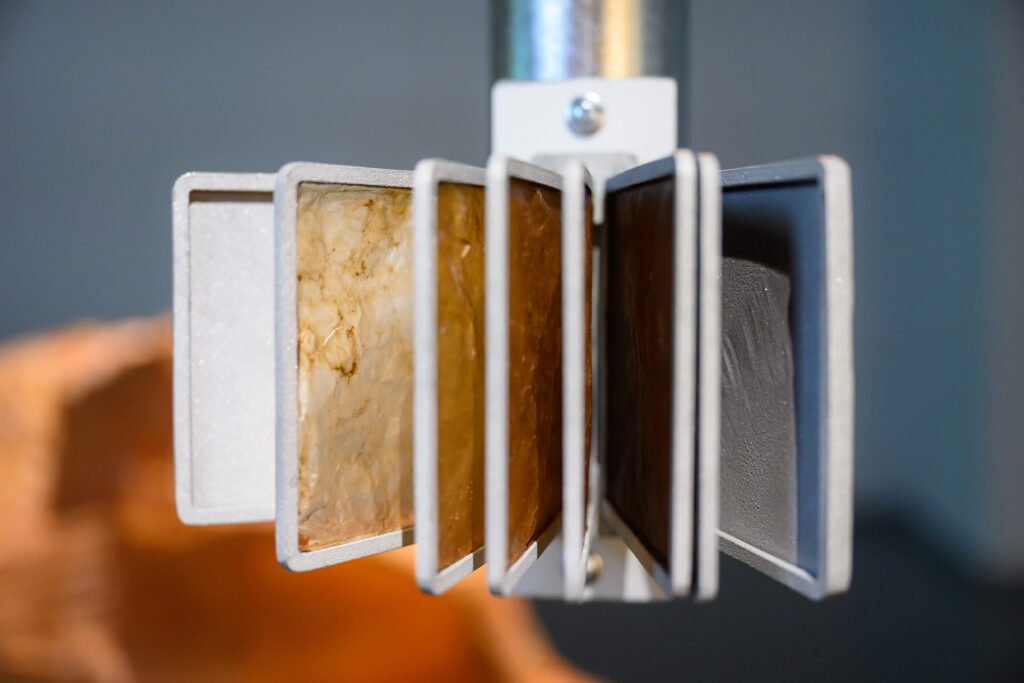
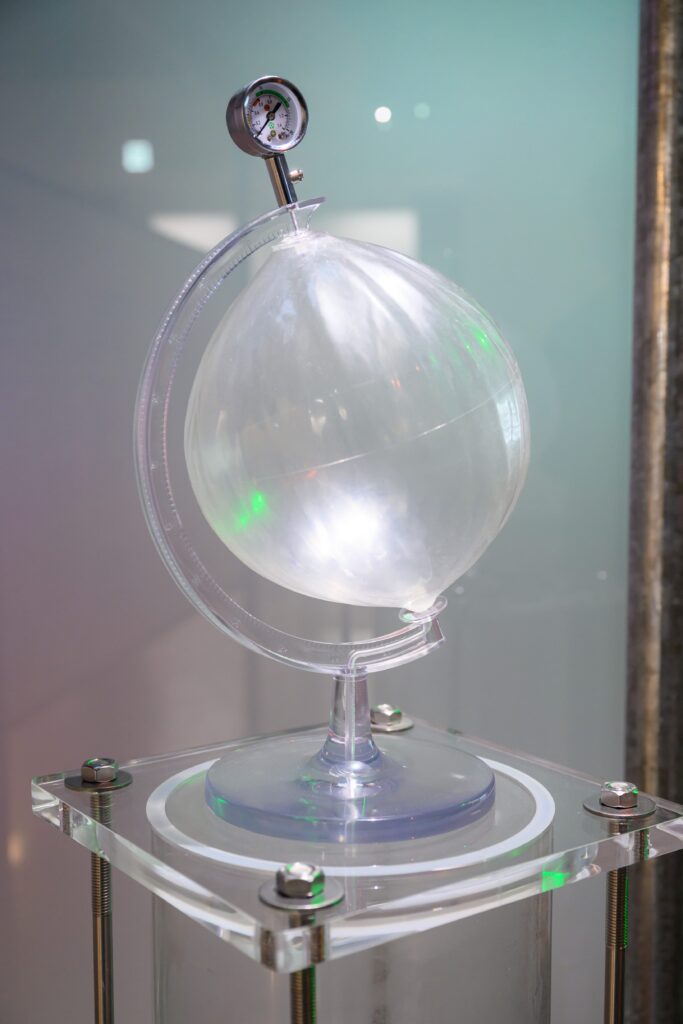
Within these transformations, the growth and reproduction of kombucha SCOBY is read as an instance of what Jane Bennett calls ‘vibrant materiality’ (Bennett 2010): microbes, tea, and sugar form a metabolic assemblage whose fermentation makes the agency of matter palpable rather than merely instrumental. Human gestures of measuring, feeding, touching, and ingesting take part in a posthuman kin-making with these nonhuman actants, as tea and SCOBY traverse the porous interface of the skin and momentarily blur species boundaries. Even in decomposition, tea leaves and residues move into cycles of composting and regeneration, nourishing other organisms and soils, making ‘waste’ a shared condition of living-together and echoing Donna Haraway’s call to ‘stay with the trouble’ in a damaged, multispecies-entangled world (Haraway 2016).
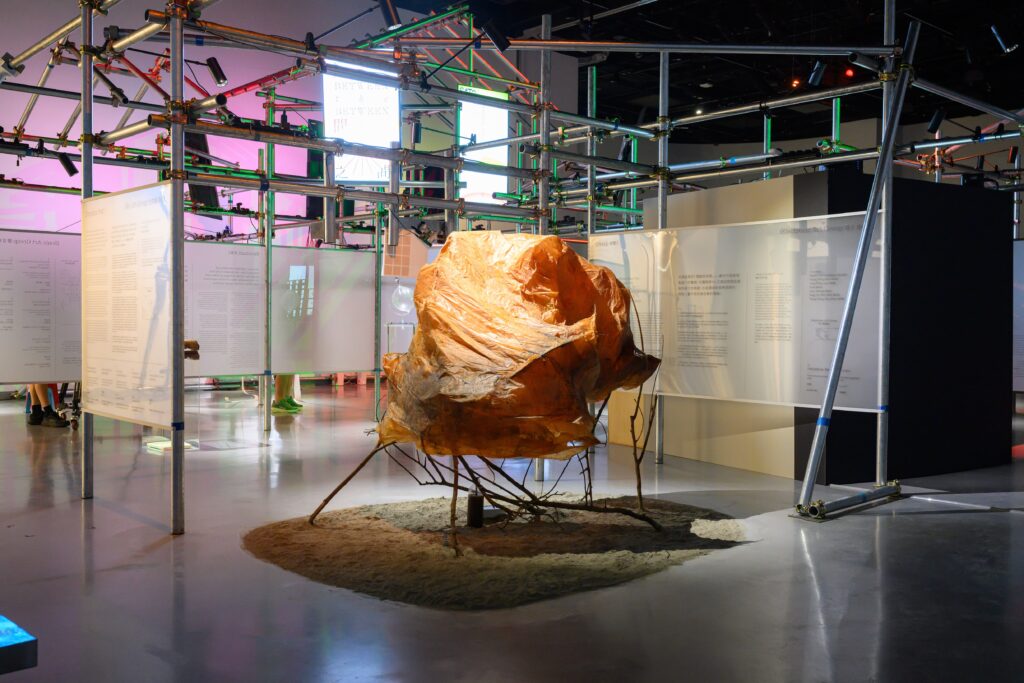
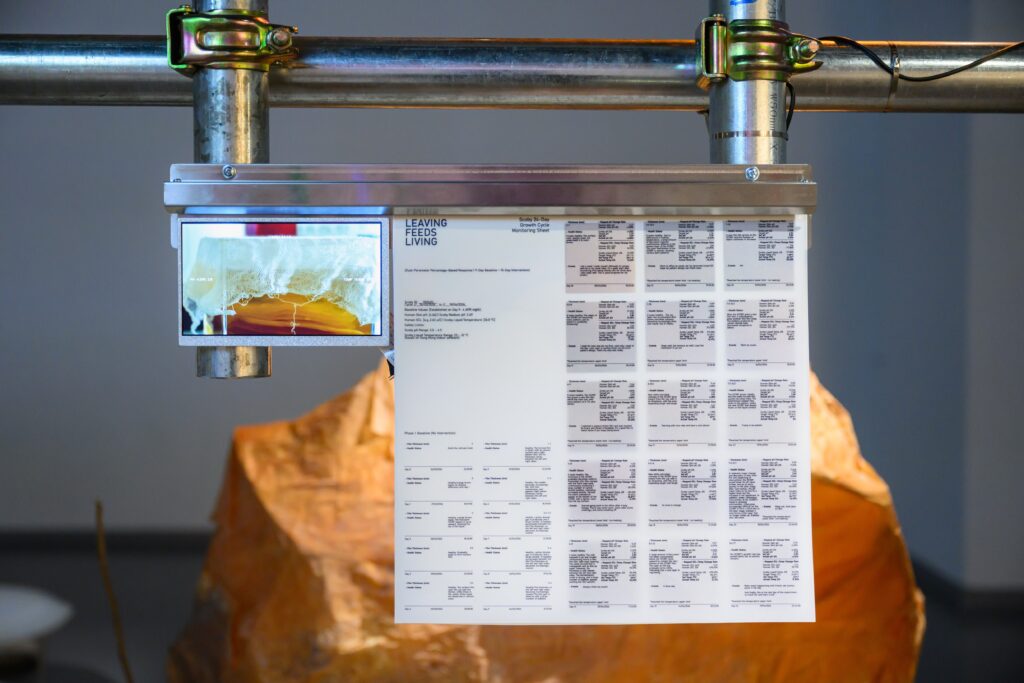
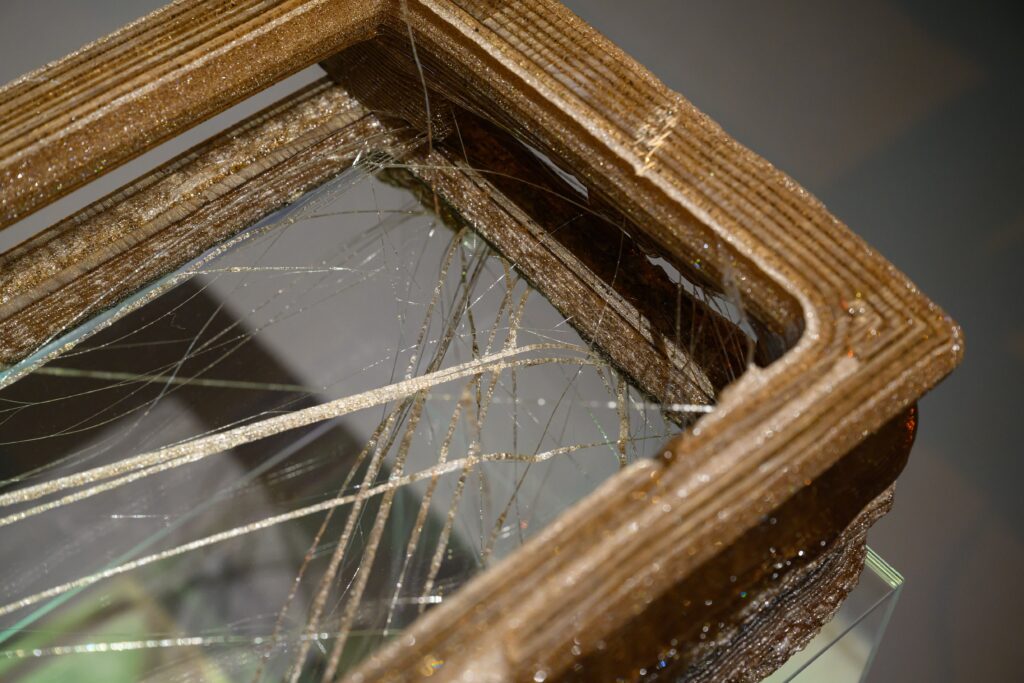
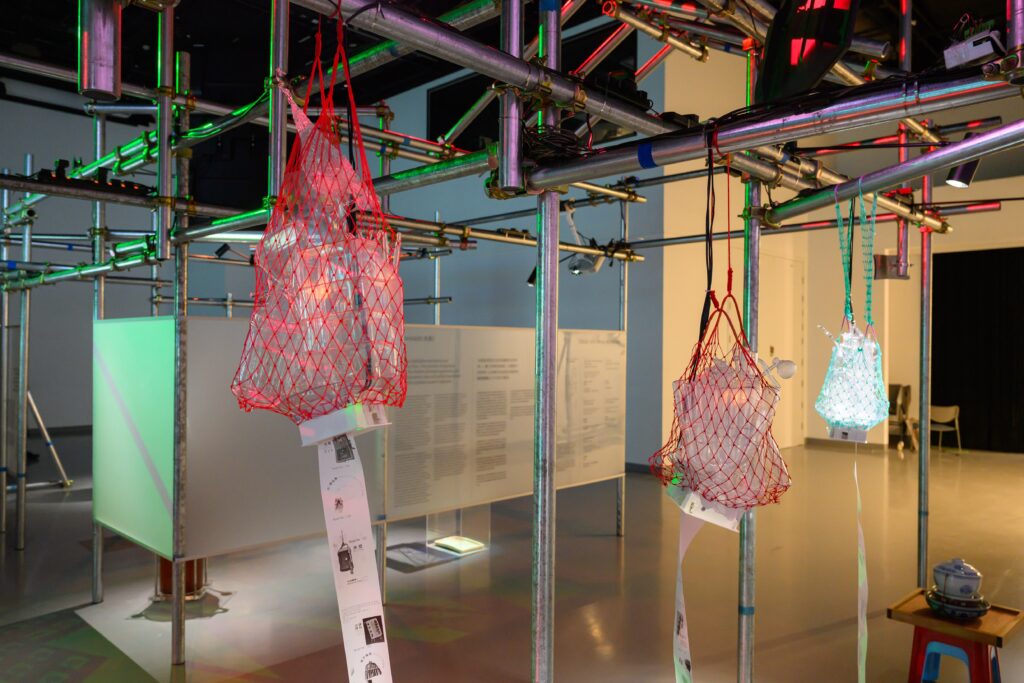
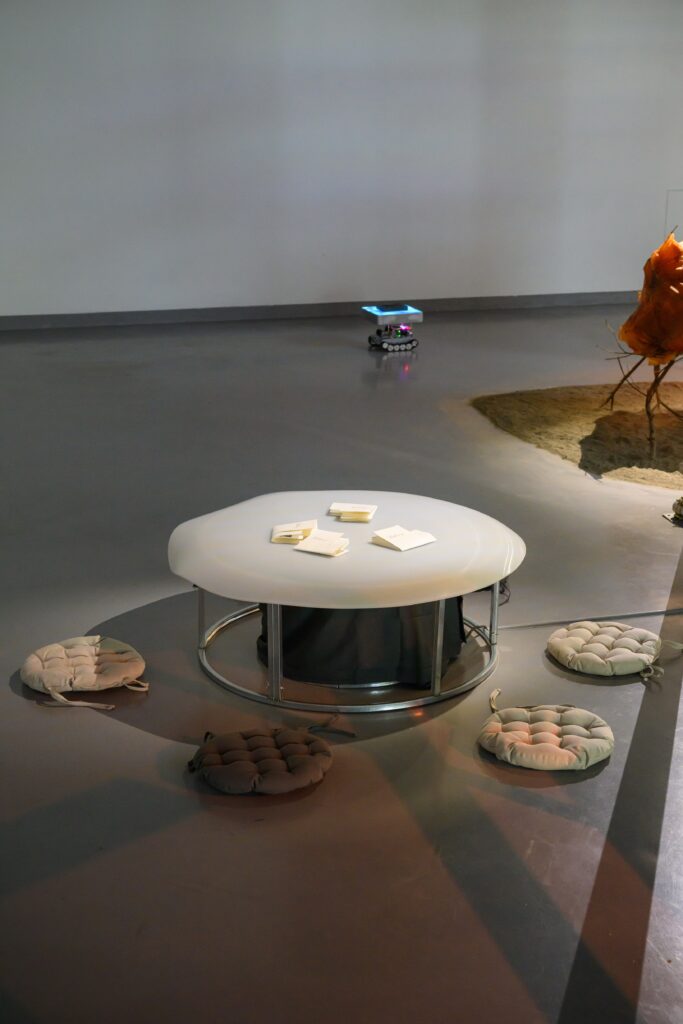
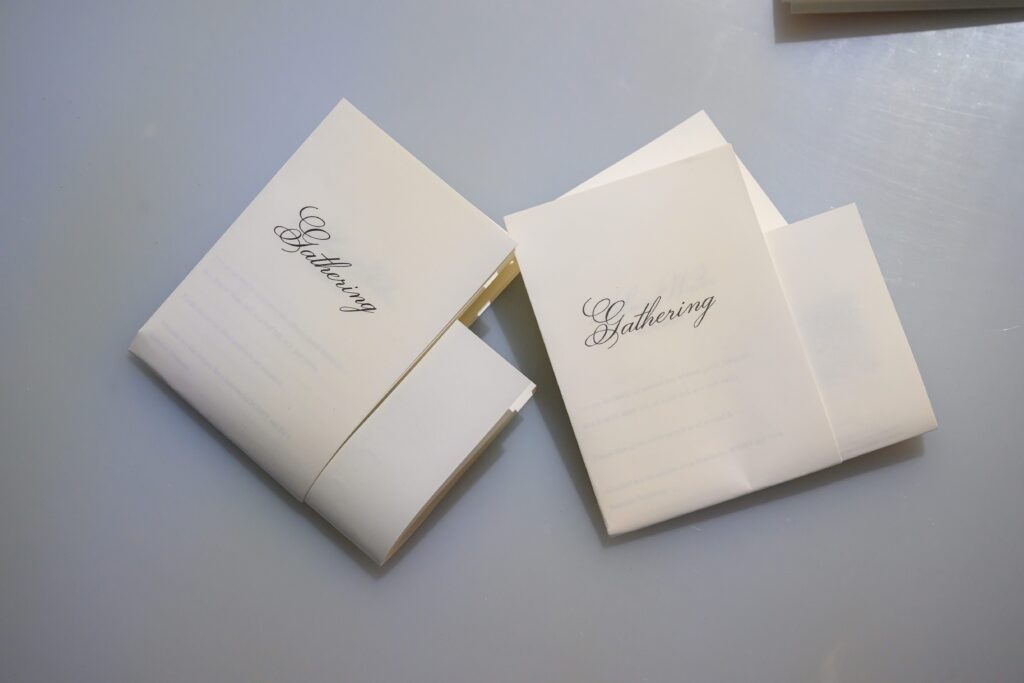
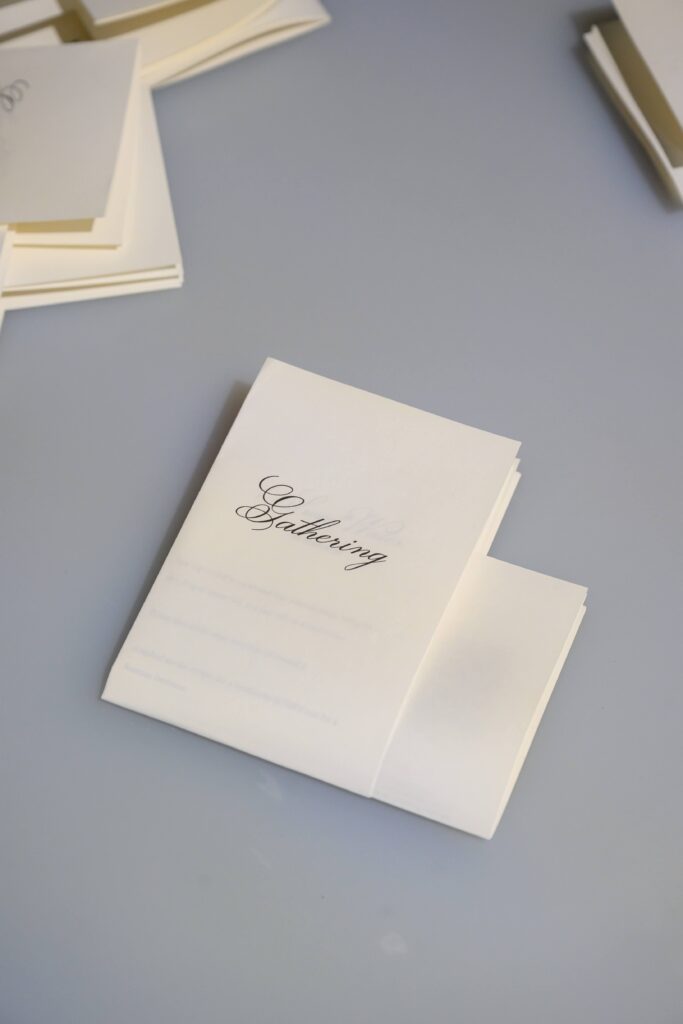
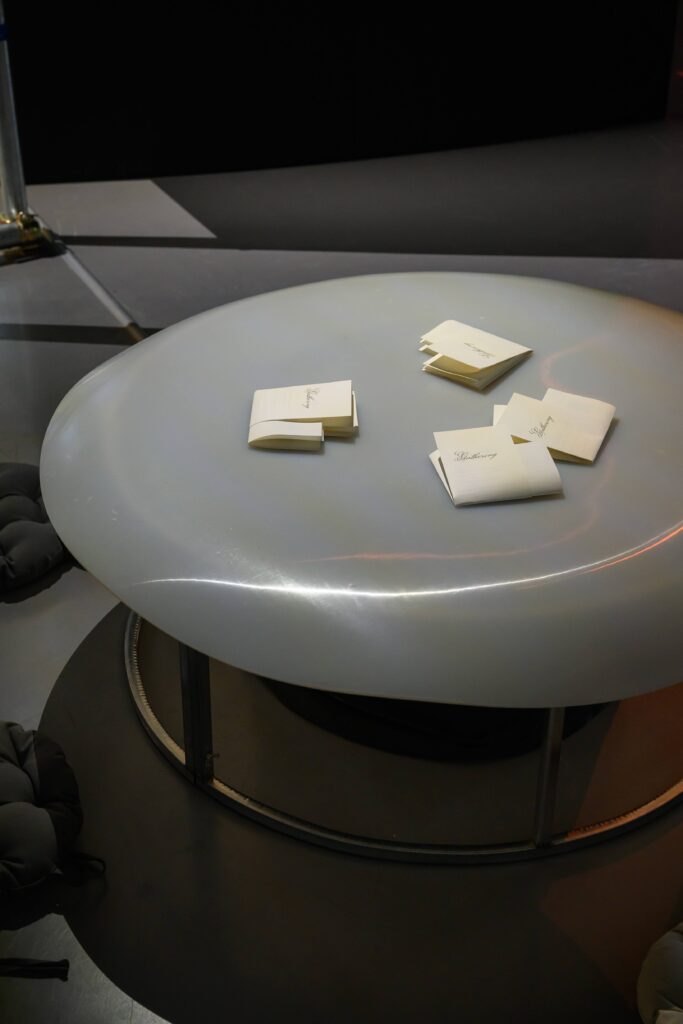
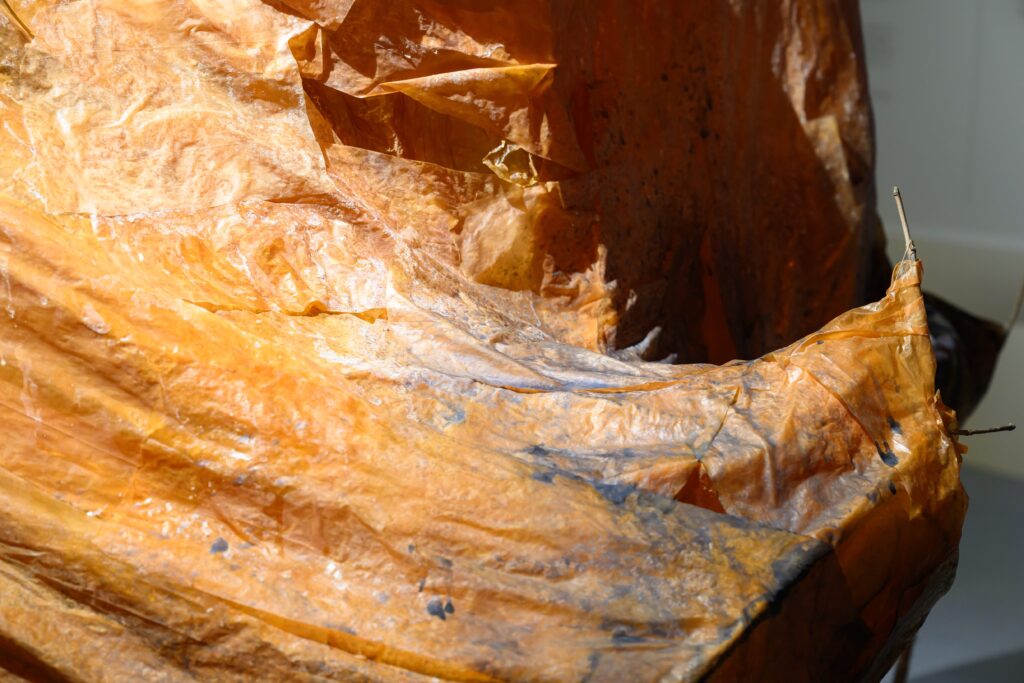
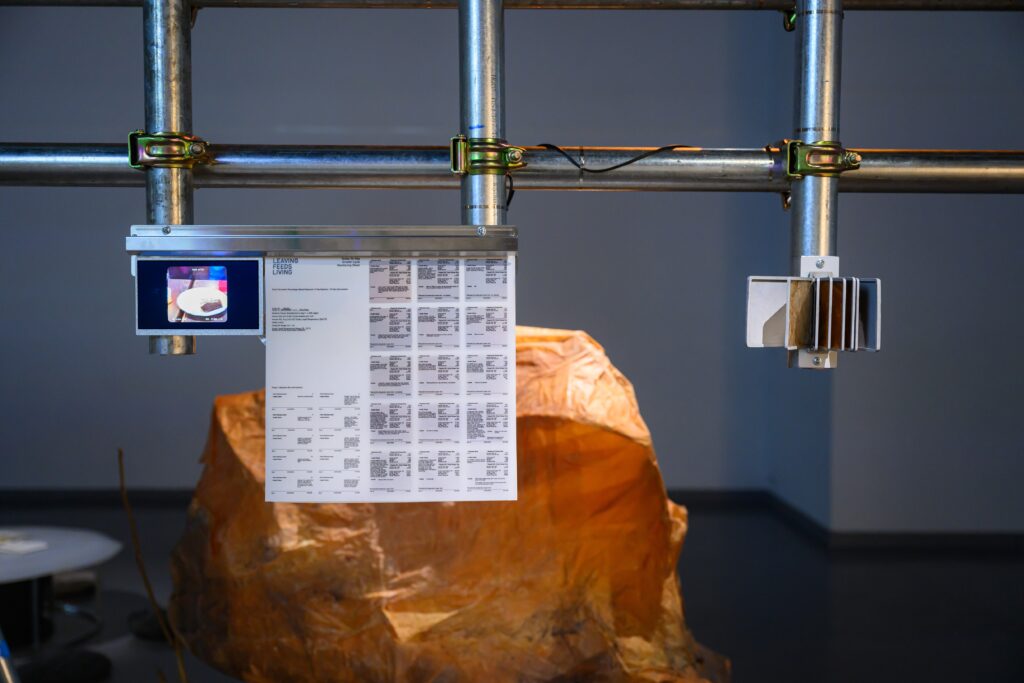
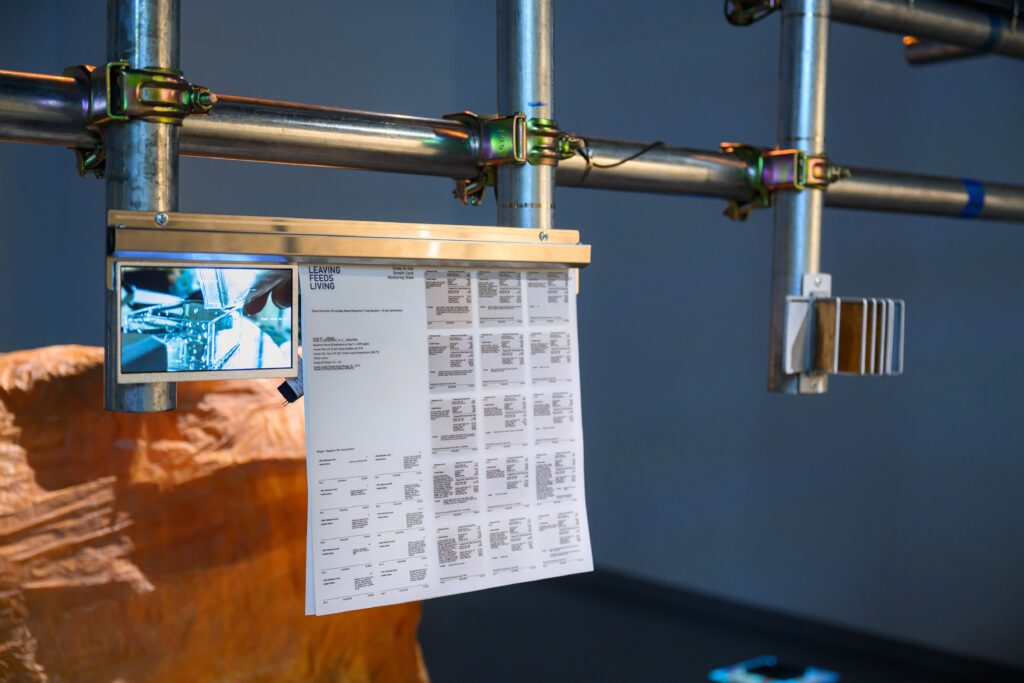
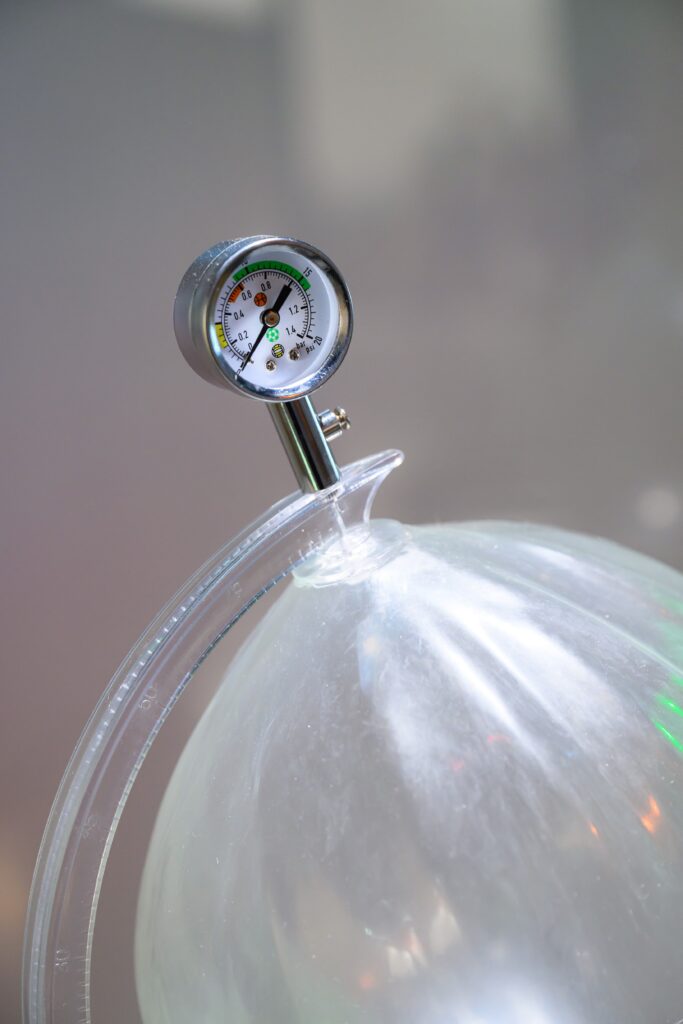
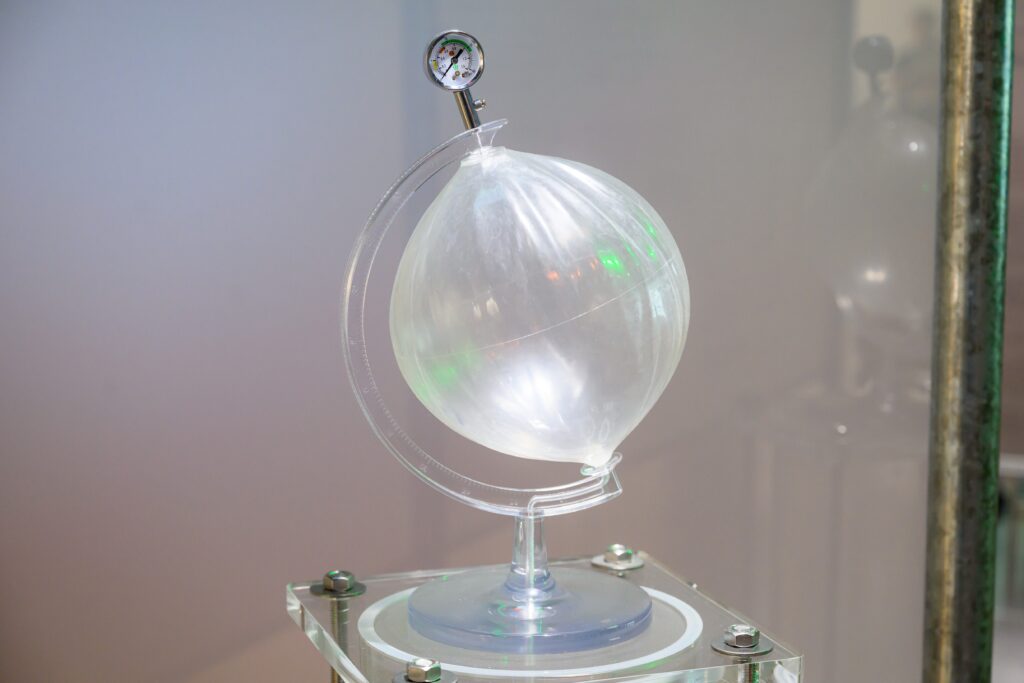
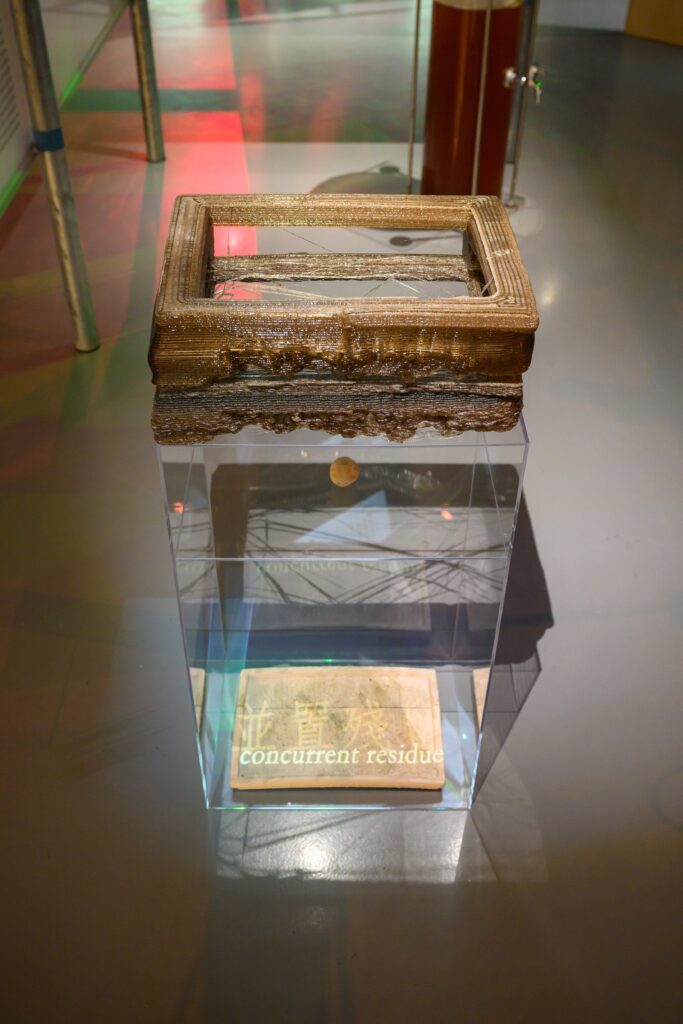
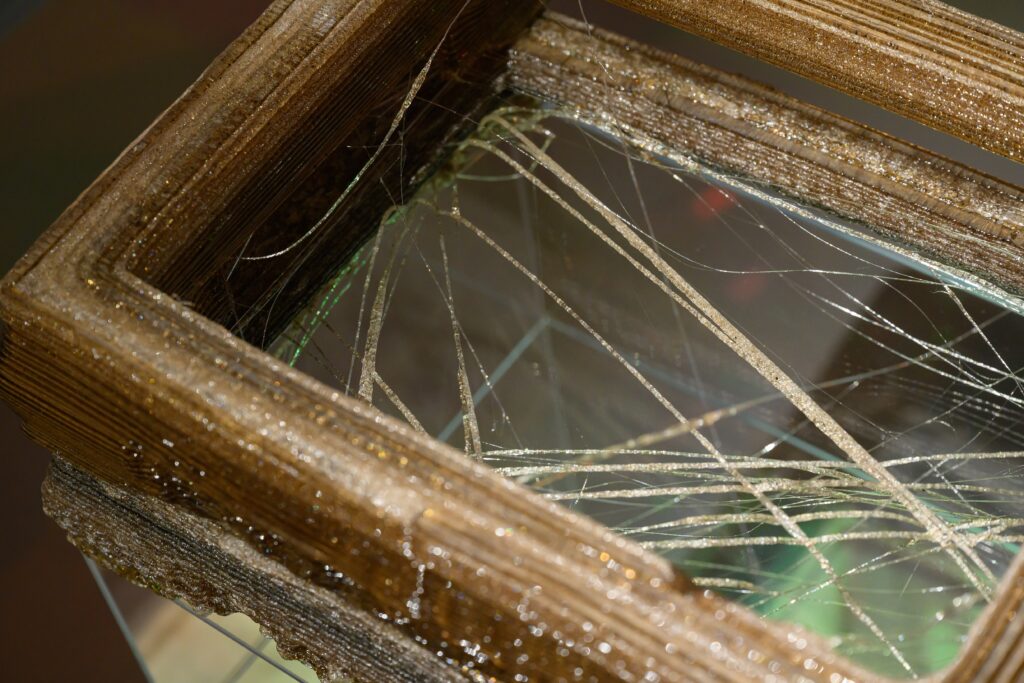
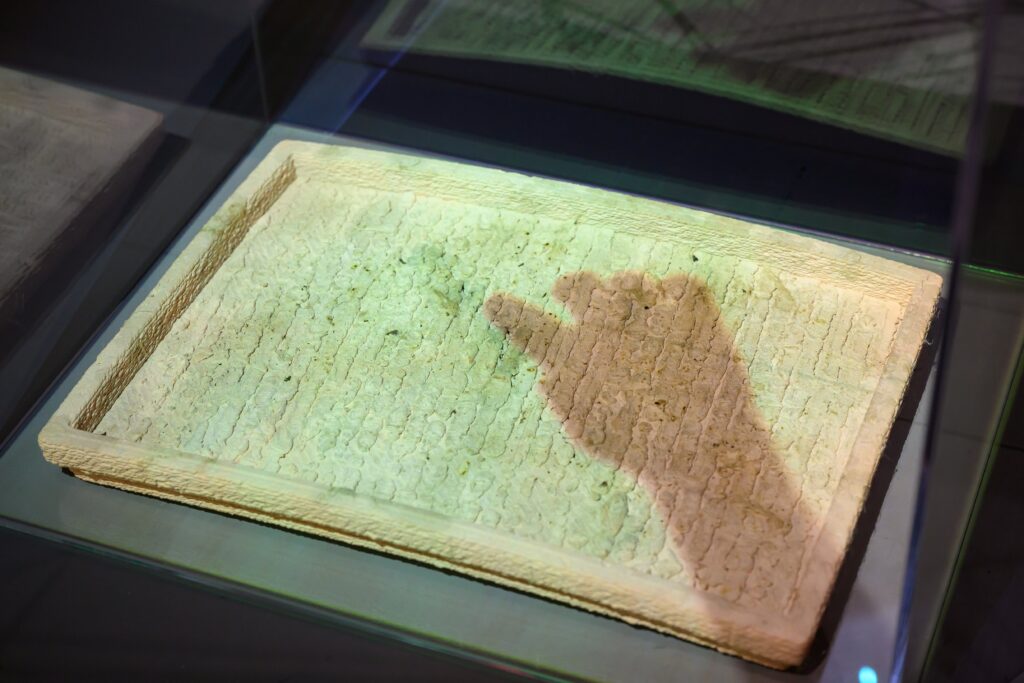
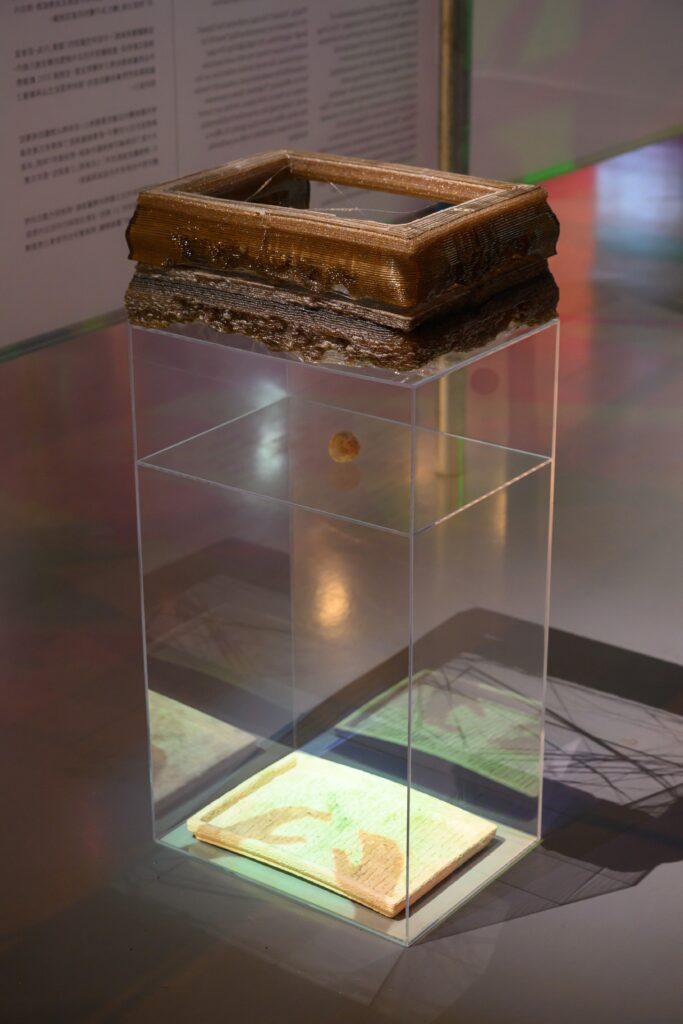
The five works each focus on a different moment in these entangled lives: Tian Zhang’s Leaving Feeds Living treats SCOBY grown from Tibetan tea and migrant bodily data as a living ID of affective belonging; Melody Qingmei Li’s Concurrent Residue turns a family tea tray and tea dregs into a sensory memory machine; Aaron Lam Kwok Yam’s Holding Breath refigures tea trade and colonial routes through gas-driven floating forms; Gabriella Lai’s Tea Pe(s)t: Sooty centres tea ‘pests’ and their traces to question how value is assigned in economic and ecological systems; and Cheung Ching Yu Annisa’s Gathering stages SCOBY clusters as ‘living fountains’ whose collective movements model the resilience of more-than-human communities.
時延
本展區呈現有機且非線性的時間——那些緩慢、混亂的生物節律,既與控制與測量相互交織,又從整齊的量化中悄然溜走。活體 SCOBY 與茶藝作品體現了「持續時間(durée,即被體驗的時間)」,以此對比商品化的時鐘時間。
全球流通的茶葉,於生態、政治與文化的紐帶之中一直扮演重要角色,從土壤、身體到微生物群落,茶的各種互動展現了生態糾纏。老茶店作為香港社區歷史的重要載體,與茶葉一同見證街坊生活、遷移足跡與跨地域連結,而奇香村茶行正是承載這些感官記憶與流動故事的場域。小組將展覽視為一個持續運作的生命網絡,探索茶葉、紅茶共生菌、人類與其他物種的內在互動,如何不斷重塑物質與意義。茶的生命在此並非線性循環,而是一種反覆展開的過程——涵蓋種植、發酵、被銷售、體內消耗與分解,每一階段皆是跨越物種與尺度的轉化場域。
在這些轉化之中,紅茶共生菌 (SCOBY) 的繁殖被理解為 Jane Bennett 所謂「活力物質性」(Bennett 2010) 的具體呈現:微生物、茶與糖形成代謝性組裝,透過發酵生成酸度、氣體與纖維素,展現物質本身的能動,而非僅是人類意志的被動載體。人類的測量、餵養與觸碰,則與這些非人行動者共同構成人類的親緣關係;當茶液與紅茶共生菌穿過皮膚這多孔的界面,物種邊界變得暫時而模糊,生成混雜且由多物種共同書寫的身體。即使在分解之中,茶葉與茶渣亦不被視為終點,而是進入堆肥與再生循環,持續餵養其他生物與土壤生態,讓「廢棄」成為共居的條件之一。這種對殘餘、腐敗與再生的關注,回應 Donna Haraway 所提出「與困境共處」(Haraway 2016) 的實踐:承認我們身處一個已受損且多物種纏結的世界,與微生物、害蟲、植物與殖民歷史的物質痕跡持續共存,而不是尋求簡單復原或潔淨逃離。
小組區域呈現的五項實踐,分別指向這種糾纏生命中的不同時刻:微生物物質性、殖民貿易歷史、多物種協商、人類身體作為相遇場域,以及身體記憶。張天的《Leaving Feeds Living》將藏茶培養的紅茶共生菌與自身在異地的日常生活數據相連結,讓紅茶共生菌成為茶磚上的活體身分證,回應「身體作為相遇場域」與遷徙中的歸屬感。李清美的《並置殘留》把承載奇香村家族記憶的舊茶盤轉化為記憶機器,透過手部泡茶動作的投影與茶渣氣味,召喚觀者感官記憶,讓茶葉殘渣凝聚為跨時間、跨地域的記憶載體。林國鑫的《屏息》以發酵產生的懸浮充氣器,將茶葉貿易路徑與殖民遷徙的地圖轉化,揭示殖民主義作為一種持續在當下內部運作的壓力場域,使茶成為全球貿易與權力結構中不斷被調節的漂浮物。黎家欣的《Tea Pe(s)t: Sooty》關注茶文化中時間與痕跡如何被折算進經濟價值——從壺壁的茶垢、可收藏的茶餅,到人工塑造的陳化效果,並追問昆蟲與自然系統互動所留下的痕跡又如何在經濟體系中被承認與估值;作品把這些非人痕跡轉化為人造書寫工具(墨),以此描繪人類對自然產物的剝削與再加工。張靜瑜的《聚會》則透過 SCOBY 聚集與振動的反應,對照人類的聚會形式,將這些共生菌視為感知與匯聚能量的「活體噴泉」,以小誌與裝置記錄微生物社群的韌性與可觀測的微觀集體行為。這些實踐共同強調分散的行動性、超越人類的親緣關係,以及茶作為物質與意義之間所展現的轉化性生命力,並邀請觀眾與這些發酵、腐敗與再生中的麻煩一同停留。
生態糾纏將本次展覽區域框定為一個持續運作的生命網絡,在其中茶、SCOBY、人類與其他物種彼此內在互動,不斷重塑物質與意義。茶的生命在此並非被視為線性的循環,而是一種反覆展開的過程——涵蓋栽培、發酵、消費與分解,每一階段皆是跨越物種與尺度的轉化場域。
本展區呈現的五項實踐,揭示了糾纏生命中的不同時刻:微生物物質性、殖民貿易歷史、多物種協商、人類身體作為相遇場域,以及身體記憶。這些實踐共同強調分散的行動性、超越人類的親緣關係,以及茶作為物質與意義所蘊含的轉化性生命力。